
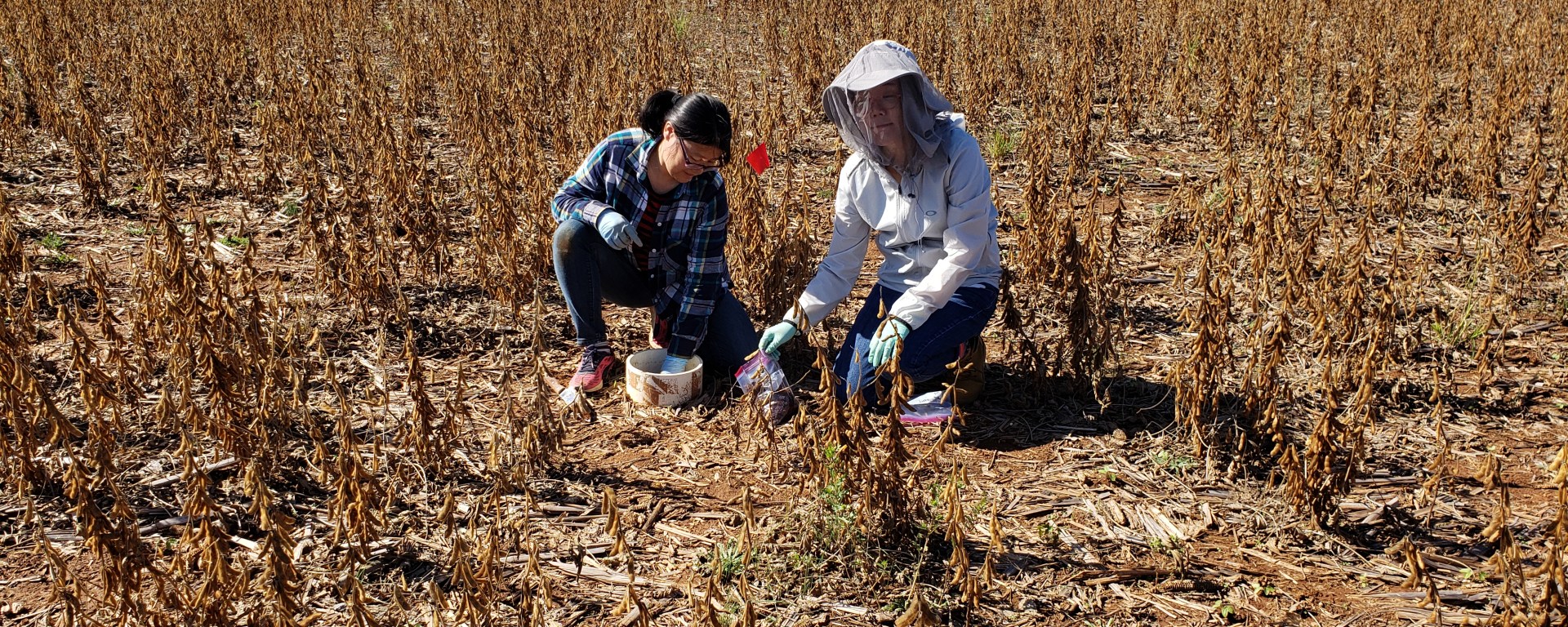
Alabama A&M researchers study agricultural influencers of climate change, carbon emissions
by Sydney Cromwell
What’s growing in the fields of Hazel Green is more than just crops — it could be the next source of biofuel. Or a way to reduce the climate impact of agriculture. Or a new strategy to protect farmers against the effects of severe weather.
Hazel Green is the home of the Winfred Thomas Agricultural Research Station, a 972-acre research farm for row crops, livestock and forestry, overseen by Alabama A&M University.
As a land-grant college and historically Black institution, Alabama A&M’s history is rooted in serving minority and disadvantaged communities.
At the research station, the modern interpretation of that mission includes not only research in traditional agriculture, but also a growing body of study on how farming both changes and is changed by the broader environment.
GRASS IN THE TANK
Food crops like corn, sugarcane and canola are common sources for biofuel. But what’s got professors Ernst Cebert and Xianyan Kuang excited is a species of tall grass called miscanthus.
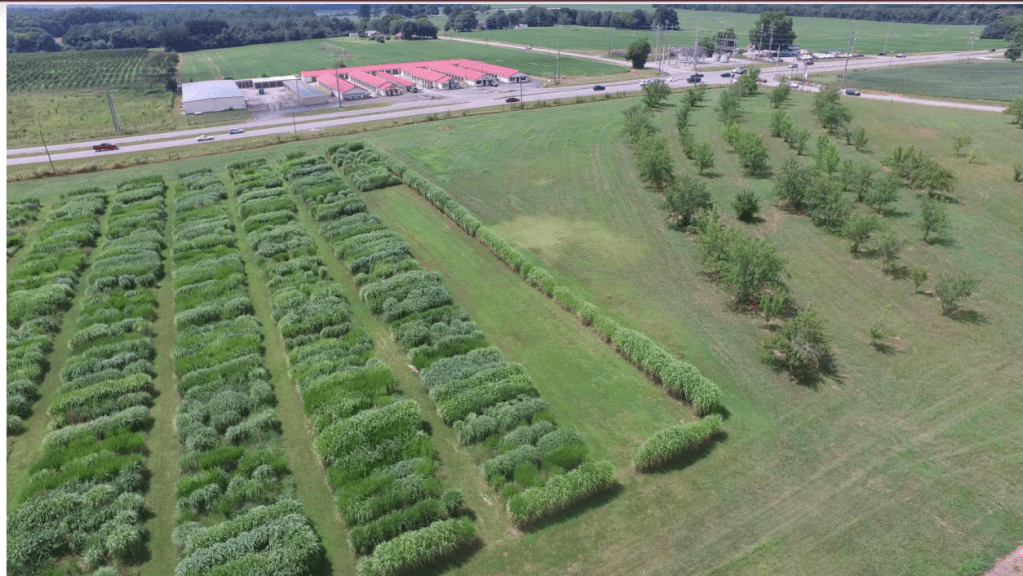
Cebert and Kuang are growing about 10 acres of miscanthus, also called silvergrass, at the Alabama A&M research station.
“If you come to our research station, the first glimpse of the property you see will be the providence of those miscanthus crops,” Cebert said.
Their work is part of a larger national collaboration known as the Center for Advanced Bioenergy and Bioproducts Innovation (CABBI). Cebert and Kuang became CABBI members in December.
CABBI is one of the U.S. Department of Energy’s four bioenergy research centers and funds the development of new, sustainable sources of fuels and other chemicals from biological material.
As plant and soil scientists, Cebert and Kuang are focused on the genetics and best way to grow miscanthus.
So, why miscanthus?
“Because it’s a perennial grass,” Cebert said. “… It’s very appealing for sustainability.”
Miscanthus can grow more than 10 feet in a single growing season, Cebert said, meaning there’s a lot of plant matter to turn into fuel. And it doesn’t need the amount of space and hands-on management that row crops require, Kuang said.
“It’s designed to just plant in marginal land, with all this soil rejuvenation capacity,” Kuang said. “… You plant them, make them established, it should be good for many years.”
Cebert added: “You can grow a crop and then be able to harvest the carbohydrates, the sugar from it for fuel with very little input. … Once the crop is planted, the farmer can go on vacation.”
Cebert and Kuang are part of a team of several universities, led by researchers at the University of Illinois Urbana-Champaign, studying the growth of miscanthus. The research station’s location in north Alabama is beneficial, Cebert said, because of its milder winter weather.
“Certain genetic lines which would not survive in Illinois most likely would survive here,” he said.
Plus, they can take grasses that survive well at more southern universities and try to slowly adapt them to colder weather.
“There is a southern migration and also a northern migration of crops that’s unique in our location here,” Cebert said.
With their 10 acres of miscanthus, Cebert and Kuang monitor the genetics and growth of each type of the grass. Through a grant from the U.S. Department of Agriculture, Kuang is also researching how the different genetic lines handle extreme weather conditions like drought.
“If something like this is going to take off, we have to not worry too much that cold weather is going to kill it or that drought is going to kill it,” Cebert said.
Their work includes trying to spot any drawbacks to growing miscanthus for biofuel, such as the species becoming invasive. However, Cebert said they’re using non-fertile types of miscanthus, so it shouldn’t cause trouble through unintended expansion.
“This is why we often work with a crop like this, to understand all its potentials, pros and cons,” he said.
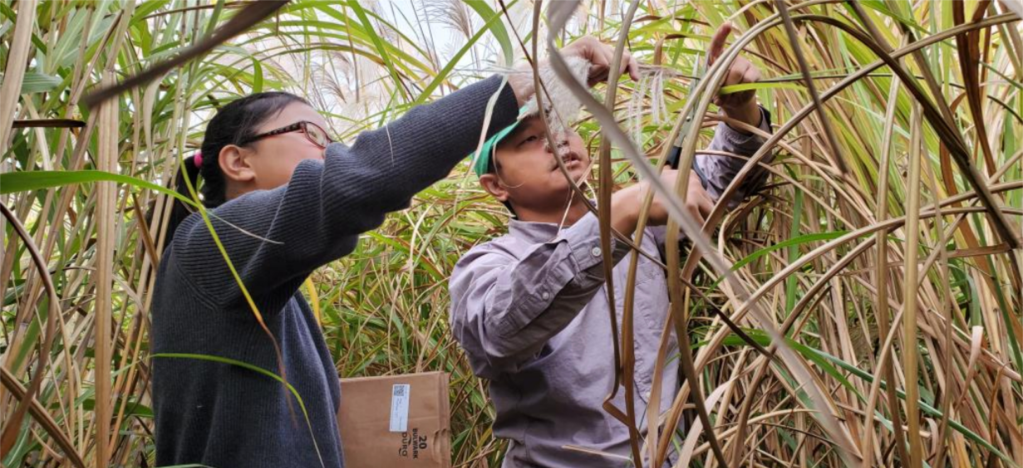
After harvesting the miscanthus, Cebert said they try to find other uses, including training undergrad and graduate students, studying the grass’s engineering potential or simply mulching it to spread on other fields at the research station. He said he knows a company that uses miscanthus to create paper plates and cutlery.
“It’s not just a fuel,” he said.
Other CABBI teams are working on the second half of the process: turning the harvested miscanthus into biofuel in a way that is environmentally friendly and economical and efficient enough to lead to its adoption, particularly by the federal government.
If that happens, Cebert said he sees miscanthus as a viable crop for Alabama farmers.
“Until the door opens up for the end users — in this case, the military — to say, ‘Yes, we’re ready to start using this bio-based fuel for flying,’ then likely it’s not going to move to the farm yet,” he said. “… Farmers will definitely be active once Uncle Sam decides, ‘Yes, this is a product that we want.’”
Cebert said adding miscanthus would not take a lot of extra work for many farmers.
“If you’re a farmer or a rancher that’s producing hay, you already have all the equipment that you need,” he said.
Cebert said he’s “realistic” about the fact that miscanthus and other biofuels aren’t likely to totally replace fossil fuels. But even partial adoption or blending of biofuels into traditional fuels can make it more sustainable.
“You’re already taking a step in decreasing the harmful carbon,” he said. “… It’s a long-term solution, but certain incentives have to be there to encourage producers, manufacturers to veer into that.”
Sustainable energy continues to become more urgent, Cebert said, as the human impact on climate becomes increasingly clear.
“We can no longer say we have normal weather patterns. We don’t know what’s going to happen,” he said. “These severe swings in the weather system, we human beings have an impact in our constant emission of fossil-based [fuels] or carbon in the atmosphere. So we see renewable energy from plant material can help resolve the issue.”
Since joining CABBI, Cebert and Kuang have received $1 million to fund their next five years of study, and Kuang said they’re seeking additional grants and funding to expand their work.
As long as the funding is available, Kuang said there’s “no end date” for him to stop working with miscanthus.
“This is an exciting crop. I’m so enthusiastic about this crop, especially with all the great genetic resources and all the external collaboration opportunities,” Kuang said.
CLIMATE-SMART AGRICULTURE
Professor Dedrick Davis spends his time focused on what lies beneath the research station’s crops, trees and livestock.
Davis grew up in a family of cotton, corn and soybean farmers in north Alabama. When he came to Alabama A&M as an undergraduate, he planned to study forestry, but an enthusiastic soil science professor changed his mind.
“One of his questions was, ‘Can you think of anything in this world that you don’t have to interact with soil to obtain?’” Davis said.
Now a professor of soil physics, Davis studies how water, gasses and heat travel through soil, and how those processes interact with farming.
Since last summer, he has been using sensors placed in the soil beneath the research station’s soybean fields, corn fields and pastures to measure moisture and temperature.
“What we’re getting an idea of is, how do these land uses or land management — how does it influence water movement, heat movement and overall soil status?” he said.
The structure of the soil also changes throughout the year due to rainfall, tilling, plant growth and other factors. Understanding how soil moisture and temperature changes can be critical for growing more successful crops and managing droughts or other difficult conditions, Davis said.
“It can provide us with an understanding of water management for future scenarios,” he said. “… When you plant a crop, the seed might need the right moisture to germinate or the right moisture to grow over the year.”
Carbon dioxide and other greenhouse gasses also escape into the air through pores in the soil, Davis said, and the amount that is released depends in part on the temperature, microbial life and other soil conditions.
“Having an idea of those dynamics becomes very important,” he said.
“Before people can really implement some of these things, there has to be data that backs up that, hey, this is a credible practice.”
Dedrick Davis, soil physics professor, Alabama A&M University
Davis said he’s working with a study of carbon dioxide emissions from sorghum and how the emissions change throughout the growing season.
“By that, you can effectively start modeling what carbon emissions might be,” he said.
Graduate students at the research station have also studied the emissions of different land management zones and “climate-smart” agroforestry practices, Davis said.
Davis said he would like to install deeper soil sensors in the future, to understand even more of what’s happening below the surface. And he hopes to study the use of cover crops and how they impact soil quality, erosion and water retention.
“The simple growing of those cover crops — they’re going to create pores through that soil where the water can travel,” he said. That in turn influences the gasses and microbes underground.
“All these things are interlinked and related to one another,” he said.
The value of this work isn’t limited to laboratory findings and research papers — it’s also in sharing those results to make more successful and environmentally conscious farmers.
“As we try to find better solutions — let’s say climate-smart agriculture — before people can really implement some of these things, there has to be data that backs up that, hey, this is a credible practice,” Davis said.
That’s where Alabama A&M’s long history in the community and its agricultural extension program work to its advantage.
Davis said the university does a lot of outreach work to share its data with small and medium farms, including field days, where the public can visit and see their research in action, and individual relationships between university professors and local growers.
“Places such as A&M tend to focus on small farms,” he said. “… We can possibly get to those stakeholders that might be more hesitant or harder to reach.”
‘WEATHER AND SOIL MUST WORK TOGETHER’
Better climate data can lead to better farming, and that’s what Monday Mbila wants to provide through his work at a series of meteorological and soil research stations called the Alabama Mesonet.
“One of the things that we know is that for agriculture to flourish, weather and soil must work together,” said Mbila, a soil science professor at Alabama A&M.
At these Mesonet stations, Mbila tracks air and soil temperatures, solar radiation and the evaporation of water from soil and plants into the atmosphere. Using this data, he can build models of how soil moisture changes depending on weather and land use.
By making his data and moisture models available to farmers through the Mesonet and U.S. Department of Agriculture SCAN websites, Mbila said they have more information to plan their planting, irrigation and harvesting schedules.
“Every farmer that we work with is very interested in that. The stations where we have this are owned by farmers, so they are interested enough to give us part of their land to install a weather station,” he said.
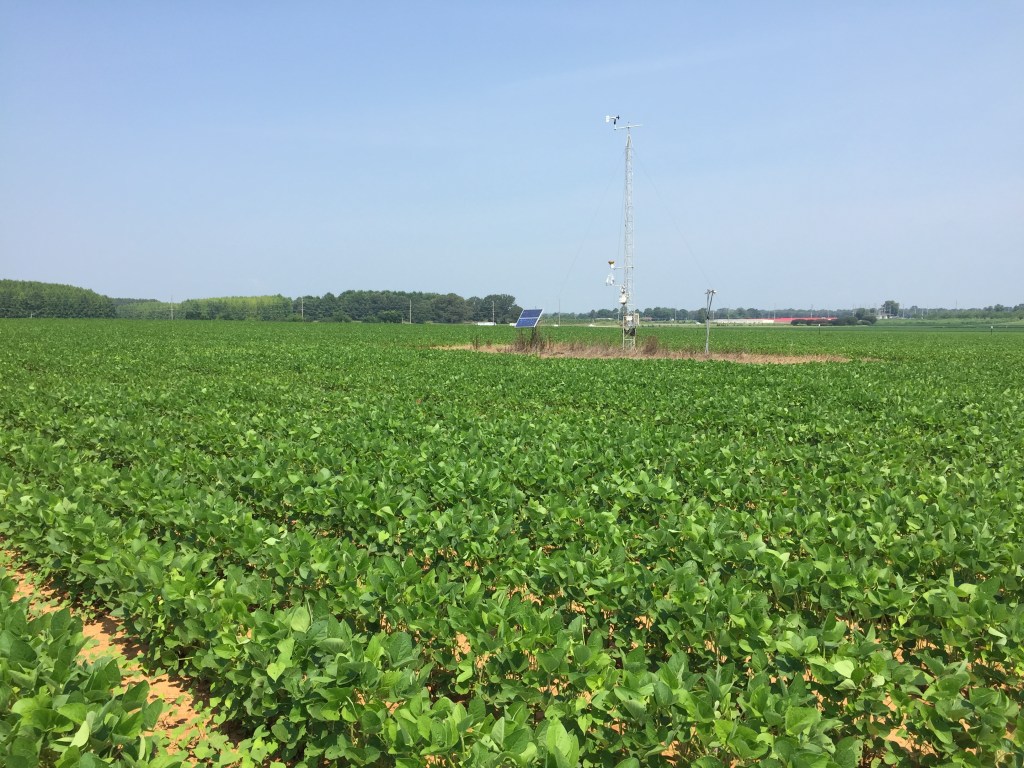
Mbila said his research will only become more relevant to agriculture as climate change causes more severe storms, droughts and flooding.
“You can’t avoid those things, … [but] you can schedule your agriculture practices to contain those extremes,” he said.
Studying weather and soil interactions is a long-term project, Mbila said.
“For you to have a good atmospheric pattern, you know, you’re looking at 20, 30 years,” he said. “… We intend to keep doing that as a part of the Alabama database, as long as the funding to sustain it is there.”
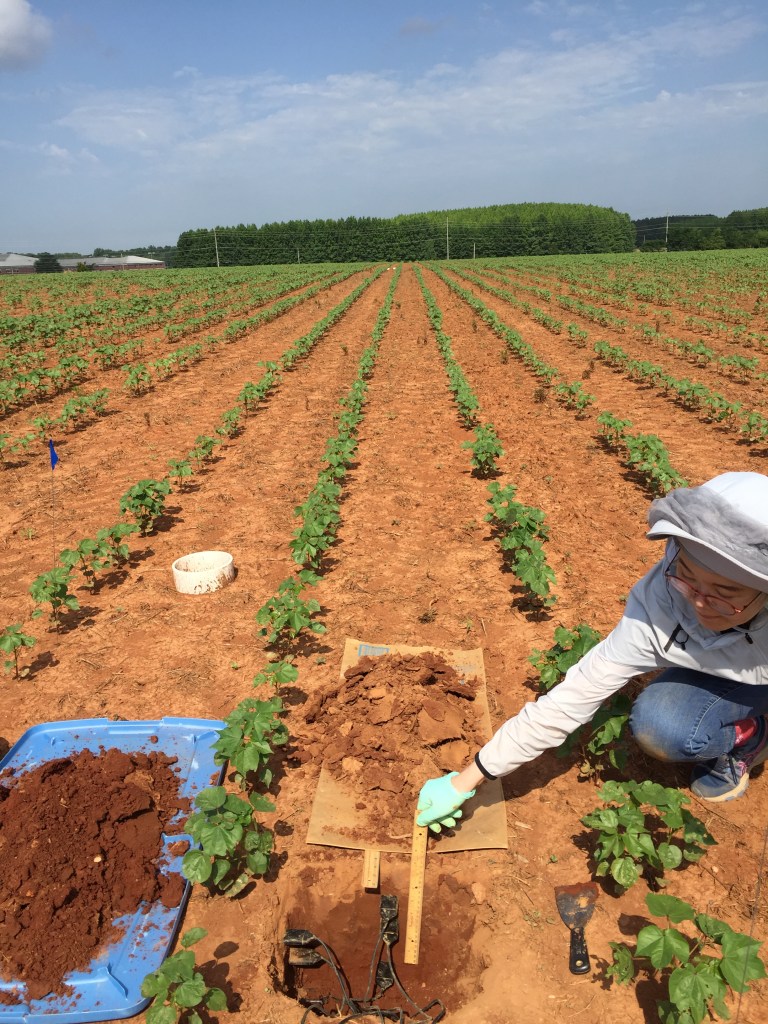
For the past few years, Mbila has also used the Mesonet stations to study the carbon emissions of some of Alabama’s most common crops.
“The ecosystem has carbon dioxide in different pools,” Mbila said. Each of those pools — including the soil, various plant species and the atmosphere — manages and moves carbon in different ways.
Through measuring the emissions of corn, soybean and cotton crops, Mbila plans to create carbon budgets for each crop and find more sustainable management techniques.
“That helps us know how much carbon has to be cut out,” he said.
Mbila said farmers “may not be in a position to determine the evapotranspiration of the gasses” themselves, so he wants to produce data and maps that are more accessible for them.
Mbila said the carbon budget data will be ready within a few months to a year, and he’ll be able to share it directly with farmers, just as he has done with his atmosphere and soil moisture monitoring.
GET ON THE BUS
While it isn’t based at the agricultural research station, Alabama A&M’s Bulldog Transit System has also recently made big environmental strides.
Since 2019, the university has replaced six of its campus buses with all-electric, zero-emission buses, according to Marshall Chimwedzi with the university’s department of transportation.
When the traditional campus buses were reaching the end of their lifespan in 2019, Chimwedzi said he began looking around at other options and discovered the zero-emission buses. He said green energy adoption is already spreading in his home country of Zimbabwe due to fuel issues.
“Every time I visit home during the holidays, everybody’s going solar,” he said.
Changing from gas to electric didn’t happen with the snap of a finger. Chimwedzi said mindsets had to be changed — in particular about the price tag, which is about $1 million per electric bus, compared to around $200,000 for a traditional bus. Replacing all 15 of the campus buses with electric would have been “a nonstarter,” he said.
“It had to take some convincing to the administration, to my bosses, to say, ‘Look, you need to shell out this amount of capital,’” he said.
Chimwedzi said the mechanics were also concerned that an electric bus was “just a big golf cart,” and that they wouldn’t be able to handle the university routes. The transportation department held a symposium with staff and students to explain how the electric buses would work.
“When we finally figured out this is cool, this is something that’s doable, we had to figure out the funds,” Chimwedzi said.
That meant a lot of grant writing. Chimwedzi said the university has secured the funding for six electric buses, with two more to come, and an electric charging facility.
The university is also planning a 1.2-megawatt solar farm, so the power supplying the charging facility also comes from green energy. Chimwedzi said that project should be built by the end of 2023.
Once Alabama A&M decided to create an electric bus fleet, Chimwedzi said the bus company had to evaluate the campus routes and train the drivers. Particularly in extreme temperatures, he said the buses have to use more battery power to produce heat or air conditioning, which will affect how soon they need to recharge.
“You have to understand those adjustments and exactly when the bus needs to be charged without compromising operations,” he said.
Since the new buses have gone into service, Chimwedzi said he hasn’t heard any complaints about them — except perhaps that their quieter operation makes them hard to hear coming.
“The students have embraced it, everybody who comes, they like it. They’re cool, they’re technologically advanced,” he said.
The upfront cost for the electric buses is steep, but Chimwedzi said the ongoing maintenance will be less expensive than the former buses. There are no oil changes, and the brakes last longer because the motors can reverse acceleration when the driver takes their foot off the gas, he said.
A 10-kilowatt-hour charge is also far cheaper than the 30 gallons of fuel the university used per bus each day, Chimwedzi said.
“You can’t beat that in terms of fuel,” he said.
Chimwedzi said he would like to eventually make 100% of on-campus transit emission-free, and possibly look into electric options for other campus service vehicles.
“The interest is there. The drivers like them,” he said.
Alabama A&M can be a leader in the Southeast for clean energy-adoption at other universities and organizations, Chimwedzi said.
“We really will be a model,” he said.
Main article image of carbon emission measurements courtesy of Monday Mbila.
 Southern Science