
Will new coal ash regulations make Alabama safer?
by Sydney Cromwell
Coal-fired power plants produce about one-fifth of the electricity generated in Alabama. After power companies are done with the coal, they’re left with a toxic substance called coal ash.
What’s done next with that coal ash is a big deal. When it isn’t handled safely, coal ash can leak into waterways and poison local drinking water — or can even create a catastrophic flood of pollution.
The Environmental Protection Agency (EPA) is working on a set of new regulations that could change the way coal ash is handled at Alabama’s 14 coal ash retention ponds and landfills. However, the timeline for implementing these protections has left some environmental groups frustrated.
TOXINS BY THE TON
The coal ash leftover from power production (also called coal combustion residuals, or CCR) has around 20 different toxic heavy metals and carcinogens, including lead, mercury, arsenic and bromides. It can be produced through the actual burning of coal, or through processes to remove coal pollutants from the air.
Nearly 5 billion tons of coal ash have been created by power plants in the U.S. over the last century.
Coal-fired power plants “are a major source of toxic water pollution in the entire country and particularly in the Southeast,” said Frank Holleman, a senior attorney at the Southern Environmental Law Center (SELC) who has worked on coal ash pollution issues for more than a decade.
While coal ash can be recycled as concrete or cement, power companies historically have stored much of their coal ash waste in retention ponds and landfills, which are capped and left in the ground once they’re full. According to the environmental advocacy group EarthJustice, as many as 94% of those retention ponds are unlined — meaning there’s no barrier between the coal ash and the soil around it.
When rain or groundwater passes through unlined coal ash pits, it can carry those heavy metals and pollutants into the soil and wash them into nearby rivers, lakes and other waterways, including local sources of drinking water.
“I think it’s pretty clear that there are a lot of sites around the nation that aren’t meeting those regulations,” Mobile Baykeeper Cade Kistler said.
“If the ash is still in groundwater, the contaminants are still going to leak as the groundwater continues to pass through the ash.”
Lisa Evans, EarthJustice
Nine of the coal ash ponds in Alabama are unlined, according to the Alabama Department of Environmental Management (ADEM). Alabama Power’s Plant Gorgas, for instance, sits next to the Mulberry Fork of the Black Warrior River, and it stores coal ash in unlined ponds on both sides of the river. According to Alabama Power documents, those ponds encompass about 420 acres and hold more than 2 billion gallons of water contaminated with coal ash.
New coal ash ponds are required by federal regulations to be lined, but inactive sites, also called “legacy” impoundments, are still full of these pollutants that continue to escape.
Lisa Evans, an attorney with EarthJustice who has worked on coal ash issues since 2000, said monitoring of groundwater at sites across the country has shown that these pollutants are leaching out nearly everywhere.
“We’ve seen that 92% of those ponds [at active sites] have contaminated the groundwater at levels above federal standards,” Evans said. “… The utilities have known about the problem at these leaking sites for many, many decades.”

Sometimes, however, it’s more than just a leak.
In December 2008, a containment wall failed at a coal ash pond in Kingston, Tennessee, releasing a sludge of coal ash and water over 300 acres and into two nearby rivers. Homes and properties were destroyed or became uninhabitable.
The Tennessee Valley Authority (TVA), which had operated the power plant in Kingston, spent around $1 billion on the cleanup until it was completed in 2015. Many of the cleanup workers have since sued the contractor hired for the cleanup work, saying that the exposure to coal ash without adequate safety precautions led to illnesses and deaths.
In February 2014, a burst drainage pipe at a retired power plant in Eden, North Carolina, released more than 50,000 tons of coal ash and 27 million gallons of ash pond wastewater into the Dan River, a source of drinking water for the nearby community. The power company responsible, Duke Energy, has agreed to pay a total of $3 million for the cleanup.
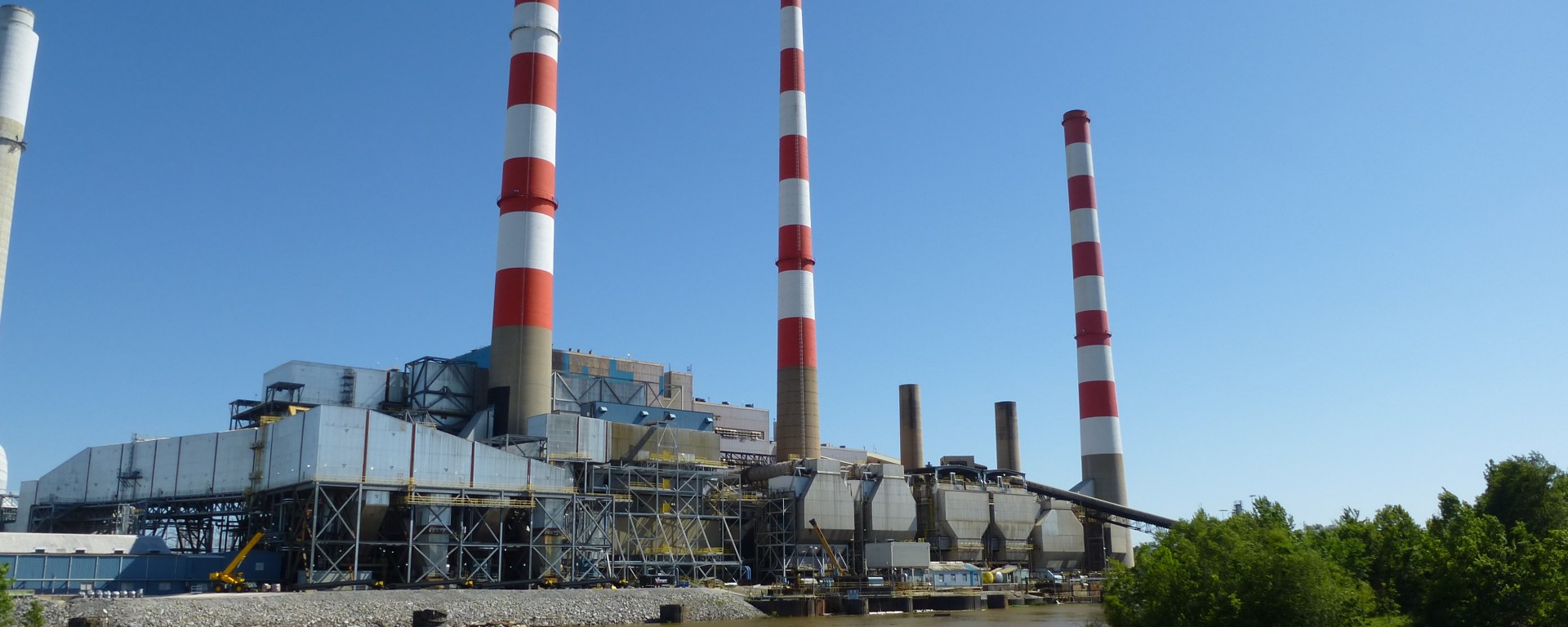
If a catastrophic failure occurred at Plant Barry, which sits on the Mobile River, the spill would be a disaster “20 times the size of the BP oil spill,” Kistler said.
ALABAMA’S ASHES
Alabama Power operates three active coal-fired power plants: Plant Barry (Mobile County), Plant Gaston (Shelby County) and Plant Miller (Jefferson County). It also has three former sites that have been shut down or switched to another fuel source: Plant Gadsden (Etowah County), Plant Gorgas (Walker County) and Plant Greene County.
The TVA no longer operates coal-fired plants in Alabama after the closures of Widows Creek Fossil Plant (Jackson County) in 2015 and Colbert Fossil Plant (Colbert County) in 2016, although it still has active plants in Tennessee. PowerSouth Energy Cooperative also closed its last coal-fired plants in 2020.
Retired plants often still have coal ash ponds or landfills on-site, even if the sites are no longer generating power.
“The old sites are just as dangerous,” Holleman said.
The Alabama Power website about coal ash attributes the 2019 closure of Plant Gorgas to “costly, federally driven environmental mandates related to the handling of coal ash and wastewater.” PowerSouth blamed those same regulations and “extremist environmental ideologies” for the 2018 closure of the Lowman Plant.
“What we’ve seen over the years is when forced to make that decision, many utilities have made the economic choice to retire that facility rather than investing more money in an aging and dirty facility,” Holleman said.
Alabama’s coal-fired power plants have a history of mishandling their coal ash waste. All nine active and retired facilities in the state have reported levels of heavy metals and pollutants that exceeded federal standards in their sites’ groundwater between 2010 and 2019, according to AshTracker, a website that compiles monitoring data that companies are required to submit to state regulators.
“The state of Alabama is the notable outlier. It’s the only state in our region with not one site … being excavated and totally cleaned up.”
Frank Holleman, Southern Environmental Law Center
In 2018, the Alabama Department of Environmental Management (ADEM) fined five Alabama Power plants and one PowerSouth plant $250,000 each — the maximum penalty — due to unacceptable levels of coal ash discharge leaving the sites.
In 2022, Mobile Baykeeper and the SELC filed a lawsuit against Plant Barry and ADEM over a permit to store 21 million tons of coal ash in a capped, unlined landfill. Mobile Baykeeper claims that the coal ash will be stored in the floodplain of the Mobile River and below sea level, violating state and federal rules.
“If you just simply take out the surface water and place a cap, … if the ash is still in groundwater, the contaminants are still going to leak as the groundwater continues to pass through the ash,” Evans said.
Holleman said Alabama Power has moved to dismiss the suit and the SELC has replied to the motion, which is now before the court for a decision.
Alabama Power declined to be interviewed for this article due to the ongoing litigation.
In January, the EPA sent Alabama Power a notice of potential violations at Plant Barry. According to a copy of the notice provided by the EPA, Alabama Power’s plans for closing the coal ash pond, monitoring groundwater and preparing emergency actions had “potentially failed” to meet federal requirements.
The process to close and cap the ash pond at Plant Barry started in 2020, according to ADEM documents. The EPA’s notice estimates the closure won’t be complete until 2030.
Alabama Power sent its responses to the EPA this spring, and the EPA said it is currently evaluating the case.
In August, the EPA proposed that it would deny Alabama’s application for a state-run permit program, based on certain regulations that didn’t meet federal standards. Read more about that proposal here.
THE “NOTABLE OUTLIER”
The combination of advocacy, lawsuits and federal and state regulation have put increased pressure on utility companies to clean up their coal ash sites before they become another Kingston or Dan River, Holleman said.
“Utilities either have already or are now required to clean up over a billion tons of coal ash from unlined, polluting coal ash sites,” he said.
Holleman said that includes all of the unlined ponds and landfills in North Carolina and South Carolina, as well as some in Virginia and Tennessee. Georgia Power, a sister company to Alabama Power, is now excavating much of its coal ash, although not all.
Alabama Power reports that it is working to reduce the size of its coal ash ponds, cap them and increase protections around them. The TVA also says it performs assessments and groundwater testing at the Colbert site, and it is developing new monitoring technologies. However, this is not the same as complete removal.
“The state of Alabama is the notable outlier. It’s the only state in our region with not one site … being excavated and totally cleaned up,” Holleman said.
It’s not an issue of differences in state law, he said. While North Carolina and Virginia have enacted stricter coal ash regulations, South Carolina hasn’t done so but still has site cleanups moving forward. Southern Company is excavating in Georgia, but not in Alabama.
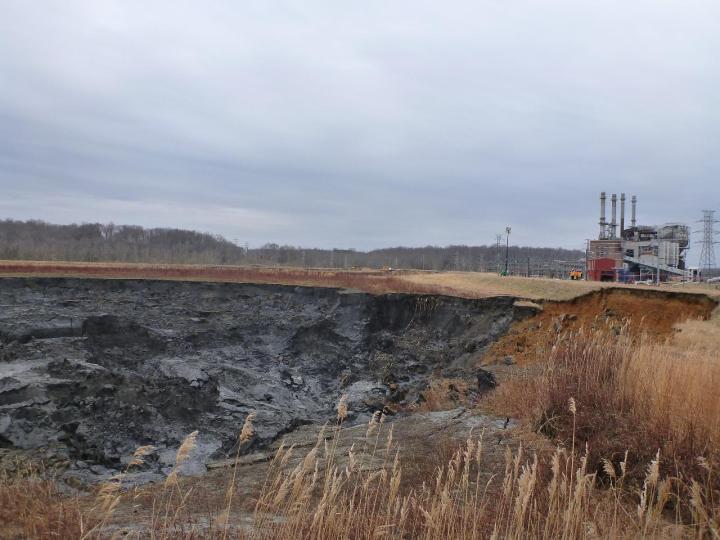
“It’s a mystery, really. It’s not clear why the people of Alabama don’t have the same protections,” Holleman said. “… People in Alabama suffer the same threats and risks that people in Georgia, North Carolina face.”
Cindy Lowry, executive director of the Alabama Rivers Alliance, said the state’s laws surrounding coal ash are “only as strong as the federal government requires.” And up until now, Lowry said, that hasn’t been enough.
“The water discharge permits from coal plants have never been strong enough, and they, to my knowledge, have not been made stronger,” she said.
A BIG STEP FOR COAL ASH REGULATION
The EPA’s push for stricter regulations on coal-fired power plants and coal ash — and enforcement of those regulations — began with the current presidential administration and the settlement of a lawsuit by EarthJustice and other environmental groups over the existing standards.
In April and May 2023, the EPA released its proposed changes to the federal coal ash guidelines. The major proposed changes from the current regulations are:
- Tighter limits on pollution in three types of wastewater that coal-fired plants discharge. For two of the types of wastewater, the new pollutant limit would be zero. The EPA has estimated that these proposed limits would reduce coal ash pollution by around 584 million pounds per year.
- Requirements for “legacy” coal ash ponds and landfills — those that have been closed or are no longer accepting waste — to meet the same regulatory requirements as active facilities.
- Creation of a “streamlined” permit process for companies to dispose of their coal ash waste
- Extension of the deadline for plants to become “early adopters” of the existing 2020 standards or choose to retire early, which means the plants won’t have to meet the new 2023 standards.
At the same time, the EPA also proposed new, stronger regulations on mercury and other toxic air pollution from coal- and oil-fired power plants.
“It’s a big step forward overall for the country for the water quality, public health, for our drinking water supply,” Holleman said.
Tom Cmar, a senior attorney with EarthJustice, said a cost-benefit analysis of strengthening clean water protections against coal ash “unsurprisingly” found that the social benefits far exceeded the industry costs of meeting those standards.
“You can’t fully measure the benefits of clean water or clean air, but where you can, it’s historically been clear that the benefits far outweigh the costs,” Cmar said.
The EPA has estimated that if the energy industry complies with its proposed regulations, the additional cost to customers averages out to about $0.63 per year on their power bills.
“For some utilities, it won’t be that much of a change. Some of them say they already treat [wastewater] significantly,” Holleman said. Others may have to upgrade their equipment and facilities or consider closure, as Alabama Power and PowerSouth have done in the past.
The EPA estimates that updating coal-fired power plants to meet the 2023 standards would cost the average consumer about $0.63 per year on their power bills.
Environmental groups like EarthJustice are particularly pleased about the EPA adding regulations for legacy coal ash ponds and landfills.
Legacy sites that stopped receiving ash before 2015 currently exist in a loophole, where they are not held to the federal standards for protection, monitoring and cleanup that active sites must meet.
“The requirements that are currently applicable to coal ash ponds need to be imposed on the legacy ponds,” Evans said. “… We obviously have been waiting a long time for these regulations to come down.”
EarthJustice has cataloged 292 currently-unregulated coal ash ponds and landfills across the U.S., including three in Alabama.
“As much coal ash waste was left out of the 2015 rule as was included,” Evans said.
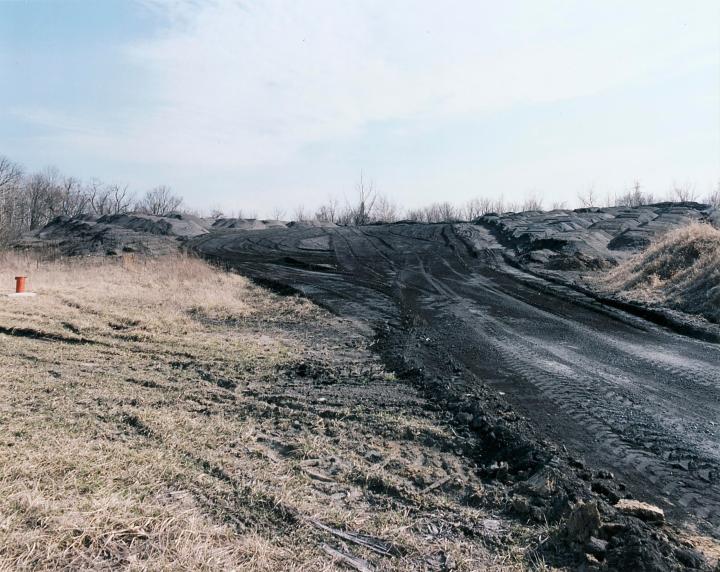
Since older coal ash ponds and landfills are less likely to be lined, this loophole has left a lot of leaking pollution unaddressed. Evans said ideally, each of these sites should be cleaned up in a way that makes them “safe and potentially even reusable for other purposes.”
Holleman said long-term thinking is needed to make sure those legacy sites don’t let pollutants escape in the future.
“We’re talking about forever solutions. This ash is not going away,” he said. “It’s going to be there forever, so where do we want to store it?”
OVERDUE AND OVERTIME
Despite being hopeful about these proposed stricter limits, environmental advocates are concerned that the EPA is giving too much time for the industry to comply, undermining the actual effectiveness of any new regulations.
“To protect human health and the environment, it’s necessary to require industry to move quickly,” Evans said.
The EPA held public hearings on its main body of coal ash regulations in April and May, and the agency expects to publish the final rule in fall 2024. Hearings and public comment on the proposed rules for legacy impoundments will continue through July 17.
If the rules published next fall are approved, it will primarily be up to state regulatory agencies, like ADEM, to enforce them. However, the EPA said states will have up to five years to issue new pollution-discharge permits to each coal-fired facility, meaning “full implementation” won’t happen until late 2029.
In the meantime, power plants that are scheduled to close or switch away from coal by 2028 will not have to meet these new standards and will instead be held to previous, less-strict limits. This rule has been in place since 2020. The EPA said this exception allows coal-fired plants to avoid installing new equipment “that would only be used for a short period of time and thus provide little additional pollutant reductions.”
The EPA has also proposed to create a new category of facilities called “early adopters”: those that have already met the standards of the 2020 amended rules and have agreed to quit using coal by 2032. Early adopters also will not have to meet the new 2023 standards.
“Delay just begets more delay.”
Tom Cmar, EarthJustice
These timelines are “very worrisome,” Evans said, because they will allow certain plants to continue producing coal ash at their current rate for many more years.
Coal ash regulation has a history of “slow and fitful progress,” Cmar said.
Despite first considering coal ash and similar waste products as possible hazardous waste in the 1970s, regulations on coal ash disposal didn’t exist until 2015. At that time, Holleman said, nearly a third of toxic water pollution was coming from coal-fired power plants.
In fact, Holleman said, power plants would clean coal ash, mercury and other pollutants from their exhaust fumes in order to meet Clean Air Act standards, but the pollutants would wind up in unregulated water instead. He called it a “foolish and self-defeating” process.
“It makes no sense and is harmful to the folks who live downstream of these plants to take that pollution and prevent it from going into the air, and then dump it into the waterway,” Cmar said.
The EPA also chose to define coal ash as a “solid waste” rather than a “hazardous waste” when the agency was writing the 2015 regulations. This was less expensive for utilities and created a lower standard for “safe” disposal of coal ash.
The creation of the 2015 rules “was itself 30 years overdue,” Cmar said. Those regulations were almost immediately weakened by EPA delays and reversals under the Trump administration. The 2012 air quality regulations for coal-fired plants were similarly hampered.
When the EPA decided in 2020 that all active, unlined ash ponds needed to either be lined or begin closure by April 2021, facilities could apply for extensions until 2028 to comply. The EPA received 57 of those applications but did not begin issuing decisions on them until early 2022, months after the deadline to begin closing the ash impoundments.
As recently as June, the EPA was still making determinations on whether power plants could receive extensions.
Giving this flexibility to industry has “only allowed for the situation that we’re in now,” Cmar said, where some coal-fired plants still haven’t modernized to meet the current pollution standards, let alone the proposed new ones.
Cmar said the technology needed to meet the 2023 regulations generally only takes two to three years to install, and he believes that timeframe should be sufficient for power companies to comply.
“Delay just begets more delay,” he said.
THE FUTURE OF COAL
While the EPA is considering these new regulations, the energy industry is making some decisions of its own.
As coal-fired power plants reach the ends of their lifespans and alternative fuel sources, from natural gas to wind and solar, become less expensive, many utility companies are choosing to shift away from coal.
“This is all happening in the midst of a massive energy transition,” Cmar said.
The TVA has said it intends to close all of its coal plants by 2035, and spokesperson Scott Brooks said 80% of the coal ash that TVA plants produced in 2022 was recycled. Alabama Power has committed to the EPA’s 2028 early retirement deadline for Plant Barry. It hasn’t announced any plans to close Plant Miller or Plant Gaston, despite Southern Company setting a goal of net-zero greenhouse gas emissions by 2050.
Plant Miller has been the largest single source of greenhouse gasses in the U.S. every year since 2015.
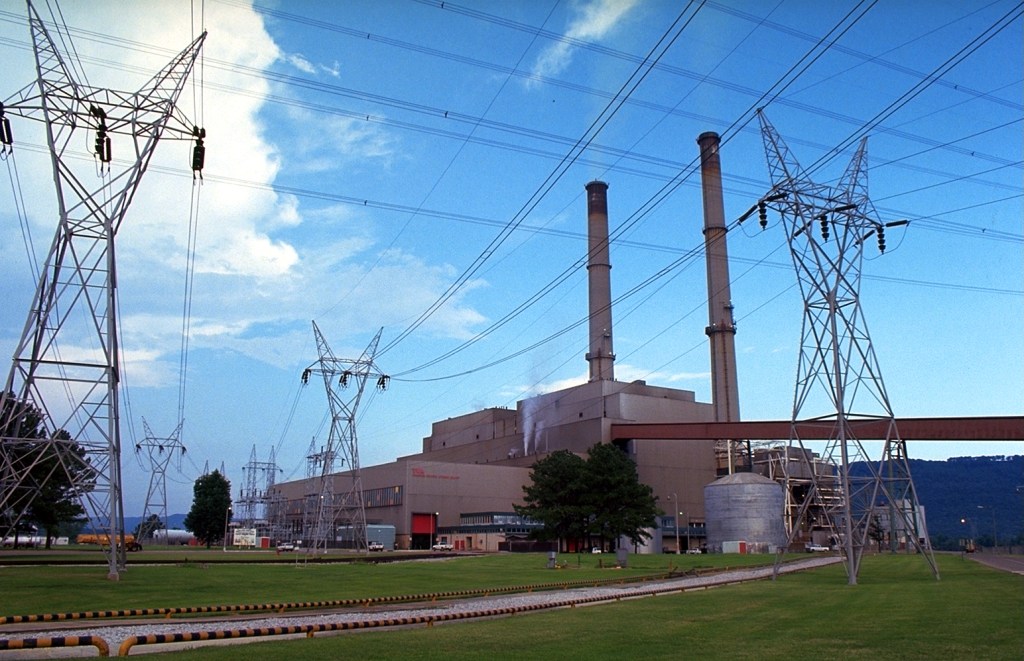
In Alabama, the amount of electricity produced by coal has dropped by more than half since 2010, and natural gas and nuclear power now make up larger proportions of the state’s power generation, according to the U.S. Energy Information Administration. Across the U.S., coal-fueled power has declined by about the same percentage.
This movement away from coal power is a positive trend for the federal government’s 2021 greenhouse gas reduction goals, since an estimated quarter of greenhouse gasses come from electricity generation. But it’s projected that coal-fired power production would have to almost entirely stop in order to meet the goal of a 50% emissions reduction by 2030 and net-zero by 2050.
Even if every coal-fired plant in the U.S. shuts its doors, those billions of tons of coal ash will still be there, in the soil and in the water.
Waiting to be dealt with.
Main article image of Alabama Power Plant Barry and the Mobile River, courtesy of boeman3, Wikimedia Commons.
 Southern Science
3 thoughts on “The burning problem”