
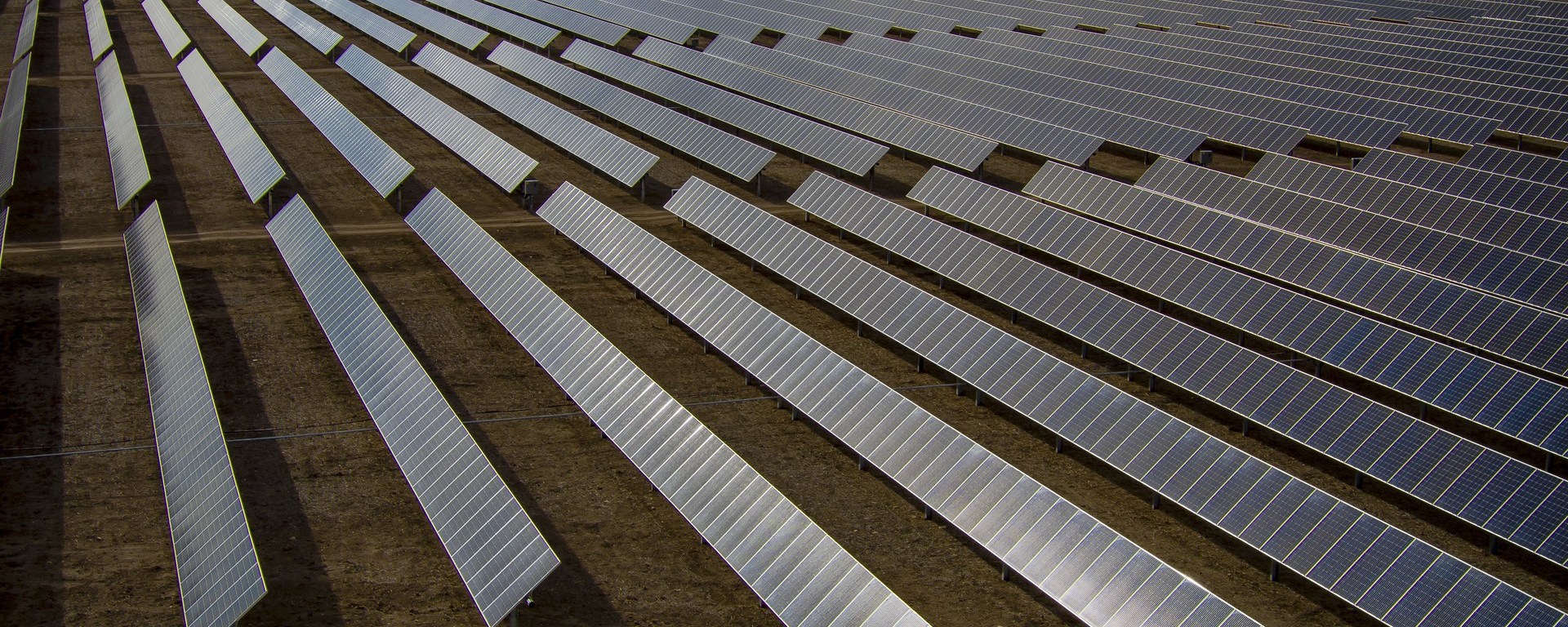
New Alabama Power fee will deter renewable energy investment, solar advocates say
by Sydney Cromwell
Two-tenths of a cent doesn’t sound like much. But multiplied by the annual electricity produced at a solar-energy farm, that fraction of a penny can rack up to hundreds of thousands of dollars, according to Daniel Tait of Energy Alabama.
That’s why renewable energy advocacy groups like Energy Alabama and the Southern Renewable Energy Association (SREA) are opposed to Alabama Power’s new integration fee for solar and wind energy producers, which the state’s Public Service Commission approved this past spring.
Alabama Power characterizes the new integration fee as a necessity for the expenses that come with solar and wind’s inconsistent power generation. Tait, however, believes it’s an intentional effort to discourage competing energy providers from the state.
“It’s a big hit, and I would argue was probably designed that way to make these projects as uneconomic, or less economic, as possible so they won’t go forward,” Tait said.
Now the new fee, and its approval process, are the subject of competing legal motions and interpretations of state law.
SOLAR PRICE TAG
Every year, Alabama Power has to present any updates to things like rates and contracts to the PSC for approval. Two of the changes presented on March 5 were “anything but routine,” Tait said.
First, Alabama Power reduced the rates that it will pay to outside companies that sell power to the grid. Compensation rates changed by anywhere from 16% to 50%. (Alabama Power buys energy at different rates depending on voltage and demand factors such as seasons and time of day. The decrease in compensation wasn’t uniform across these rates.)
Whit Cox, the SREA’s regulatory director, said it’s pretty common for utility companies to change compensation rates from year to year, but the size of the decrease was unusual.
“It was a pretty big drop in compensation, which was notable in and of itself,” Tait said.
The new integration fee, however, is what Tait considers “a game-changer in the most negative of ways.”
“It will kill projects, full stop, or is likely to kill projects,” he said.
The integration fee charges $0.00193 per kilowatt hour produced by “variable” power generation sources. Alabama Power media relations principal Anthony Cook said this is necessary when purchasing solar and wind energy, which “requires additional operating reserves to maintain reliability on our system” when weather and other local conditions change how much power the sources can produce day to day.
Cook said the integration fee is charged to companies that are not customers of the utility but sell most or all of their power output to Alabama Power.
“This same cost will be captured for any future intermittent generation that is added by Alabama Power, whether contracted or company-owned,” Cook said via email.
According to Alabama Power, less than 3% of its electricity generation comes from solar sources (although other renewable sources like nuclear and hydropower make up nearly a third of the company’s power production). There are no operational wind farms in the state, according to the federal Department of Energy.
Tait said the additional expense is “a false argument on its face.” Since Alabama Power hasn’t tried to integrate solar power into its system on a large scale yet, he doesn’t think the utility company can adequately prove that solar creates additional expenses.
Instead, Tait believes the fee is meant to be a barrier to competing power generators in the state.
An 80-kilowatt solar farm, Tait said, will accumulate to more than $200,000 in integration fees each year. He has talked with solar project developers who were considering building in Alabama, but are “definitely reconsidering whether or not it makes sense to do so” with these new costs.
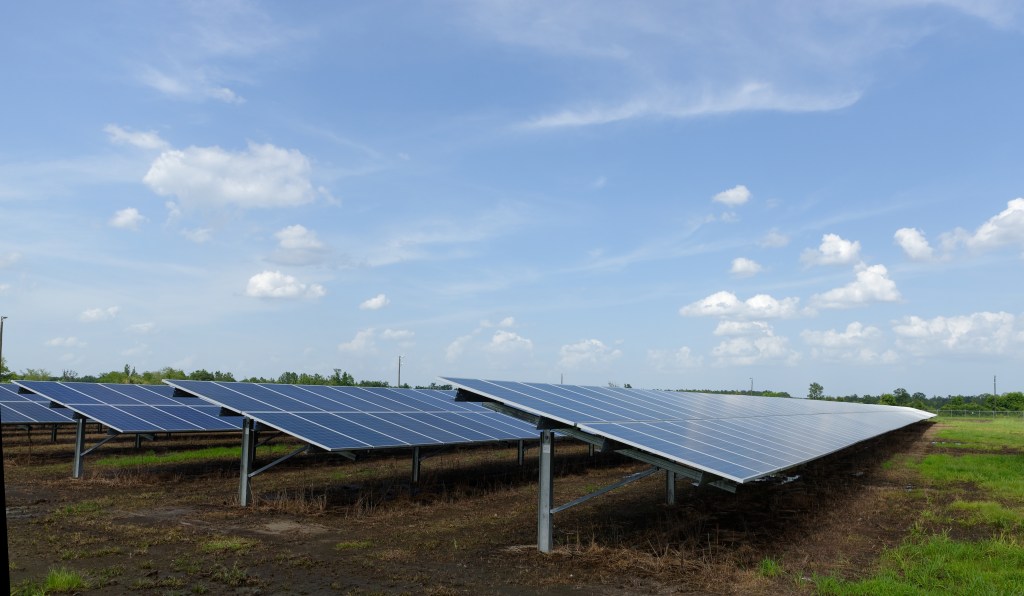
With a 25- to 30-year lifespan on a potential new solar farm, Cox said members of the SREA are now concerned about building a facility and then having their contract with Alabama Power changed unexpectedly.
“If our members are wanting to invest millions of dollars to build a power facility in Alabama, … they don’t want the contract underlying their investment to be changed in a year,” he said.
For companies that have already bought or leased land in the state for solar development, “this really is a change that directly affects them already,” Cox said.
For example, Ingka Investments has announced plans to build multiple 80-megawatt solar farms on land it owns in Walker County, and the facilities would sell their generation to Alabama Power. However, the company likely won’t make a final decision on moving forward with the project, estimated to cost half a billion dollars, until 2025.
An Ingka spokesperson said via email that the company is aware of the new integration fee and is “currently reviewing the situation and assessing its impact on any potential solar projects in Walker County.”
SREA members have already invested in 16 solar projects in Alabama Power’s territory, totaling more than 1,000 megawatts of power generation, according to the organization.
None of the SREA members were willing to speak with Southern Science for this article. Cox said that members were concerned that speaking publicly about the fee would put them at a disadvantage in future dealings with Alabama Power.
While the SREA has filed a petition for a new PSC hearing about the fee, Cox said none of its members have been willing to sign on individually.
“Even though Alabama Power doesn’t call it a tax on solar, that’s what it is, or at least a tax on solar not owned by Alabama Power,” Cox said.
Aside from deterring potential green energy investment in the state, Tait said, this new integration fee could also deter new businesses that want renewable energy sources.
“With actions like this, it really threatens Alabama’s competitiveness as a state to go grab those jobs. If you’re a company with clean energy goals, why would you ever come to Alabama?” he said.
Alabama ranks 32nd among U.S. states for development of new solar power installations, according to the Solar Energy Industries Association. That’s a drop from last year, when Alabama ranked 27th. About 0.84% of the state’s electricity comes from solar power.
Nationwide, about 6% of electricity generation comes from solar and 10% from wind, according to the U.S. Energy Information Administration.
Read more from Southern Science about Alabama’s lagging solar power adoption.
Neighboring states rank 3rd (Florida), 7th (Georgia), 30th (Tennessee) and 37th (Mississippi). Georgia Power, a sister company of Alabama Power, gets 7% of its energy from solar sources. Georgia Power has the same integration fee, and Cox said Mississippi Power, another sister utility through Southern Company, has proposed a similar fee.
The integration fee “isn’t something that’s completely new, but it isn’t something that’s accepted practice across all utilities,” Cox said.
ONE-SIDED PROCESS
The new fee is a problem for solar energy advocates and developers, but the bigger problem, Cox said, is that they had no voice in the decision process.
The Alabama Public Service Commission approved Alabama Power’s revised contracts and rates, including the integration fee, at its March meeting without a public hearing. The changes took effect on April 1.
Cox believes the new fee was significant enough to merit its own filing and hearing, separate from the rest of the annual revisions.
“The PSC voted to approve this without any discussion, … basically just rubber-stamping what Alabama Power wants without any debate,” he said.
Cox tracks the proceedings of public service commissions in seven Southeastern states. He didn’t find out about the integration fee until he saw the list of decisions made at the Alabama PSC’s March meeting.
“If our members are wanting to invest millions of dollars to build a power facility in Alabama, … they don’t want the contract underlying their investment to be changed in a year.”
Whit Cox, Southern Renewable Energy Association
In states like Louisiana and Arkansas, Cox said, lengthy public hearings are more common when contentious issues come up at the public service commission. The Georgia PSC includes public comment periods at every meeting, and it recently held multiple days of hearings over a utility company’s proposed new resource plan, Cox said.
The Alabama PSC, on the other hand, is “only hearing from the utility,” Cox said.
Tait said the PSC’s role is to “be the judge between the power company and the general public, and that’s a failure on the PSC to do that as well.”
After the integration fee was approved, the SREA and Energy Alabama filed petitions to intervene in April, asking the commission for a rehearing of the integration fee. Months later, they’re still trying to be heard.
DETERRENCE
SREA and Energy Alabama are petitioning the PSC to grant them the right to intervene in the decision and to provide comments on the integration fee. Both of those petitions require proving that they have a special interest in the outcome.
The SREA also filed an application for rehearing, which claimed that the PSC’s approval of the fee without adequate public notice or a public hearing was a violation of due process. The application stated that Alabama Power had not provided sufficient proof that the new fee was necessary.
In the application, the SREA requested that the commission modify its process in the future to provide more notice and opportunities for public comment, as well as to require more evidence from utilities when they propose significant revisions.
In response, Alabama Power filed motions to dismiss all three filings. The utility said that Energy Alabama and SREA had filed their petitions too late, according to state law, and that any petition should have been filed in advance of the meeting.
According to documents from the Alabama PSC, the revised rates, including the integration fee, were published on the commission website on March 1, four days before the meeting.
Alabama Power also said that the SREA does not have the right to request a rehearing without being able to provide a specific existing or proposed project that would be affected by the integration fee.
While no individual solar owners or developers were willing to publicly sign on to the petitions, Cox said the SREA’s membership, made up of developers of the exact kind of projects impacted by the fee, means that its interest is clear.
In many ways, the damage is already done.
Daniel Tait, Energy Alabama
Based on his previous work with the Louisiana and Arkansas public service commissions, Cox said it’s rare for a commission to deny the right of intervention to anyone who has demonstrated a valid interest according to state code, as he believes the SREA has done.
“They want to hold us to these really high standards for intervention that other states don’t, that’s just not normal at all,” Cox said.
The SREA responded to Alabama Power’s motions in mid-April with their own citations of state law and legal cases, arguing that Alabama Power’s objections weren’t valid.
However, the PSC voted at its May meeting to deny the motions from SREA and Energy Alabama, again without public comment, based on the advice from Alabama Power. The PSC didn’t publish a written copy of that decision until July 22.
Cox said he wasn’t surprised that the PSC denied the petitions from SREA and Energy Alabama, based on the commission’s past decisions to deny similar requests from the SREA and other groups. He said some organizations don’t even try to file petitions “because they feel like it’s a lost cause.”
“In this case, it seems like the process is kind of intended to deter any members of the public from intervening,” he said.
WHAT’S NEXT
Now that the PSC has published its written decision to deny SREA and Energy Alabama’s petitions, the two organizations are considering their next steps.
Tait said Energy Alabama will likely file a motion for reconsideration and will consider options to take the issue to court.
“They want to hold us to these really high standards for intervention that other states don’t, that’s just not normal at all.”
Whit Cox, Southern Renewable Energy Association
Cox said they have a right of appeal to the Montgomery Circuit Court within 30 days, but the SREA will be discussing with its members and hasn’t made a decision yet. They could also appeal to the Alabama Supreme Court, he said, though the court has previously denied environmental groups’ appeals in similar cases.
He said they could also choose to take their case to the Federal Energy Regulatory Commission.
It could take years to reach a resolution, Tait said, especially in the courtroom, and “that’s to Alabama Power’s benefit.” As long as the lower rates and integration fee are in place, they will continue to act as a deterrent to solar and wind development in the state, he said.
“In many ways, the damage is already done,” Tait said.
THE OTHER ALABAMA SOLAR TAX
While the integration fee for solar energy providers is new, Alabama Power customers with personal or commercial solar arrays have been subject to an extra fee since 2013.
The capacity reservation charge imposes a fee of $5.41 per kilowatt per month to customers who have solar panels or other alternative power sources at their home or business. Alabama Power says the charge pays for backup power that the customers may need if their energy production varies.
In July 2021, after the PSC reaffirmed the capacity reservation charge, the Southern Environmental Law Center, the Greater Birmingham Alliance to Stop Pollution and four homeowners with solar arrays filed a lawsuit in federal court.
The lawsuit against this solar fee has been stalled for a long time. According to Terah Boyd with the SELC, the plaintiffs last filed an amendment to their complaint in May 2023, and Alabama Power and the PSC filed motions to dismiss that complaint. The lawsuit alleges the capacity reservation charge doesn’t meet FERC guidelines for reasonable and non-discriminatory utility rates.
These motions are pending before the U.S. District Court for the Middle District of Alabama, Boyd said, and several hearing dates have been canceled, the last of which was nine months ago. Boyd said there’s no timeline on when the Court will consider the motions.
Read more from Southern Science about the capacity reservation charge.
Main article image by Emily Bedenkop, U.S. Department of Energy.
 Southern Science
This article sheds light on the significant obstacles facing Alabama’s green energy sector due to Alabama Power’s newly approved integration fee for solar and wind energy producers. Renewable energy advocates, including Energy Alabama and the Southern Renewable Energy Association (SREA), argue that the fee—though seemingly minor at two-tenths of a cent per kilowatt-hour—can accumulate to substantial costs, potentially discouraging investment in solar and wind projects. For instance, an 80-kilowatt solar farm could incur over $200,000 in annual fees, making such projects economically unfeasible.
LikeLike