
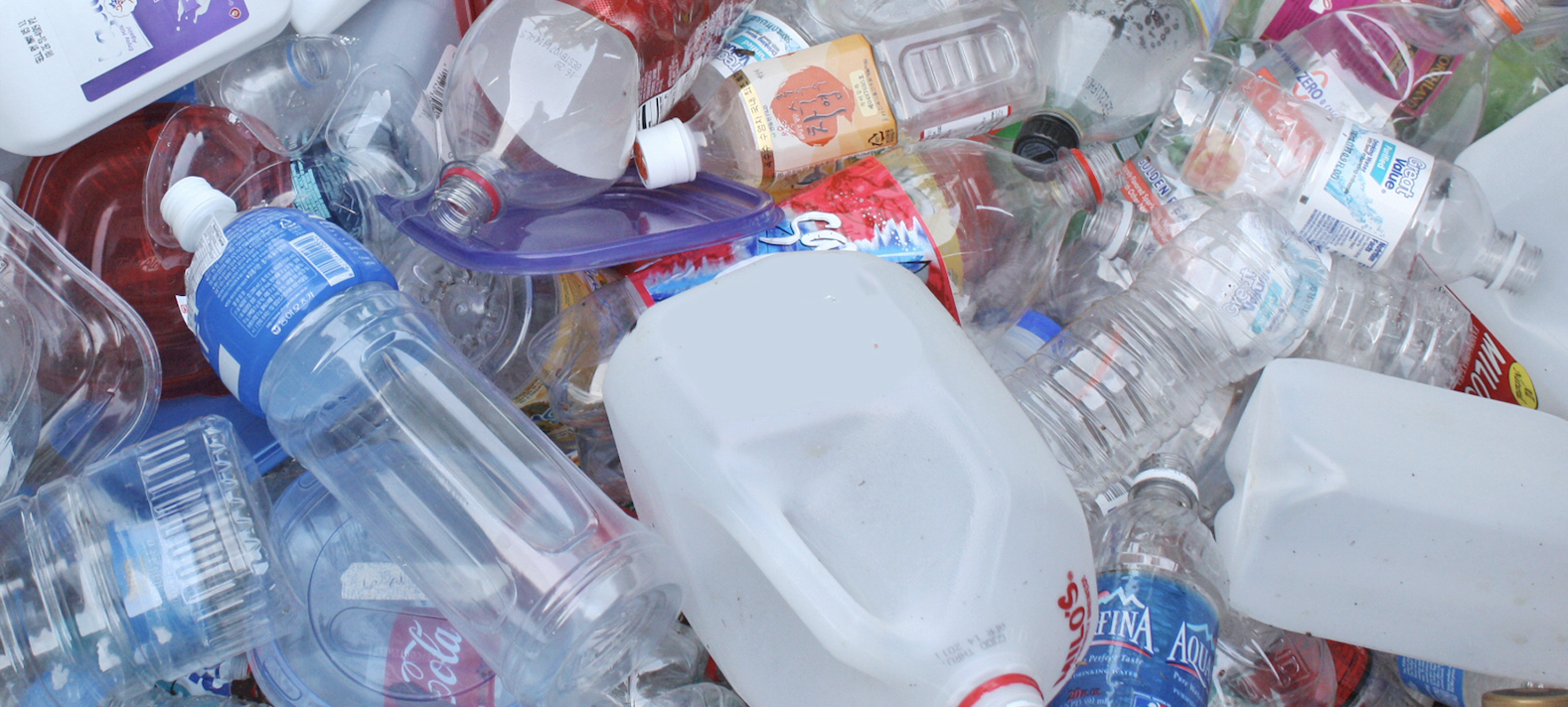
With NOAA grants, two Alabama research teams take aim at Gulf, global plastic pollution
by Sydney Cromwell
There’s a piece of plastic floating in the Black Warrior River. It’s far too small for the eye to see, even though it’s surrounded by thousands of other pieces of plastic just like it.
Perhaps it came from a washing machine, where tiny fibers broke free from a polyester T-shirt in the laundry and washed out through the sewer line. Perhaps it came from a plastic water bottle, tossed out a car window and broken down by the steady beat of sun, rain and time.
Wherever it came from, that piece of plastic — so tiny that it’s called a “microplastic” — has landed in the Black Warrior River, which is contaminated with microplastics just like every other body of water that’s been tested, everywhere on the planet.
Many microplastics will get eaten by fish and other river creatures, or pulled into a drinking-water intake, where the water supplier’s filters may not be able to catch them. Others will float downstream into the Gulf.
But this particular piece of plastic has a different fate.
It gets sucked up into a tube that University of Alabama professor Mark Cheng’s research team has placed in the water on the banks of the Black Warrior, near Tuscaloosa. The plastic passes through a series of increasingly finer filters, leaving larger pieces of debris behind.
Finally, the piece of plastic will travel beneath a spectrometer and camera inside the device, which will capture an image and then analyze and identify which of the many types of plastic this particular microplastic is made of.
The microplastic is just one symptom of a planet drowning in plastic waste. But the device it traveled through might be part of the path toward solving that problem.
“UNTESTED AND PROMISING”
Cheng, an engineering professor and member of UA’s Alabama Water Institute, has been studying microplastics from an engineering perspective for several years. That includes working on prototypes of his device, which is intended to be a cheaper and more efficient way of filtering and identifying microplastics.
His work on the device got a big boost in July, when Cheng’s team was one of 11 recipients of a Marine Debris Challenge Competition grant from the National Oceanic and Atmospheric Administration (NOAA). His project received more than $2.3 million.
Madison Willert, a marine debris specialist for the NOAA Sea Grant program, said the Challenge Competition winners were researchers with innovative approaches to dealing with all kinds of marine debris pollution, including microplastics.
“We were really looking for untested and promising technology,” she said.
In 2023, the first year of the Challenge Competition grants, one award was given to Shenghua Wu, an associate professor of engineering at the University of South Alabama, and the Mississippi-Alabama Sea Grant Consortium (MASGC).
“I think we are very fortunate to be honest,” Wu said about receiving the federal grant of over $1.9 million.
The Challenge Competition is paired with the Marine Debris Community Action Coalitions, another NOAA program that awarded grants in 2023 and 2024 for efforts to improve public engagement and response to marine debris, particularly in communities that are most affected, Willert said.
“We [NOAA] are not the direct beneficiaries of these awards. Really, these awards are being made to benefit coastal communities, the American public in general, fisheries,” she said.
The two grant competitions were funded through specific allocations in the Bipartisan Infrastructure Law and Inflation Reduction Act, and they won’t be continued unless NOAA receives additional special funding in the future, Willert said.
“It was a really unique opportunity to get some new research going in this field that is so needed,” she said. “… Microplastics is such a bipartisan issue. No one likes plastic on their beaches, no one likes plastic in their bloodstream.”
With such a limited pool of grant winners, MASGC Outreach and Deputy Director Steve Sempier said it’s significant that two separate projects in Alabama received NOAA Marine Debris funding.
“We have $4 million worth of research coming through Alabama institutions, which is a testament to the caliber of research,” he said.
WHY MICROPLASTICS ARE A PROBLEM
When Wu first learned about microplastics, he resolved to switch away from plastic water bottles to ceramic drinkware. But as he continued researching, Wu said he realized that was just a fraction of his microplastic exposure.
Microplastics (pieces less than 5 millimeters) and their even smaller brethren, nanoplastics (less than 1,000 nanometers, or about 100 times smaller than a human hair), are a byproduct of the pervasive plastic use in our daily lives, from household containers to industrial fishing gear. In fact, last year the world produced more than 400 million tons of plastics.
After decades of plastic use, microplastics have been found from Arctic ice to the Marianas Trench and in the bodies of fish, birds and other creatures.
“The more we start to understand about microplastics in our food and the amount that we’re exposed to in our daily lives, water always comes up in the conversation. Essentially, with the increased use of plastic in our lives and the degradation over time, it all ends up in the water,” said Michael Fedoroff, the executive director of CONSERVE Research Group at the Alabama Water Institute.
Scientists have found microplastics in people’s organs, joints, blood vessels, placentas and even brains. All that plastic has hitched a ride on the food we eat, the clothes we wear, the household items we touch and even the air we breathe — in fact, it’s estimated that the average person consumes a credit card’s worth of plastic per week.
“I don’t think this is something that’s at the forefront of people’s minds right now. We are large plastic consumers.”
Steve Sempier, Mississippi-Alabama Sea Grant Consortium
“It’s an emerging topic that we will become more and more aware of. I don’t think this is something that’s at the forefront of people’s minds right now. We are large plastic consumers,” Sempier said.
Research on the impact of microplastics is still relatively recent, but a growing collection of studies is showing reason for concern.
For instance, one study found that microplastics in the veins are a potential risk factor for cardiac problems, while another linked them to a variety of cell damages. They may also impair liver, respiratory and bowel functions.
In animal studies, the presence of microplastics has been connected to problems with reproductive and immune systems, metabolism, cancers and cognitive function.
There’s still a lot we don’t know, particularly about how much plastic stays in the body and the potentially toxic materials — from heavy metals to industrial chemicals — they can carry with them. No one has a certain answer on exactly how dangerous these pieces are.
“It’s really hard to establish a baseline” to determine if microplastics are actually causing or increasing the risk of these health and environmental issues, Cheng said.
But even much more foundational questions still need an answer: exactly how much microplastic is out there, and where is it located?
“The short answer is it’s everywhere, which is not comforting, right?” Fedoroff said. “… The issue becomes that there isn’t a lot of baseline data.”
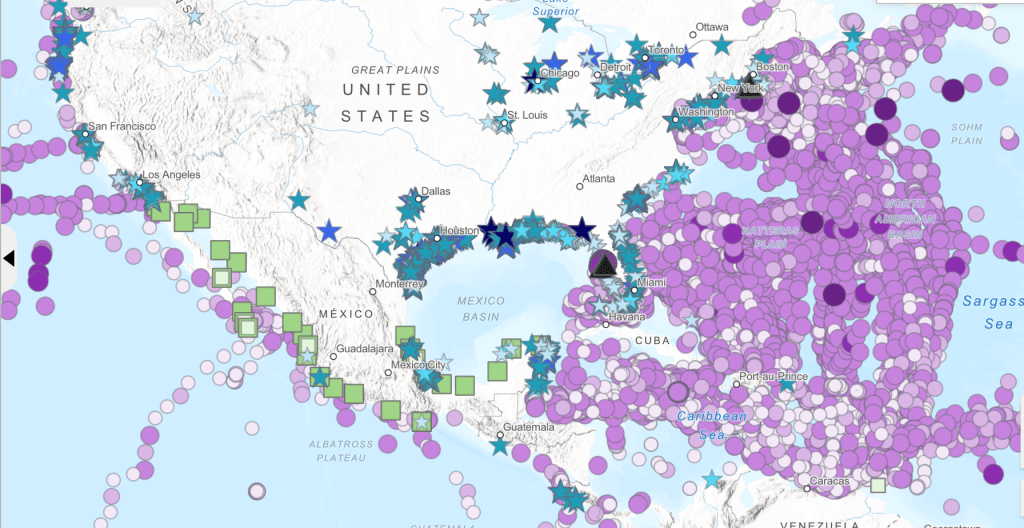
Wu and Sempier said there’s a particular gap of microplastic data in the Gulf of Mexico, compared to other places like the Great Lakes or Pacific Coast. That’s one reason they are excited about these studies being funded.
“We don’t really have a good understanding of hotspots, by any means,” Sempier said. “… They don’t have much data at all in the Gulf Coast.”
“We are trying to fill the data gap,” Wu said.
PLAYING CATCH-UP
Imagine a near-invisible needle in an ocean-sized haystack. Even with millions of pieces scattered through the world’s waters, soil and air, you see why microplastics are so hard to study and clean up at a large scale.
One problem, Cheng said, is that there are so many types of plastics, which break down in different ways and may not have the same environmental effects.
“They are not created equal,” he said.
The types of plastics also vary geographically, based on the different industries using them. So microplastics in the Great Lakes, where Cheng previously did his research, are different from plastics in the Gulf.
“It’s just impossible to target every single plastic type,” Wu said.
Along with the microplastics’ chemical structure, the type and quality of the water being sampled can produce varied results as well, Sempier said.
“It’s a really complex landscape to try to go through,” he said.
Their microscopic size also means particularly precise instruments are needed to capture and analyze them, and reviewing plastic shards one at a time is both labor- and time-intensive, Cheng said.
Wu said current technology requires a couple days to process a water sample and count the plastic particles.
The lack of efficient ways to study microplastics also means that industries have a hard time responding to them. Wu said there currently aren’t practical methods for removing plastics from a water source.
Drinking-water treatment facilities have filtration systems, but they often can’t catch all of the tiniest particles.
“The science is sort of playing catch-up with microplastic detection and removal,” Fedoroff said.
The seafood industry is starting to pay more attention to microplastics, particularly in preserving more vulnerable industries like oyster aquaculture. But successful oyster restoration and protection of other seafood species depends on good data about water quality and microplastic concentration, Fedoroff said.
Lack of knowledge also means a lack of consistency in state regulations regarding plastic pollution. California has passed laws about reducing the amount of microplastics in drinking water, and a few states have done microplastics sampling or considered various microplastics regulations in their state legislatures. Alabama is not among them.
“We need to understand the situation first before we push action because that’s a huge investment,” Wu said.
So, Cheng is starting with some of those basic questions by trying to build a better way to sample, identify and remove microplastics from the water.
“Unfortunately, this is a very, very complicated problem,” Cheng said.
ALGORITHMS AT WORK
Cheng’s background is in electrical and computer engineering. When he first began reading about microplastics six or seven years ago, while a professor in Michigan, Cheng said he realized solving all these challenges would take expertise from multiple fields, including his own.
And since he has experience in biomedical devices, including nanochips and drug delivery systems, Cheng said the engineering principles for a device to detect microplastics aren’t all that different.
“You would be surprised,” he said.
He is working with multiple universities and partners to create and test the device, including the U.S. Fish and Wildlife Service, the Geological Survey of Alabama, the Gulf of Mexico Alliance, the Alabama Wildlife Federation, the Mississippi-Alabama and Carolina Sea Grant programs, Dauphin Island Sea Lab, Dauphin Island Water and Sewer Authority, the University of Maryland, the University of Connecticut, Mississippi State University and Coastal Carolina University. Cheng’s particular expertise is with the sensors and machine-learning algorithms that detect and identify the pieces of plastic as they pass under the device’s camera and laser.
Based on the photographs taken inside the device, Cheng’s team is training an object-detection algorithm that can spot the differences between various plastic types at a microscopic scale.
“We’re basically using that technology from surveillance systems, but now using it to look at different types of microplastics,” he said.
The spectrometer, on the other hand, analyzes the chemical composition of the plastic pieces. There are hundreds of unique plastic polymers, Cheng said. Stopping microplastics from entering the environment means tracking them back to their sources, which requires an accurate idea of their chemical makeup.
“That’s really exciting to see that technology,” Sempier said.
Using algorithms should also enable them to work faster, Cheng said. Current methods take 10 seconds or more to measure and identify a single piece of microplastic, he said, but he’s hoping to get his device to detect each piece in a few tenths of a second.
“We are hoping that we can detect and capture these microplastics in a much faster way,” he said.

Field tests, like the one done on the bank of the Black Warrior River about three years ago, are critical to seeing whether all the technical pieces can actually perform outside the lab environment. Cheng said he’s also done a field test with a prototype in Michigan.
“You’d be surprised, within the first hour, we’d basically captured tens of thousands of microplastics. There’s basically a lot in the environment,” he said.
Despite that success, it isn’t a one-size-fits-all device. Cheng said different bodies of water, types of likely microplastics and weather conditions mean the device often has to be reconfigured, such as sampling from an ocean instead of a river or dealing with additional sediment in the water after a storm.
“If you come to a different area, a different location, their [the microplastics’] size may vary and because of that, we have to redesign the system,” he said. “… We have to redesign everything just for that application.”
So, the team continues trying to learn from those scenarios and refine their approach. The partner universities are helping to provide different testing conditions and to see whether the device can produce results that are as accurate as the more traditional counting methods.
“You never know what the weaknesses of your technology are until you take it out into the field and try to break it. So, we’re in the ‘try to break it’ stage,” Fedoroff said. “… We’re excited to see what those issues that arise in the field could be and engineer solutions.”
“We are hoping that we can detect and capture these microplastics in a much faster way.”
Mark Cheng, University of Alabama
Sempier is working to secure testing sites at oyster farms and wastewater plants. Fedoroff said CONSERVE is also working on relationships with oyster aquaculture to use the device in the future, as well as the Alabama Aquatic Biodiversity Center’s field sites for freshwater mussel conservation. CONSERVE has done some recent rivercane restoration work, and Fedoroff said they may field-test the device at one of these sites to gain more water quality data.
The Poarch Band of Creek Indians has reached out about testing microplastic levels in areas where they fish and swim, Fedoroff said. The NOAA grant also provides funding for a community outreach liaison in the Mobile area to build relationships that can put the device to work.
“This shows that these types of water quality topics and issues are becoming more mainstream,” Fedoroff said.
The eventual goal is a portable, adaptable machine that can be set down on the bank of a body of water and quickly provide an accurate picture of the concentration and types of plastics floating there. Importantly, it needs to be cheap enough for small oyster farmers, local water-quality organizations or concerned communities to be able to afford it, not just research labs.
“It’s going to be able to monitor and capture and remove micro- and nanoplastics in real time,” Willert said.
COMMUNITY SCIENCE
At University of South Alabama, meanwhile, Wu’s team is working on a broader approach to microplastics, rather than targeting a single method to study and remove them.
Their three-year project, funded through the Marine Debris Challenge Competition last year, established the Gulf Coast Center for Addressing Microplastics Pollution (GC-CAMP) and has set a number of goals:
- Creating a library of data about the type, concentration and source of microplastics in the Gulf of Mexico
- Developing tools that can filter microplastics out of public water bodies and wastewater treatment facilities, including real-time monitoring and an app that can map hotspots of pollution for users
- Increasing public awareness of microplastic pollution, especially in communities that are underserved or at risk of high exposure
- Encouraging community and industry interest in cleaning up marine microplastics and preventing future pollution
Wu’s background is in transportation infrastructure, but he’s always had an interest in sustainability, such as repurposing plastic waste into pavement or construction materials. At USA, he’s the founding faculty advisor for the Society for Sustainable Engineering. Like Cheng, he values the multidisciplinary approach to microplastics.
“This is not something that can be done by one person or one university. You have to be collaborative,” said Wu, who is the director of GC-CAMP.
“We need to understand the situation first before we push action because that’s a huge investment.”
Shenghua Wu, University of South Alabama
There are 11 faculty researchers at USA working on the project funded through the Marine Debris Challenge Competition grant, as well as undergraduate students and even some local high schoolers.
“Research is not just for people who have a Ph.D.; research is for everybody,” Wu said.
Other partners in the project include MASGC, the Alabama Department of Environmental Management, the Gulf of Mexico Alliance, the Mississippi Department of Marine Resources, the City of Mobile, Mobile Baykeeper, Stevens Institute of Technology, Osprey Initiative LLC, Goodwill Gulf Coast Inc., Dauphin Island Water and Sewer, Emerald Coast Utilities Authority, Jackson County Utility Authority and the Harrison County Utility Authority.
Wu said he wants GC-CAMP’s data collection to help people understand which types of plastics are most common in their local environment, so they can focus on solutions that will have the greatest impact.
GC-CAMP is working with 10 wastewater treatment facilities in Alabama, Florida and Mississippi, Wu said, to track how much plastic is entering and leaving these facilities and to test options for filtering out plastic particles.

The water treatment infrastructure at each site is distinct, Wu said. Some are able to filter out a large amount of the microplastics in their water, while others aren’t, and more research is needed on the best ways to do so.
The research GC-CAMP is doing provides more data about each facility’s microplastics situation, Wu said, and it also lets wastewater facility managers learn from what’s working at other sites.
In May, GC-CAMP held its first workshop with about 50 local community members to talk about microplastics, Wu said. Dauphin Island Sea Lab has also taken a leading role in outreach, he said, through school programs that introduce kids to water sampling and plastic pollution.
GC-CAMP plans to further connect with schools and coastal communities, particularly those that are in poverty or have faced other environmental injustices. The center’s website will also share its findings, including tools for microplastic removal and an eventual app with microplastic concentration data.
“[We’re] using our technology to help our region, especially those who are underserved,” Wu said.
It’s critical, Wu said, to have partners like the Sea Lab and MASGC, who are experienced in communicating about their work to the general public without getting too technical.
“How would you educate your parents?” he said.
“CLOSING THE LOOP”
Cheng said getting rid of global microplastic pollution won’t be as simple as a single device or educational program. But they’re both good places to start.
“People always want to look for the one solution for all, but I don’t think that would be the case for microplastics,” he said.
Wu agreed: “There’s a lot of technology out there, but I think there’s still a long way to go to make them feasible, low-cost and also easy to use.”
Filling the current data gaps with their research could open the door to “ask more interesting questions” about what microplastics do and how to address them, Cheng said. More than likely, it’s going to take the combined efforts of many of the NOAA grant winners, plus other microplastics researchers as well.
“In general, we know that these are innovations, they’re new ideas. Research doesn’t always go according to plan, and we always encourage grantees to go out on a limb and invent something new,” Willert said.

Then, it’s about talking to people, Cheng said, to enable smart decisions about community protections, industry standards and state or federal regulations.
“People don’t know what to do with that,” Cheng said of the current unknowns surrounding microplastics. “… The information we can provide, that can help the people to understand the microplastics’ fate — in other words, how they are present in space and time.”
The best way to keep new microplastics from continuing the cycle, Cheng believes, is through policies such as bans on single-use plastics.
“I think that is a very effective tool,” he said.
Wu said that “closing the loop,” or eliminating new plastic waste, will require a perspective shift from both the companies that make plastics and the consumers that use them.
“This is actually a life-cycle perspective,” he said.
Main article image courtesy of Alabama Cooperative Extension System.
 Southern Science