
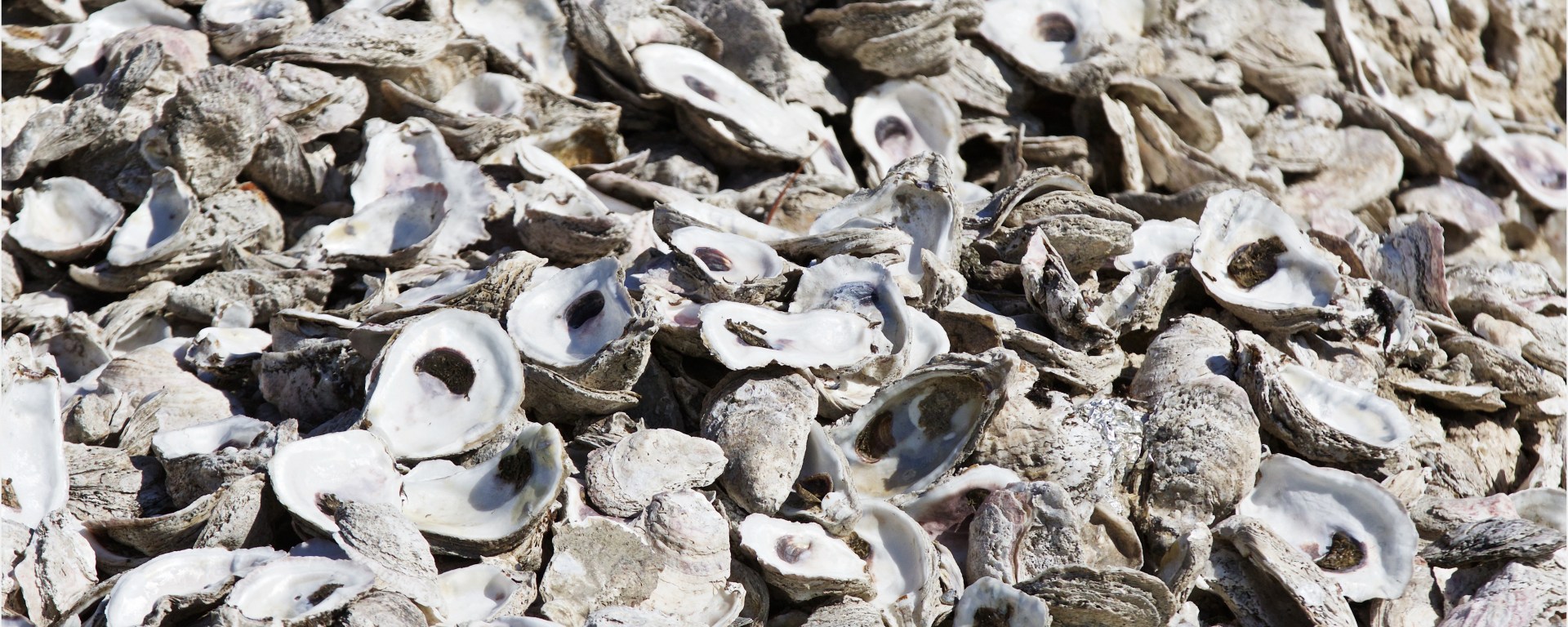
From gardens to genomes, state and conservation groups continue trying new approaches to oyster restoration
by Sydney Cromwell
Eighty percent in 80 years. That’s how much of Mobile Bay’s oyster population is estimated to have disappeared.
It’s the same story all along U.S. coastlines, as decades of overharvesting, development and other human activity have catastrophically damaged oyster reefs and the industries and ecosystems that depend on them.
Despite signs of oyster population loss for several decades, most conservation efforts have ramped up only in the past 10 or 15 years. So far, they haven’t been enough to bring the oysters back to healthy levels.
Still, coastal residents, nonprofits and state officials are continuing to attempt new solutions and refine old ones, in the hope that some combination of these approaches might turn the corner on oyster recovery.
SOURCES OF DESTRUCTION
What’s true in real estate is also true in the life of an oyster: Location is key.
Once an oyster larva has attached itself to a surface and started growing its shell, it won’t move again. It’s subject to whatever conditions might come its way for the rest of its life.
“There are so many environmental conditions that have to be just right for oysters,” said Scott Bannon, the director of the Marine Resources Division of the state’s Department of Conservation and Natural Resources.
Some destructive forces are natural, like hurricanes or the oyster drill, a predatory snail that bores through the shell to eat the oyster inside. Scott Rikard, who works at Auburn University’s Shellfish Lab, said droughts in the late 2000s raised the water’s salinity, making conditions just right for the oyster drill to spread fast.
“They just started moving up the bay and consuming everything in their path,” he said.
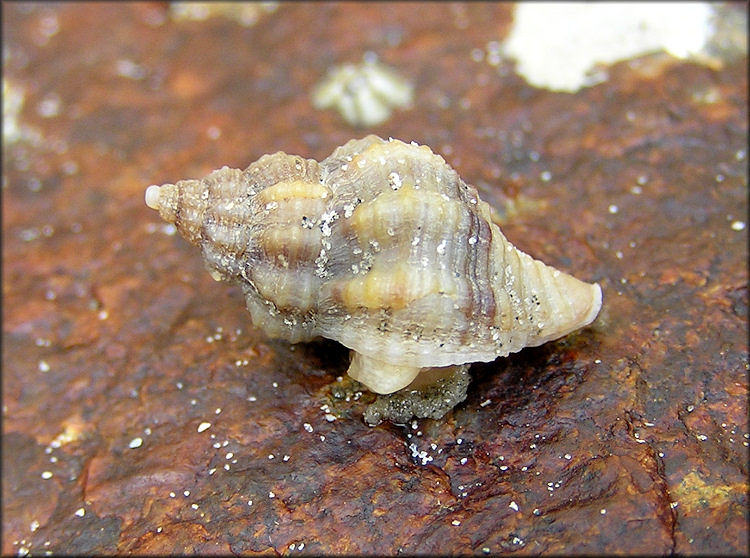
Water depth is another factor. Reefs that are set too deep underwater may not have enough tidal movement to keep the water oxygenated. Those that grow in the shallower water of Mobile Bay’s estuaries, where the rivers meet the Gulf, are better protected from the oyster drill but are more susceptible to changing levels of freshwater and sediment coming downstream.
A heavy rainfall that floods Central Alabama could end up lowering the salinity of the water around an oyster reef, while sediment can partially bury the oysters and prevent them from filtering properly. Both situations can be fatal.
“It’s almost like you’re in a fight with Mother Nature” when doing oyster restoration work, according to Kayla Boyd, the oyster project manager at Mobile Baykeeper.
However, people, not nature, are the real driving force behind oysters’ falling populations.
Nearly two centuries of unregulated harvests meant many areas were overharvested, wiping out not only the existing adult oysters but also future generations, which often land on top of existing oysters to begin their own growth into adulthood.
“If we harvest all of the oysters — or even just a significant percentage of the oysters — out of the region, then the next generation has no place to grow,” said Hilary Stevens, the coastal resilience manager at Restore America’s Estuaries, which works in Mobile and other places along the coast.
When hurricanes like Ivan and Katrina displaced some oystermen from Mississippi and Louisiana in the 2000s, Rikard said, they started harvesting in the undamaged areas, adding intense pressures to some local reefs.
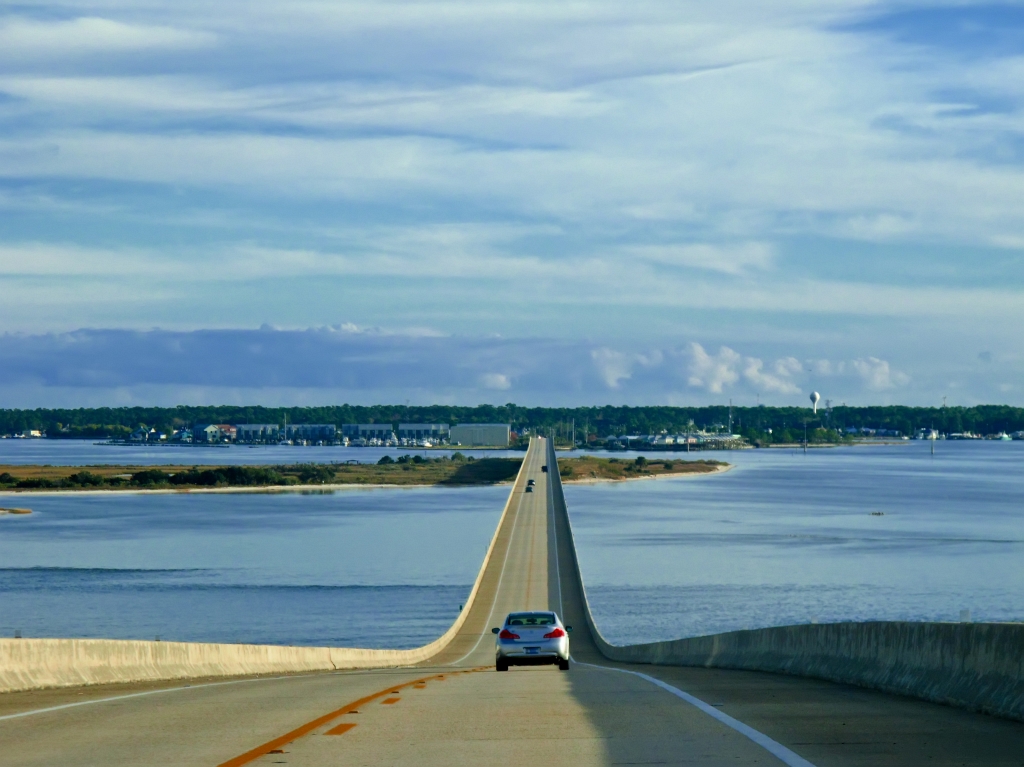
Building the Mobile Causeway and dredging ship channels have both changed the water flow, temperature, sediment and nutrient levels in the bay, Bannon said.
Old oyster reefs were also mined to use the shells as material for concrete, chicken feed and other manufactured products, destroying spawning areas and destabilizing the bottom of the bay. According to estimates from Mobile Baykeeper, nearly half of the bay’s historic oyster reefs were mined between 1946 and 1982.
Pollution from development and industry are another source of long-term harm, Boyd said. The 2010 Deepwater Horizon oil spill caused an estimated loss of 4 billion to 8 billion oysters in the Gulf, according to Pew research.
Climate change, which is caused by human activity, has brought a host of complicated variables to oyster survival, Boyd said, including upstream stormwater flooding, rising sea levels and changes to surface water temperatures and acidity.
For example, she said, rising seas may raise the salinity in the bay, which is better for oyster growth but also encourages oyster drills. More acidic water can erode oysters’ calcium-based shells and is especially damaging for “spat,” the larvae that are just beginning to create their shells, Rikard said.
Organizations like the Dauphin Island Sea Lab and the Auburn Shellfish Lab are looking into these variables, Boyd said, but it’s hard to predict where and how climate change’s impacts will present themselves, “and by the time it happens, it’ll be too late.”
Bannon said he often hears from longtime oyster harvesters about reefs that were once popular to harvest but are now basically dead.
“All those things over the past 100 years have changed the environment, and we have to adapt to that,” he said.
In the 1990s, when Rikard was beginning his career in oyster research, there were periods where the oyster reefs would die back for various reasons, but they tended to bounce back, he said. At the time, Alabama’s oyster harvesting season was open year-round.
But all these accumulated pressures meant that by the end of the 2000s, “the reefs were in really poor shape,” Rikard said. In 2011, Alabama switched to a more regulated harvest season, beginning in October and ending in April, or earlier if the state determines that its reefs can’t support the harvest.
“That made it much harder for folks to be oystermen,” Rikard said.
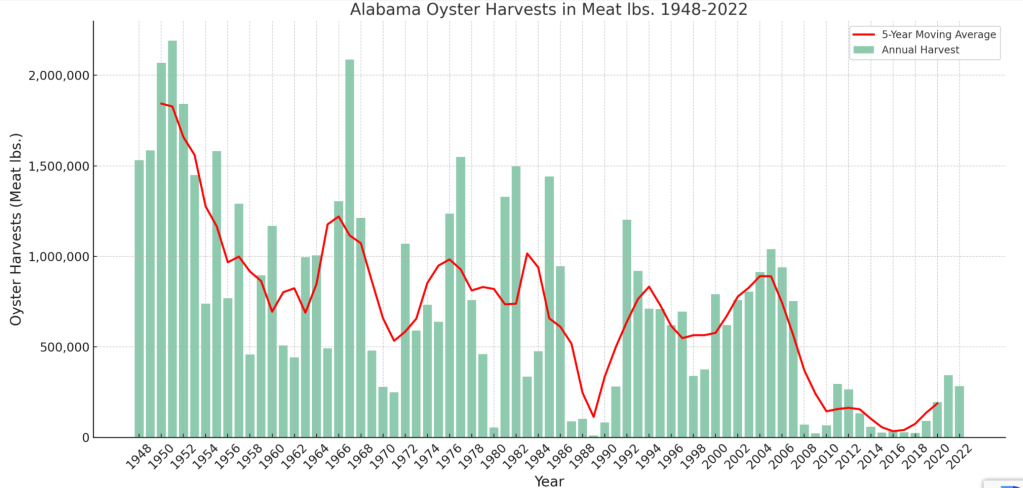
In the 2018-2019 season, Alabama didn’t allow harvesting at all because oyster populations were so low. While state data shows that oyster harvests have always had peaks and valleys, since 2007 the harvests have been consistently smaller than almost any year back to 1948.
“We would like to get back to where we’re harvesting most of that time period and we’re still sustainable,” Bannon said.
‘FOUNDATIONAL CRITTERS’
The collapse of the Gulf oyster population would mean more than the loss of a seafood menu item.
A roughly $125 million industry depends on oyster harvesting and farming throughout the Gulf, including around $11 million in wild harvests and more than $3 million in farm harvests in Alabama. That industry includes not only harvesters and farmers, but also restaurants and companies that shuck, package and distribute the oysters.
Oysters are also a “foundational critter” for the plants and animals living in Mobile Bay and its estuaries, Bannon said.
“We have to have oysters in our system to have a healthy waterway, to have healthy fisheries and, again, to provide a tasty product to us humans. So they provide benefits on multiple levels,” he said.
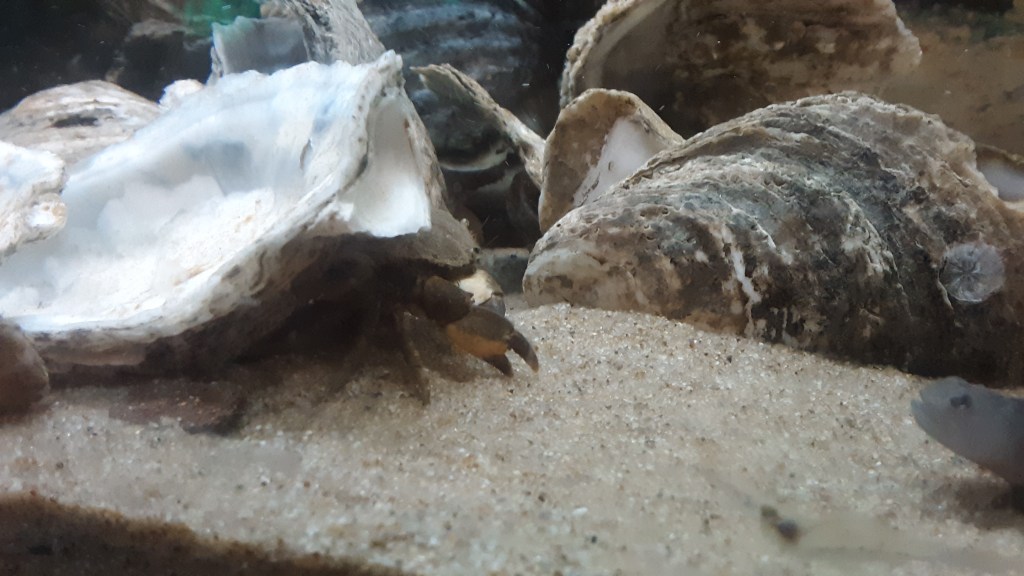
Oyster reefs stabilize the soft, muddy floor of the bay and break up the energy of incoming waves, slowing erosion and shoreline damage from storm surges.
They are also filter feeders, which means they can clear algae, excess nutrients and other materials from the water just through their natural eating processes. An adult oyster can filter up to 50 gallons of water per day.
“Oysters are absolutely critical to the health of an estuary,” Stevens said. “… A healthy oyster reef can filter an enormous amount of water.”
The presence of oyster reefs and their water filtration in turn create habitats that encourage healthy seagrasses, fish and other aquatic species, according to the National Oceanic and Atmospheric Association.
“If we continue to see declines in oyster reefs, that has cascading effects to other animals,” Rikard said.
HARVEST MANAGEMENT
Oyster restoration starts with protecting the reefs that still survive. And, according to Bannon, Alabama has one of the best systems in the Gulf for tracking oyster harvests and their impact on reef health.
“We manage to a level that no other state does,” he said.
After the Deepwater Horizon oil spill, the state created a strategic framework for oyster restoration that Bannon said guides its management of harvests and conservation efforts.
“The state of Alabama does a phenomenal job of monitoring oyster reproduction,” Alabama Coastal Foundation Executive Director Mark Berte said.
The Marine Resources Division’s approach begins with sonar mapping and a series of dives to survey the oyster populations in Alabama’s waters during the summer, Bannon said. The surveys give state officials an idea of how many adult, juvenile and spat oysters are growing on various reefs, as well as the availability of shells, rocks and other “cultch” material for larvae to grow on, he said.
The state focuses its survey efforts on the reefs that are open for commercial harvests, though they do check on some of the non-harvestable reefs as well, Bannon said.
The data from those surveys help MRD staff decide the quantity of oysters that can be harvested sustainably, not only in the upcoming season, but also in the year or two that follow, once the current juvenile and larval oysters have reached their adult size, he said.
“If we harvest all of the oysters — or even just a significant percentage of the oysters — out of the region, then the next generation has no place to grow.”
Hilary Stevens, Restore America’s Estuaries
The most recent season ended Dec. 31, with around 25,000 sacks of oysters (around 2.1 million pounds) collected, Bannon said. In the past few years, the state allowed more than 30,000 sacks to be harvested each season, he said, but the state set the 2024 harvest cap lower after seeing some concerning conditions during its surveys.
“The last two years we have not seen good spat counts, and so that’s concerning for us,” Bannon said. Surveys in 2023 also found high numbers of oyster drills, which Bannon said carried over into the 2024 season and reduced how much could be sustainably harvested.
Once the oyster harvest season begins in October, Bannon said the state uses a tagging and reporting system to track the quantities that harvesters are bringing in, and where they’re harvesting from. If they reach the sustainable threshold too quickly, Bannon said the MRD can choose to end a harvesting season early.
“Every single day, we know a tremendous amount of information about what’s going on out on the reef” from the reports that harvesters bring back about how many oysters they caught and where they were harvesting, he said.
The MRD also uses a grid system to open and close reefs for harvest as conditions change, he said. The grid is available to harvesters through the department’s website and an app, Bannon said, so oystermen know on a daily basis where they’re allowed to harvest.
Sections of the grid can be closed if they’re being harvested too heavily, even before the season ends, or to be designated as an oyster nursery, he said. The MRD also consults with the Alabama Department of Public Health and can close a grid section if water quality or other concerns might make the oysters unsafe to eat, he said.
“We do not take the decision [to close a reef] lightly,” he said.
Boyd described the state’s grid system as “incredibly impressive and [it] has successfully straddled keeping the public reefs functional while also keeping an important industry alive in Alabama.”
“We’ve made tremendous strides in oyster farming and oyster aquaculture. That wasn’t intended to displace the harvest of natural oysters, but it certainly may help in reducing the pressure on natural populations.”
Scott Rikard, Auburn University Shellfish Lab
While there are harvesters who sometimes try to gather oysters from closed grids or under-report their catch, Bannon said the state has enforcement officers to catch these occurrences. He believes the state’s harvest data is accurate, by and large.
“We have the most detailed harvest program in the country because I wanted to maximize the benefit to the catchers and because I wanted to know to the smallest detail possible how areas are doing,” Bannon said.
Rikard said deciding harvest quantities is a “careful balance” between the impact on the oyster reefs and the impact on the harvesters who depend on the oysters for their income. Harvesters tend to understand the need for management and restoration work, he said, but “sometimes they want to push the limits on harvest and tend to push regulators to open areas to harvest.”
The MRD meets with oyster harvesters each year to talk about harvest limits and sustainability.
“I completely understand their frustration if they would like to see the reef rebuild faster, but I think they also have the understanding that our goals and their goals are the same,” Bannon said. “… We want them to go to work, we want them to support their families, we want Alabama oysters in the market.”
REEF PLANTING
One of the earliest approaches to oyster restoration was replacing the reefs of shell material that had been destroyed. The state of Alabama first started these replacements, called “cultch planting,” in the 1970s, according to the state’s oyster restoration strategic framework.
Planting new reefs continues to be part of oyster restoration today, even though the DCNR acknowledged in the oyster plan that “despite these efforts, Alabama’s oyster populations have not returned to historic levels.”
“The return on that was not great,” Rikard said of past reef planting efforts, which often had low survival rates.
Boyd, however, said creating new reefs still has a role in oyster restoration, since the lack of surfaces for oyster larvae to attach themselves to has been a critical obstacle for population growth.
Even a 1% survival rate for planted reefs still leads to more oysters living in the Gulf, Rikard said. There have been some self-sustaining reefs created through the state’s plantings and harvest management system.
“The more oysters we put out there, the more spawning stock there is,” he said.
Stevens, who works with Restore America’s Estuaries, said reef planting can look very different depending on its location and whether the reef will ever be harvested or is solely meant for conservation.
The new reefs can be made with oyster shells or other hard materials like limestone, she said, and they can be bundled or spread loosely depending on the erosion and tides that the reef will face. Some reef plantings include larval oysters already set on the materials (called “spat on shell”).
The Alabama Wildlife Foundation works with the state in cultch planting, and the two organizations planted about 77 acres of reef two years ago, Bannon said. Mobile Baykeeper is working on increasing its involvement in this and other restoration work as well, Boyd said.
Bannon said Alabama will use some of its Deepwater Horizon funding this year to develop trials of better reef planting approaches, such as elevating the reefs above low-oxygen areas or connecting existing reefs together with new material.
“We’re pretty excited about having that opportunity and that money,” he said.
He also sees the chance to build a potential oyster reef in Mobile County’s upcoming shoreline restoration project near the Dauphin Island Causeway. The project will build rocky breakwaters to protect the road and bring back the marshy areas that once existed along the shore.
Inside those breakwaters are plenty of nooks and crannies where oyster spat could be planted and grow safe from many of their predators, Bannon said.
“There’s a lot of good stuff going on in that,” he said.
At Auburn’s Shellfish Lab, scientists are experimenting with the best ways to attach larvae for the spat on shell method, Rikard said, such as trying out smaller shell chips, which are easier to transport and plant, or letting the larvae grow larger in a hatchery first.
“We’re trying to get them up to a size where they have a little refuge from predation, so when we do plant them on the reef, they’d have a good chance of survival,” he said.
In a recent project in Little Dauphin Bay, Rikard said, the lab planted several plots of reef material, some with spat attached and some without. Little Dauphin Bay was once a productive oyster harvesting area, he said.
“We wanted to see, could we jump-start that area back?” he said.
After the first year, Rikard said, the reef plots that relied only on natural setting of larvae were doing nearly as well as the plots that had hatchery-raised spat placed on them.
“I think we’ve shown that there’s plenty of oyster larvae available, that you don’t necessarily have to jump-start it with hatchery-produced oysters, though it certainly helps,” he said.
While reef planting can create new opportunities for baby oysters, they’re still susceptible to all the other factors that can imperil the species. A poorly timed hurricane or unexpected infestation of oyster drills can wipe out an entire reef project.
For instance, oyster drills showed up at Auburn’s Little Dauphin Bay project, which wrapped up in May 2024, Rikard said. Attempts at trapping the snails “did not seem to make a dent in the population,” he said.
The reef plots are still producing new generations of oysters, Rikard said, but “populations were never as high as they were initially.” The Shellfish Lab will try to learn from what they saw in Little Dauphin Bay for future reef planting projects, he said.
Since taking on her role as oyster projects manager for Mobile Baykeeper, Boyd said she’s had conversations with others in oyster restoration about whether reef planting is effective enough. It “depends on who you ask on why things fail,” she said, but she believes more long-term monitoring could help oyster conservationists understand what is or isn’t working after the reefs have been planted.
“You can put structure material down, you can plant live oysters, and that’ll take a good handful of months to get established. The problem is who’s doing the survey work afterward,” Boyd said.
She said some organizations are now factoring multiple years of monitoring and management into the budgets for their restoration work, which she thinks will lead to greater success for the projects.
Bannon said the Marine Resources Division doesn’t have the staff to monitor its reef plantings, but students from the Auburn Shellfish Lab and Dauphin Island Sea Lab can sometimes fill that gap with their own research and monitoring work, with funding from the state.
SHELL RECYCLING
Reef planting projects require lots of old oyster shells to put back in the water. That’s where shell recycling comes in.
The Alabama Coastal Foundation began a shell recycling program with coastal-area restaurants in 2016, Berte said, so the shells could be reused rather than end up in a landfill.
“The best and highest use, again, is to get these shells back out into Alabama’s water,” he said.
The recycling program started with a two-year grant from Deepwater Horizon funds and a set of pilot restaurants on the Mobile Causeway, Berte said. Before the two years were up, however, the ACF had already surpassed its participation goal and had become self-funding.
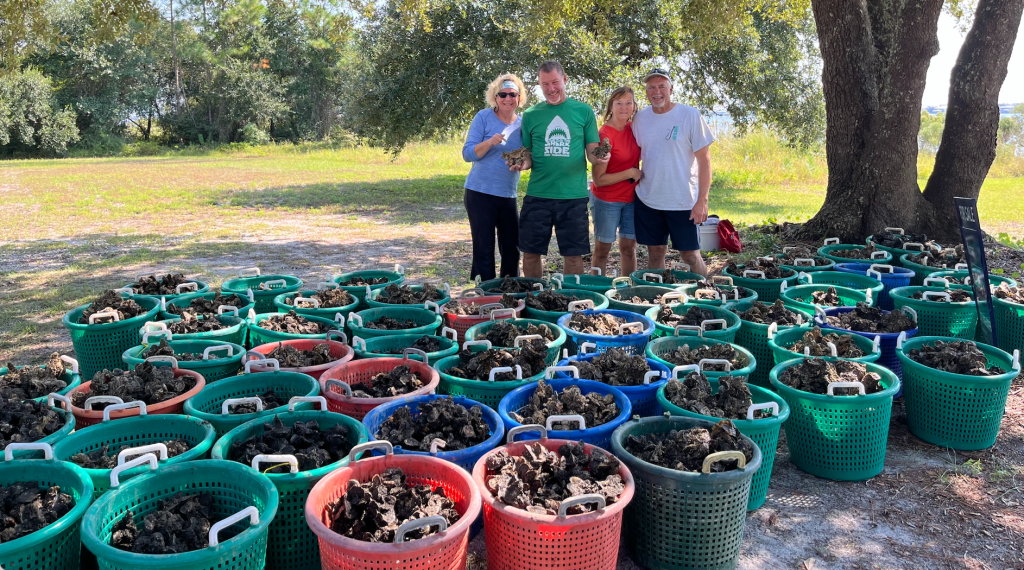
Since then, the ACF has continued to build on the recycling program and now has 18 restaurants involved in Mobile and Baldwin counties, he said. As of January, the foundation reports that it has collected more than 25 million shells and used them to plant more than 95 acres of reefs. The most recent shell deployment happened at the end of 2024, Berte said.
“We feel like we’ve got a good foothold, and now it’s about raising the awareness as well as the funds for those other restaurants to participate,” he said.
Participating restaurants collect leftover oyster shells in a special container, separate from their other trash, which the ACF then collects. The shells are taken to a state-owned property to “cure,” letting the sun destroy bacteria or other potential contagions, before they can be used for reef plantings.
“They were consumed in local restaurants, then that shell was cleaned and replanted, so that shell made the complete cycle,” Bannon said.
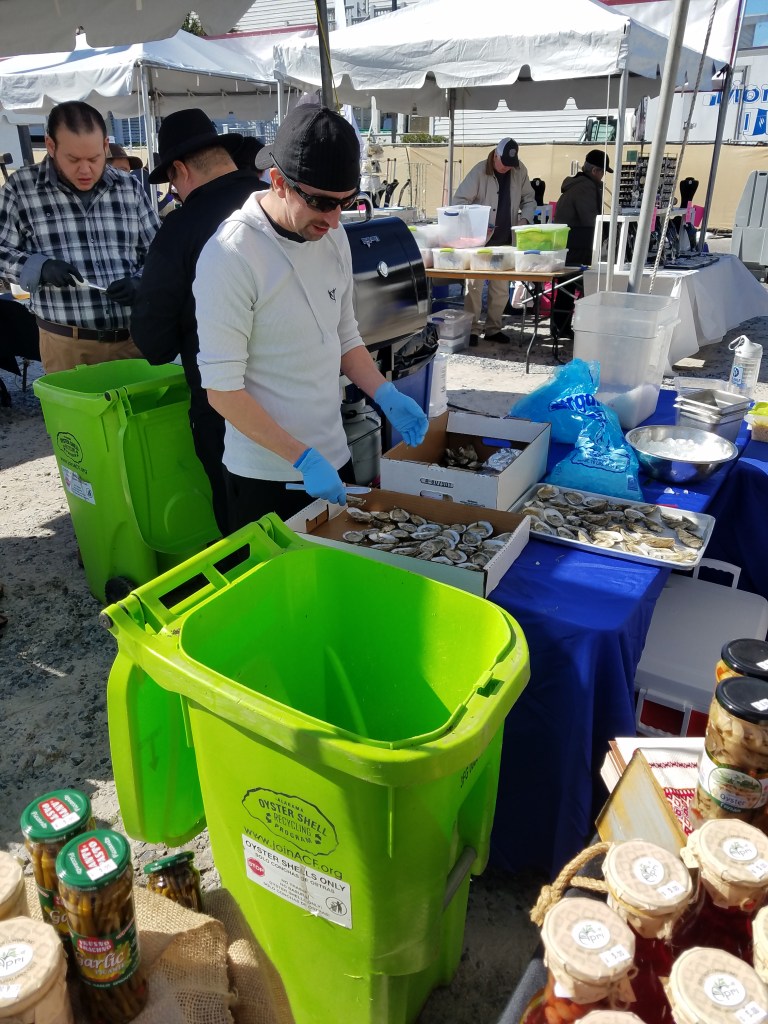
The shell recycling program charges restaurants a fee to cover the costs of handling and transporting the shells, Berte said, which is one of the main reasons why some restaurants choose not to participate. The ACF seeks out grants and solicits donations through its website to help cover those costs, he said.
“If we could pay for the entire thing through either grants … or through private donations, I’m sure that we would have every restaurant that’s eligible to participate,” Berte said.
In 2023, Restore America’s Estuaries received a three-year, $5 million grant through the federal Bipartisan Infrastructure Law to support five shell recycling programs on the coast, including the ACF’s program. With that funding, Berte said the ACF wants to expand its restaurant participation and educate more customers about the importance of shell recycling.
Stevens said a big part of the grant is creating a “community of practice” among the shell recycling programs, so they can help each other solve problems and try new ideas. The ACF has already shared some of its materials to help the newer recycling programs get started, Berte said.
The organizations are based in Galveston, Mobile, New Orleans, Pensacola and Tampa. Despite the differences in those cities’ restaurant scenes and shell recycling programs, Stevens said they share many of the same problems.
Encouraging restaurant participation and offsetting their costs is a constant challenge, she said. Restaurants are often interested in participating, she said, but they deal with thin profit margins, especially if weather interrupts their seafood supply, and constant staff turnover. “Managing those partnerships is definitely a not-insignificant part,” Stevens said.
Training restaurant staff to recycle the shells is another hurdle, Stevens said, and some restaurants have complained about the smell the recycling bins produce while waiting for pickup. A few restaurants in Tampa tend to drop out of the recycling program during the hot summer months, when the smell is most intense, and return to it in the fall, she said.
Despite these issues, Stevens said the restaurants that do participate are eager to let customers know about their shell recycling programs. Creating posters, table materials and coasters to promote the recycling programs has been another ongoing task for Stevens.
“The restaurants that participate, really, they get it. They understand that their customers would like them to do more for the coastal environment here,” Berte said.
Other frequent topics of discussion among the five organizations include finding volunteer labor to move the shells and handling the odor of shell-curing piles, which can attract flies and animals like feral hogs, Stevens said. The ACF is fortunate to be able to use state property for its shell storage, she said, but some of the other organizations have to worry about disturbing their neighbors.
“Coasters and feral hogs are not what I expected to be talking about when I took on this project, but those are the on-the-ground issues we’re encountering,” Stevens said.
More than a year into the grant program, she said, the organizations no longer call Restore America’s Estuaries first when they run into problems. They call each other.
“They’ve all got answers. This is stuff they’re all dealing with,” she said. “… That’s the whole point. We’re building a community of practice, getting these folks networked.”
“The restaurants that participate, really, they get it. They understand that their customers would like them to do more for the coastal environment here.”
Mark Berte, Alabama Coastal Foundation
The grant program is still too new to tell if the recycled reefs are producing new generations of oysters, Stevens said, but Restore America’s Estuaries and its partner organizations will keep monitoring those reefs through the remainder of the grant.
Stevens said they brought in experts to create easy-to-use monitoring protocols, in hopes that the five organizations will be able to keep collecting data about their planted reefs even after the grant funding ends.
She also plans to seek more grants in the future to support shell recycling programs in smaller coastal communities that don’t have well-established nonprofits like the Alabama Coastal Foundation to run them.
“We really see a need for this kind of work throughout the region,” she said.
OYSTER GARDENING
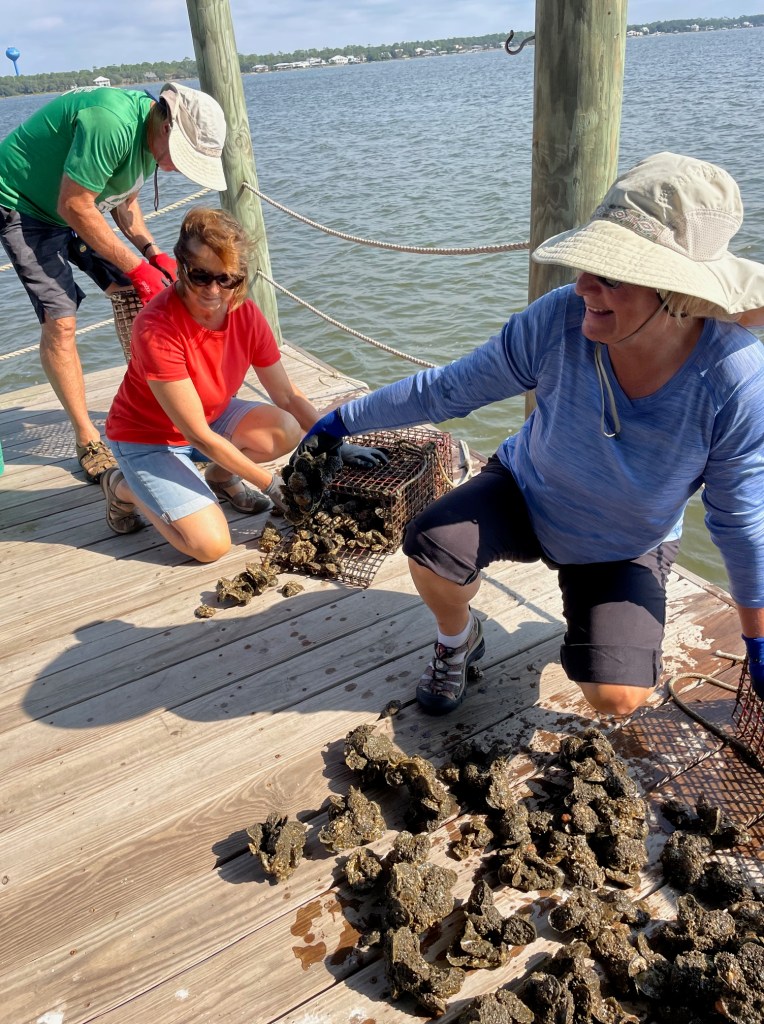
In the community of Little Lagoon, cages full of oysters hang off many of the homes’ private piers. These “gardens” are meant to give oysters a head start at life by protecting them during their most vulnerable stages.
The Auburn Shellfish Lab’s oyster gardening program works with volunteers who own waterfront property along the coast. Each May, the lab provides volunteers with cages, which are filled with shells — including some from the ACF’s recycling program — that already have oyster spat planted on them, Rikard said.
The “gardeners” hang these cages in the water off their piers or seawalls and tend to them for about six months, he said, and then the lab takes the young oysters and plants them on existing reefs.
“What that program does is allow the oysters some protection from predation” while they grow, Rikard said. “A large number of those oysters get at least one year to spawn and add to the natural reproduction of oysters.”
Oyster gardening in Mobile Bay began in 2001, according to the Mississippi-Alabama Sea Grant Consortium. Since then, MASGC has recorded more than a million oysters grown by gardeners in Mississippi and Alabama.
Mobile Baykeeper also participates in oyster gardening, Boyd said, and it is working on expanding its program. The Baykeeper’s goal is to plant 500,000 adult oysters on reefs by 2027.
Little Lagoon’s oyster gardening program started in 2017. Laurie and Tom Eberly, who run the program, said it has produced more than 366,000 oysters in those seven years.
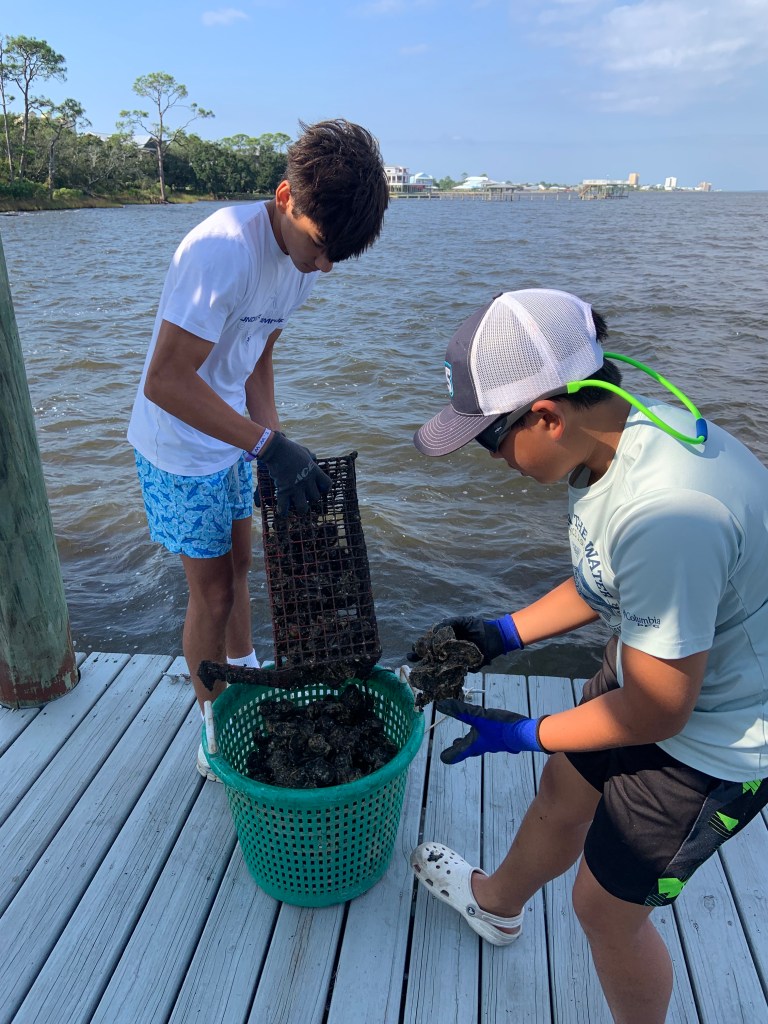
Waterfront owners aren’t the only participants, Laurie Eberly said. Some of their neighbors who don’t have a pier will instead volunteer to help another gardener maintain their oysters. Students at Gulf Shores High School have also participated since 2019, she said.
“It is so cute watching those kids. They are into it,” Laurie Eberly said. “We really love that the students in our community are so invested.”
The most recent season was a record-breaking one for Little Lagoon, she said, with volunteers collecting 87,000 oysters from 57 sites around the lagoon in 2024. This was also the first year that the oysters harvested from Little Lagoon’s gardens were planted on a sanctuary reef within the lagoon rather than being planted at other sites.
“The goal is to keep these big, healthy oysters here and have them spawn as they will and replenish oysters around the lagoon as nature would have it,” Laurie Eberly said.
While the oyster gardens are active, she said, volunteers have to monitor their health and watch for signs of oyster drills or other threats. They lose quite a few oysters each year to the snails, especially if a cage rests on the lagoon bottom.
“The little drills, they’ll kill a cage in a couple days,” Tom Eberly said. “… If a cage is on the bottom and you pull it up and it has 30 of those little rascals on there, it’s gone.”
So far, the oyster drills don’t seem to have affected the lagoon’s sanctuary reef.
“We know it’s a building process, and it’s going to take years to get it established,” Laurie Eberly said.
The gardens also attract beneficial species to the lagoon, particularly young fish seeking the protective reef habitat. The Eberlys spot sea squirts, crabs, goby, tripletail, mangrove snapper and spadefish while checking on the cages, Laurie Eberly said. She hadn’t seen some of those species in the lagoon before the gardening program began.
“The oyster gardens are such wonderful habitats for other creatures,” she said. “… It’s so cool seeing these little things.”
Auburn scientists run experiments on oyster growing conditions in the gardens. In recent seasons, Laurie Eberly said, the Little Lagoon gardens have hosted research on diseases, the ideal distribution of oysters in the cages and whether exposing young oysters to predator hormones will cause them to produce thicker, more protective shells.
“The goal is to keep these big, healthy oysters here and have them spawn as they will and replenish oysters around the lagoon as nature would have it.”
Laurie Eberly, Little Lagoon oyster gardening program
Even though the gardens can be hard work, especially during the fall harvests, Laurie Eberly said most of her neighbors “fall in love with these oysters.” They also tend to get competitive about who can grow the most each season, she said.
“The whole community, I think, is really behind it and very excited about it,” she said.
The gardens and the new sanctuary reef are a chance to make a long-term impact on the health of Little Lagoon, Laurie Eberly said.
“This is our life, and our six grandchildren live within 15 minutes of us and they love this lagoon too, … so it’s important to us that this water be clean and healthy,” she said.
GENETICS
Oyster researchers aren’t just working on ways to build more oyster-friendly habitats. They’re also trying to build a better oyster.
Rikard said some of the Auburn Shellfish Lab’s experiments in oyster gardens, like exposing the larvae to predator hormones in Little Lagoon, have been attempts to grow oysters that are better equipped for survival. Similar research is also happening at the Dauphin Island Sea Lab.
But since the complete genome of the Eastern oyster has now been mapped, Rikard said, the Shellfish Lab can be much more precise and see results more quickly.
Scientists can test how oysters fare under different conditions in the lab’s nurseries, then pinpoint the genes that make an oyster, for instance, more resistant to disease or more tolerant of low salinity, he said.
Choosing and breeding oysters by genetic markers is more efficient than the previous method, Rikard said, which required researchers to choose oysters that appeared to have those traits and wait until their spawn reached adulthood to find out if the trait had been passed on to the next generation.
“That advances the science, it advances the possibilities of breeding better oysters very rapidly,” he said. “… You’re really making leaps ahead.”
The Auburn’s lab is one of several research organizations working on the U.S. Department of Defense’s Reefense project, Rikard said. Its goal is to develop oyster reefs as breakwaters that can protect shorelines around military bases.
The Auburn researchers’ contribution to Reefense is breeding oysters that are more disease-tolerant and grow faster, Rikard said, so they can populate the concrete reef structures. If the project is successful, it could be applied to other habitat creation and shoreline protection projects outside of the military, he said.
NURSERIES
Along with oyster nurseries like the Shellfish Lab, aquaculture farms also provide some of the larvae used in reef planting, oyster gardening and genetic research projects. Two million of the oysters that the state and the Alabama Wildlife Foundation have planted on reefs have come from oyster farms, Bannon said.
He also believes the farms themselves may be an oyster conservation solution.
Farm-raised oysters account for $3 million of Alabama’s oyster industry, according to the Alabama Cooperative Extension System. Like oyster gardens, farms are able to track and control growing conditions and protect their oysters from some threats, Boyd said. That means they usually have a better idea of the causes when things go wrong in their cages, as opposed to wild reefs that may not be checked for months at a time.
“They’re the people that see it firsthand,” Boyd said.
Alabama’s oyster farmers also tend to be “conservation-minded,” Bannon said.
“They’re very keen on doing things that are helpful for the environment and for their families, … so that’s a blessing for us that they have that mindset,” he said.
In 2019, the state Marine Resources Division developed plans to use around $2.7 million of Deepwater Horizon funding to build an oyster nursery at the Claude Peteet Mariculture Center in Gulf Shores, which already hosts hatcheries for certain shrimp and game fish species. The nursery would produce larvae for the state’s various restoration projects
However, as the MRD began testing the plan with a smaller hatchery project on Dauphin Island, they found that logistics like feeding and delivering the larvae were more complicated, and therefore more expensive, than they anticipated, Bannon said.
“It wasn’t making it cost-effective,” he said.
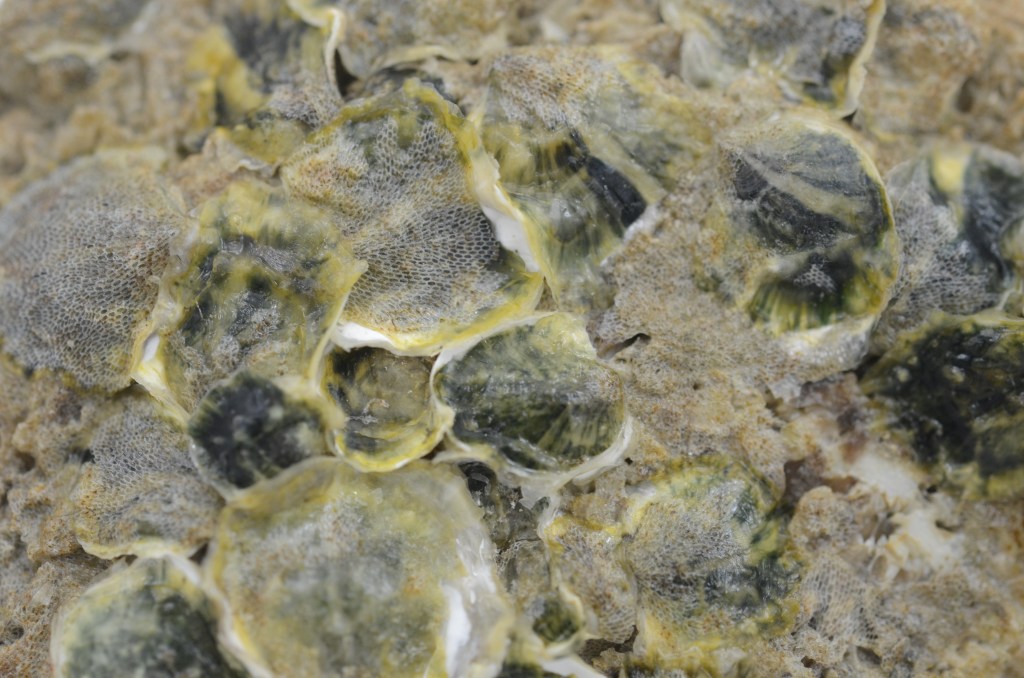
The plans for the Peteet Mariculture hatchery were shelved in 2023, but Bannon said the department is still seeking out “prime locations” for oyster nurseries along the coast. They’re also talking with oyster farmers who could partner with the MRD to run the nurseries, he said.
“I like that because that’s putting money back in the community,” he said.
Since oyster farms have already established locations with good growing conditions and figured out their logistics, Bannon said it could make more sense for the state to pay those farms to hatch additional oysters for restoration instead of running its own facility.
Bannon said oyster farms provide all the other benefits of oyster gardens, including local water filtration and “really phenomenal” fishing in the area.
The Shellfish Lab offers training and advice for oyster farmers, including those who are looking to get started in the business. MASGC also runs training and collaboration programs for the industry.
“We’ve made tremendous strides in oyster farming and oyster aquaculture. That wasn’t intended to displace the harvest of natural oysters, but it certainly may help in reducing the pressure on natural populations,” Rikard said. “… We’d like to see some of the harvesters get more into farming and less into the harvest of the natural populations.”
The MRD and the State Lands Division are working on plans to lease state-owned waterfront property for more oyster aquaculture, Bannon said.
“We are super supportive of it,” he said.
‘THAT WAS A GOOD JOB’
Each organization involved in oyster restoration is aiming at its own target, from Mobile Baykeeper’s plan to plant half a million oysters, to the Alabama Coastal Foundation’s goal to spread its shell recycling program to restaurants further inland, to the Shellfish Lab scaling up its hatchery production, to the state’s ambitions of having a large enough population to extend the harvest season.
With the variety of living conditions and threats that oysters face around the Gulf Coast, Rikard said the best way to success is probably to treat each local project as a distinct piece of the patchwork that adds up to oyster restoration, rather than trying to come up with a plan that’s fit for the entire coast.
“You can be much more targeted and focused, without having to look at the bigger picture of the whole Gulf,” he said.
Oyster restoration is an objective that has to be viewed with patience, Boyd said. It takes years of “difficult, very expensive, time-consuming” work before you can even tell if the project is going to be successful, she said.
“It’s going to be a sustained, long-term partnership to get that done,” she said.
Bannon said he doesn’t think Alabama’s oysters will ever get back to the population density of the early 1900s; too many areas are now unable to support oyster survival, and the funding for such an undertaking would be tremendous. However, he does feel confident that restoration efforts will lead to new self-sustaining reefs that can continue to support the oyster industry.
“I think we’re moving in a positive direction, and there will always be bumps in the road,” Bannon said.
“We’re getting better and better at it. I think the prospects are fairly good. It’s certainly a challenging environment with climate change, but it’s not impossible,” Rikard said.
In the next five to 10 years, Boyd said she feels “excited but anxious” about oysters’ survival prospects, but it’ll likely take longer to see the fruits of today’s labor.
“I feel good about it. I can’t wait to see what we learn from all these projects. I feel like the oysters are in good hands,” she said. “… Maybe 20 or 25 years down the line, I can look at the bay and say, ‘That was a good job.’”
Main article image courtesy of Alabama Coastal Foundation.
 Southern Science
One thought on “Pearls of wisdom”