
by Sydney Cromwell
Editor’s Note: This story was updated on April 5, 2025, with comments from the Alabama Department of Environmental Management.
In 2023, Alabama and the entire country seemed poised for a new era in coal ash cleanup.
The Environmental Protection Agency had made coal ash, a toxic byproduct of coal-fired power plants, one of its top priorities, with new regulations and more vigorous enforcement. That enforcement included decisions against the Alabama Department of Environmental Management and Alabama Power for their insufficient handling of the waste.
But with the inauguration of the second Trump administration and its reshaping of the EPA, coal ash regulation looks likely to lose its priority status, in favor of policies that make doing business easier for American energy companies.
With this change, groups like the Southern Environmental Law Center are concerned that the power industry will profit at the expense of communities living near coal ash dump sites, and it could potentially open the door to a catastrophic ash spill.
“I wish I could say that I thought that [prioritization of coal ash] would continue, but unfortunately I think what we’ve seen is all enforcement across the board is on the chopping block at the EPA,” SELC senior attorney Nick Torrey said.
DEREGULATORY SPREE
The regulations that the EPA approved in spring 2024 closed several important loopholes in how companies must handle and dispose of coal ash.
The agency tightened the limits on pollution in wastewater discharged by coal-fired plants and they determined that “legacy” ash ponds and landfills — those that have been closed or are no longer accepting waste — have to meet the same regulatory requirements as active facilities. Previously, legacy waste wasn’t covered under the EPA’s 2015 coal ash rules.
“Those are very important protections,” Torrey said.
Power plants that chose to retire early weren’t required to meet these criteria, leading some power companies to choose to move away from coal-fired plants or hasten their planned retirements.
After releasing findings at the end of 2023 that many coal ash sites were not in compliance with federal rules, the EPA in 2024 completed inspections of 107 coal ash units in 18 states and finalized six settlement agreements with noncompliant sites, along with conducting other assessments, negotiations and training activities under the new regulations.
Read more from Southern Science about Alabama’s coal ash waste sites.
Now under the leadership of Lee Zeldin, however, the EPA is following the White House’s directive to “Unleash American Energy.” The EPA has announced its intention to undo or reconsider many of the regulations on American power plants and the oil and gas industry, including air and water quality standards, limits on mercury emissions, wastewater regulations and mandatory greenhouse gas reporting programs.
The EPA has also announced that it wants to direct its enforcement officers away from energy companies.
Out of more than 30 deregulatory actions that the EPA publicized in March, two were related to coal ash guidelines, according to reporting from the environmental news outlet Grist. Those included reviewing the regulations on legacy coal ash ponds and sending more enforcement and permitting for coal ash to the state level rather than the federal level.
The EPA has stated that it plans to complete its review of legacy coal ash regulations, including the possibility of extended deadlines for power companies to comply, within the next year.
Grist also reported that the EPA wants power companies to focus more on imminent health threats rather than on preventative management or long-term threats, such as slow leaching of coal ash from containment. Environmental justice factors, such as race and poverty levels, also should no longer be considered in determining which coal ash disposal sites need intervention.
In January, prior to the inauguration, a group of power companies wrote a letter to Zeldin requesting a rollback of the Biden-era regulations intended to prevent coal ash from contaminating nearby groundwater or being used to build up land, both of which can be toxic.
According to Torrey, the regulations that the power companies want rolled back are “so fundamental and so common-sense” for safety.
“Obviously it’s a concern that the EPA might act on all or part of that request,” he said.
In March, the EPA also invited companies to apply via email to exemptions from Clean Air Act regulations, and a coal-fired power plant in Montana has already applied for a two-year delay to federal requirements to install modern pollution controls.
“I hope they do continue to enforce that and make it a priority because people of all backgrounds are affected by this.”
Nick Torrey, Southern Environmental Law Center
The New York Times has reported that some power companies are delaying their plans to retire coal-fired power plants, even though coal has been dwindling as an American energy source for years and is now more expensive to operate than building new renewable sources. One of several reasons they cited for the delays was that the power plants may no longer need to meet the stricter EPA emission and coal ash standards. According to the New York Times, two of Alabama’s coal-fired plants are still planning to retire as scheduled, while the other four have no plans for retirement.
The 2024 regulations have been under challenge since the EPA approved them, with legal cases filed by power companies and Republican states. Torrey said the power industry is “trying to advance a much weaker and less protective interpretation” of the EPA’s coal ash rules.
The SELC is among several environmental groups currently involved in defending the coal ash regulations against an industry challenge, which is being heard in the Washington, D.C., Circuit Court of Appeals, Torrey said.
The EPA has requested that the case be put on hold until June, he said, to allow the agency more time to review the issue.
Undoing EPA regulations requires more than the snap of a finger. If the EPA decides to deregulate coal ash and other pollution standards, it will take a lengthy process, including legal justifications for the changes and a public comment period.
It would be “a grave mistake to pull those back now,” Torrey said. “… That would be essentially undoing the heart of the important federal coal ash regulations.”
STATE PERMITTING
Now that the EPA has announced its intention to put more states in control of coal ash permitting, that puts Alabama’s permitting situation in some doubt.
In the summer of 2023, the EPA found that the state’s program, run by the Alabama Department of Environmental Management, was too lenient and was not meeting federal standards for regulating coal ash disposal and protecting public health.
“They are less protective than the federal rules, so that’s not going to be a substitute,” Torrey said.
The agency decided in May 2024 to deny ADEM’s permit program application.
At the time, ADEM officials said they planned to appeal the EPA’s decision, claiming that the federal agency hadn’t done its due diligence.
“ADEM is continuing to monitor the current situation and has not made a final decision regarding an appeal,” the agency’s public relations department said via email in April. “ADEM maintains that our CCR program meets all federal requirements and is as protective as the federal program.”
ADEM also said it is continuing to manage its existing coal ash permits and facilities are subject to both state and federal regulations “until EPA approves the state program to operate in lieu of the federal program.”
States aren’t required to run their own coal ash permitting program. However, the EPA said in March, during its announcement of the slate of deregulatory actions, that it would work with states to prepare their regulations and to submit applications for their own permitting programs.
So far, Georgia, Texas and Oklahoma are the only three states that have been granted their own programs, according to reporting from Grist. However, the EPA has promised action on North Dakota’s application by mid-May, with the intent for more states to follow.
PLANT BARRY CLEANUP
Enforcement actions at Alabama Power’s Plant Barry near Mobile are also now in uncertainty with the EPA’s changing priorities.
Alabama Power has been fined multiple times for groundwater contamination caused by failures to meet coal ash safety regulations. In 2023, the EPA gave notice that Plant Barry was in potential violation by allowing coal ash in unlined pits to be in contact with groundwater.
In September 2024, the EPA and Alabama Power reached a settlement agreement on what Torrey called “collateral issues” to the main violation. Alabama Power agreed to pay a fine and evaluate its groundwater monitoring program around the ash ponds and upgrade its emergency action plan.
However, the settlement did not address the main issue of the coal ash in contact with groundwater, which the EPA left open to later action. The unlined pits at Plant Barry contain more than 21 million cubic yards of ash.
Since the settlement, Alabama Power has decided to build an onsite facility to recycle some of Plant Barry’s stored coal ash into concrete, “which is a great way to safely reuse coal ash, get rid of the pollution by binding them up chemically and produce building materials that have less greenhouse gas than traditional cement,” Torrey said. According to Alabama Power, that facility will be in operation by the beginning of 2026.
The Tennessee Valley Authority is considering building similar facilities at its Colbert and Widows Creek power plants in North Alabama, along with other plants in Tennessee and Kentucky.
“Obviously, that’s a very good thing, and we’d like to see them do more of that. We consider that a partial victory,” Torrey said of the Plant Barry facility.
However, that recycling won’t use the entirety of Plant Barry’s coal ash waste, and Alabama Power still intends to cover the remaining ash in its existing unlined pits, rather than digging it up and relocating it to a lined landfill above the groundwater level.

Alabama Power’s closure plans at other sites around the state have used “cap in place” methods, which drain water from the pits and cover them with a liner on top, but not underneath the pond. Southern Science contacted Alabama Power to discuss the settlement and cleanup decisions, but did not receive a response.
Torrey said the SELC is suing Alabama Power over the safety issues presented by having coal ash in the groundwater at Plant Barry. Groups like the SELC and Mobile Baykeeper fear that Plant Barry could eventually have a catastrophic coal ash spill into the Mobile Delta, like previous ones in Kingston, Tennessee, and Dan River, North Carolina.
“It’s a ticking time bomb,” he said.
The SELC’s lawsuit began in 2022. While the District Court in Mobile dismissed the case on the grounds that the SELC doesn’t have standing to sue, Torrey said they have appealed to the 11th Circuit Court. The Circuit Court’s hearings took place this winter, he said, and they expect a decision in the summer.
If the circuit court rules in the SELC’s favor and reverses the decision, the lawsuit would return to the district court for a trial.
“We’re still fighting on that one,” he said.
PRIORITIES
Even though the EPA has indicated that it intends to reduce coal ash regulation, Torrey said he hopes the agency will see that coal ash pollution is a nonpartisan issue.
“I hope they do continue to enforce that and make it a priority because people of all backgrounds are affected by this,” he said. He has seen “support across the political spectrum for these protections and for coal ash cleanups, because no one wants this in their community.”
Torrey said the Southeast has cleaned up more than a quarter billion tons of coal ash. During the recent intense flooding caused by Hurricane Helene in North Carolina, he said coal ash lagoons near Asheville could have flooded and spread pollution into a community already dealing with severe storm damage, if the lagoons hadn’t been cleaned up two years prior.
“These coal ash sites are incredibly dangerous,” he said. “… Our region has been a national leader on this issue.”
Regardless of the EPA’s changing priorities, Torrey said coal ash cleanup and regulation will remain a top issue for the SELC.
“We’re still obviously pushing for robust enforcement of these common-sense regulations in Alabama and throughout the Southeast,” he said. “… This is a major source of industrial pollution. We have the tools to deal with it. We know what works.”
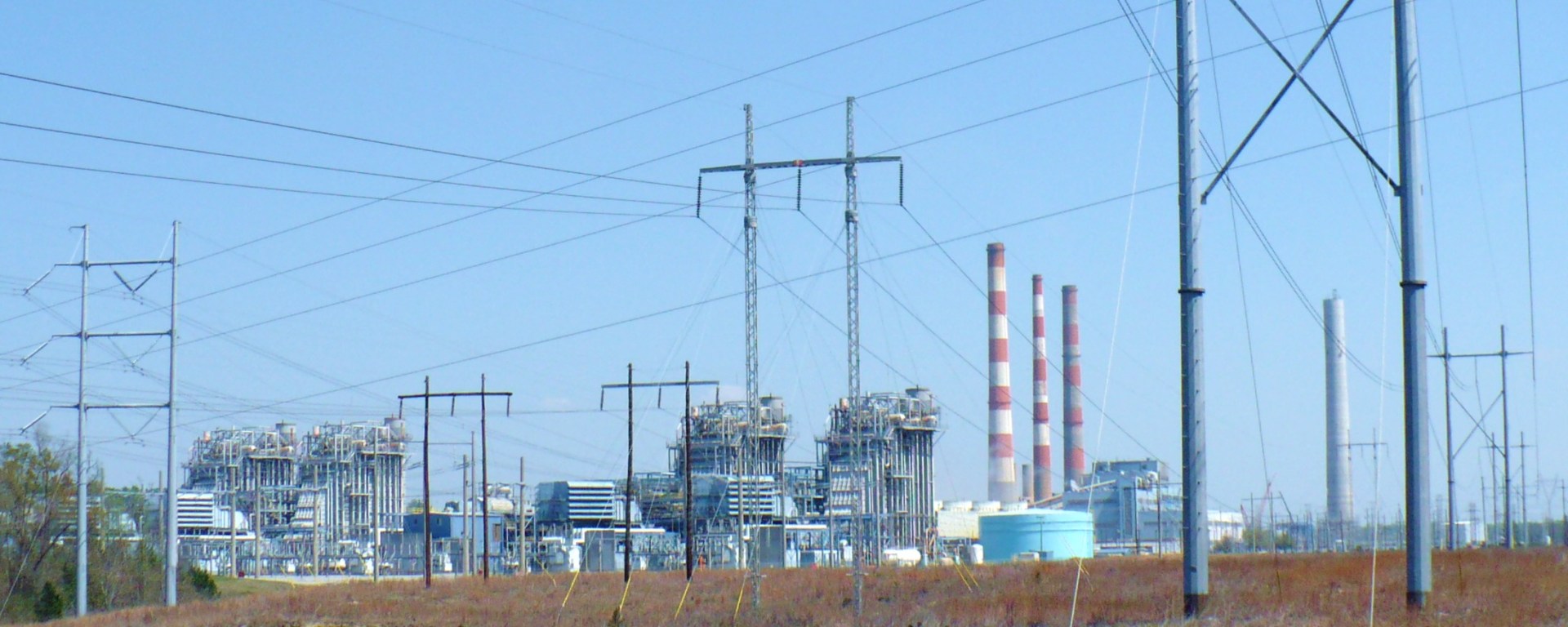
Main article image of Plant Barry by Altairisfar, via Wikimedia Commons.
 Southern Science
One thought on “Changes at EPA mean uncertainty for dealing with Alabama coal ash”