

Plants, habitat “corridors” added for first time
by Sydney Cromwell
Creating Alabama’s State Wildlife Action Plan takes more than a year of work by dozens of scientists and experts from across the state. There’s a reason it’s updated only once a decade.
After all, the SWAP is meant to be the go-to guide of every species that calls Alabama home, their relative rarity and how best to conserve them.
“It’s a big undertaking. It’s a really massive document,” said Kelly Homan, one of the leaders of the SWAP planning process.
This year marks the third iteration of the SWAP, which will be published in the fall. For the first time, the new SWAP will include plant species alongside animals, birds, reptiles, fish and invertebrates, as well as a set of conservation “corridors” meant to provide a new way of looking at endangered species protection.
WHAT’S IN AN ACTION PLAN
Each state and U.S. territory must put together a SWAP every 10 years in order to be eligible for federal funding to conserve species and habitats. The plans must meet certain criteria for identifying and responding to the state’s conservation needs and tracking their results.
The first SWAPs were published in 2005, and Alabama is currently working under the 2015 plan.
The SWAP’s primary purpose is to prevent a state’s species from becoming so endangered that they are “too rare or costly to restore,” according to the U.S. Geological Survey.
For each of the “Species of Greatest Conservation Need” within Alabama, the SWAP includes a profile with its preferred habitat, distribution throughout the state, threats to its existence, a rarity ranking and the actions that the state should take to manage and protect it. Critical habitats get similar profiles as well.
The Alabama Department of Natural Resources and the Geographic Survey of Alabama use the information in the SWAP to direct conservation projects, such as purchasing land for protect, choosing controlled burn sites or targeting a particular species for further study.
“It’s a big undertaking. It’s a really massive document.”
Kelly Homan, Auburn University
The SWAP is also a starting point for the state to work with partners on these projects, from federal agencies (like the U.S. Forest Service and U.S. Army Corps of Engineers) to conservation groups (like the Nature Conservancy and Forever Wild Land Trust) to other organizations (like the TVA and the Tennessee Aquarium).
“The SWAP will point out research needs, that could be plants or animals or habitats. So I think the idea is you could use the SWAP as a reference,” Homan said.
A pair of Auburn University researchers are working with the state to create the 2025 SWAP update: Katelyn Lawson, who is a fish biologist and environmental science professor, and Homan, a landscape architecture and environmental design professor who described herself as “the only non-scientist on the team.”
They have spent months working with biologists, botanists and other wildlife and conservation experts, then collecting and organizing that data to build the final plan.
“We’re really fortunate that we got to work on it,” Homan said. “It’s a unique thing, for sure, that doesn’t happen very often.”
The recommended rankings and maps are currently on the DCNR website for public comment until July 1. The SWAP will be finalized and published by the end of September.
ESSENTIAL AND ENDANGERED
Alabama is home to 24 plant species that are considered federally endangered, threatened or at-risk. So, why is 2025 the first time that these plants will make the SWAP list?
Lawson and Homan said there are two main reasons. First, adding a whole new category of life to the plan requires a lot of extra time and manpower.
“There’s just not enough people, enough man-hours, enough funding. I don’t think it’s that states care less about plants,” Homan said.
The second reason is that plant species usually don’t get as much conservation attention as their animal counterparts.
“Plants don’t get near the funding that animals do. This won’t correct that problem, but it will at least be a step toward one day giving them that funding,” Homan said.
Al Schotz, a botanist who runs Auburn’s Natural Heritage Program and has contributed his expertise to the 2025 SWAP, said “species of animals that people can relate to” are more likely to get the grants and donations that pay for their protection. And typically, a bald eagle or a gopher tortoise is more relatable than a prairie grass or wetland wildflower, he said.
“When people think of endangered species, they don’t think of plants,” Schotz said.
Getting plants added to the SWAP was “a long time coming” and took years of meetings with “anyone who would listen,” he said.
“For Alabama, it was certainly a slow burn. It took just a lot of prodding of the powers that be, if you will, to incorporate plants,” Schotz said. “… We’ve all turned grayer, and I think some of us have lost a little more hair, but it’s all in the name of conservation.”
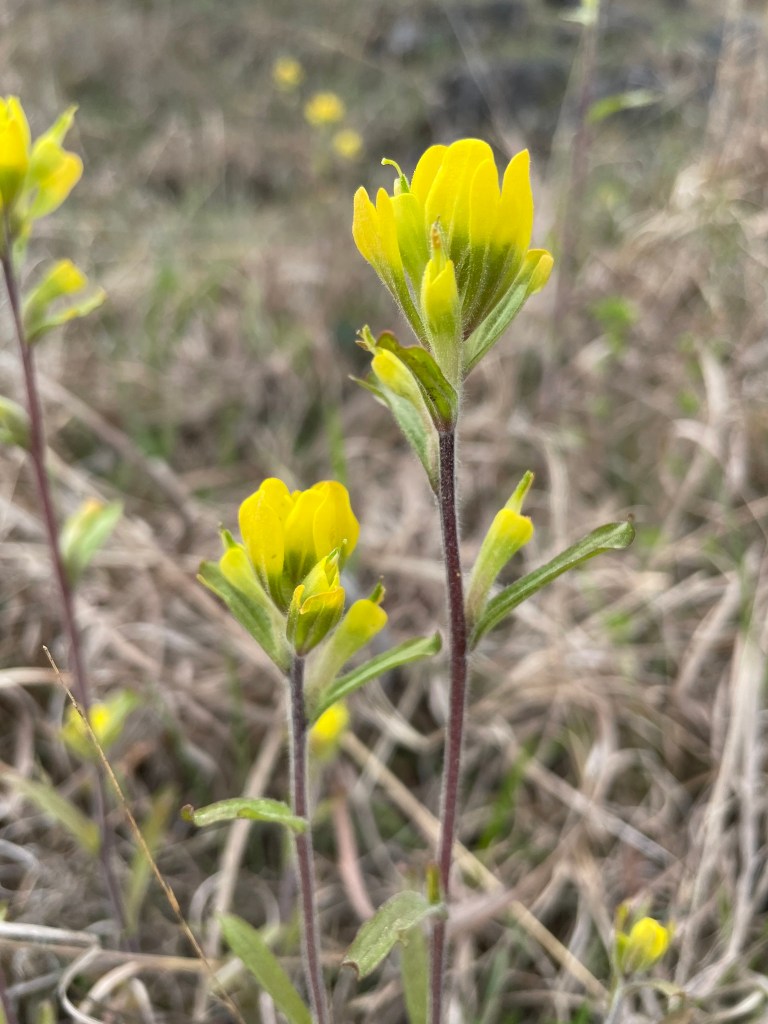
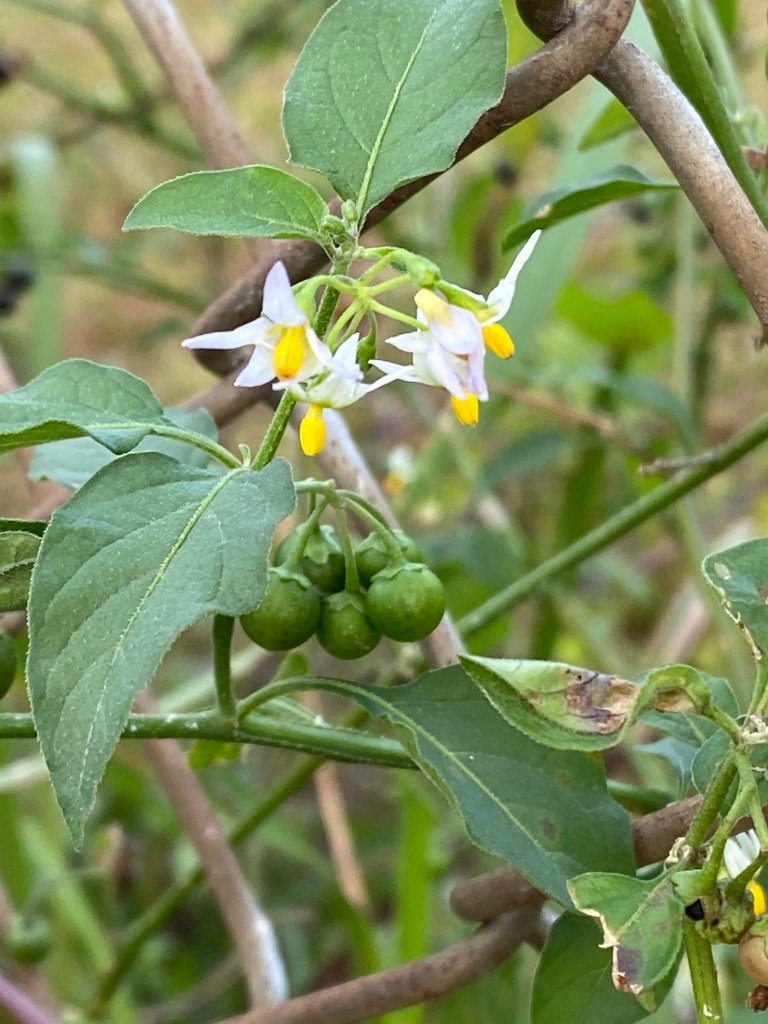
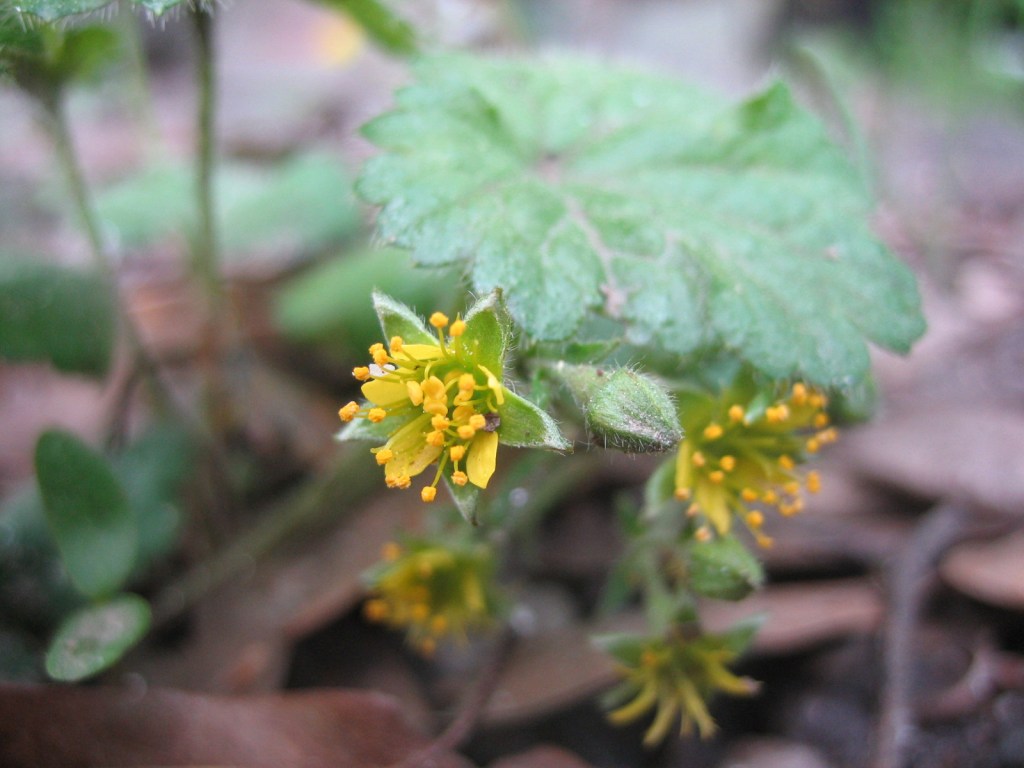
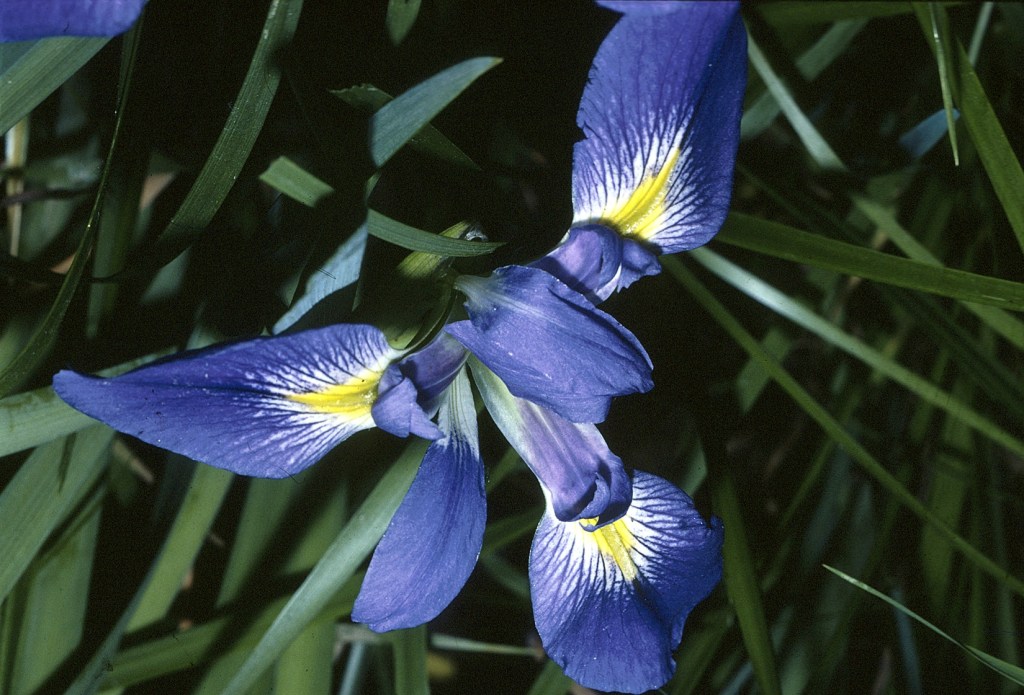
Lawson said several other states are also adding plants for the first time in 2025, and more Endangered Species Act funding has become available for plant species in the last few years.
“We’re hopeful that this will give plants more attention,” she said.
Schotz said he’s “cautiously optimistic that we’re moving in the right direction.” He would like to see state or national refuges dedicated to endangered plant species, much like the Wheeler National Wildlife Refuge is for sandhill cranes and other birds.
“It’s going to be the same concept, the same idea, but we’ll be conserving areas simply for plants, or with plants being the foremost — or I guess the poster child — in some of these preserves,” he said.
There are thousands of plant species in Alabama, and Lawson said the SWAP’s plant committee reviewed more than 600 of them, talking with botanists about their distribution throughout the state and when they were last seen, in order to categorize their rarity.
“That was a huge undertaking,” she said.
Around 300 of those species reached the two highest priority levels for conservation and will have species profiles in the SWAP, just like the rarest wildlife, Lawson said. For comparison, the 2015 SWAP had 366 total species of concern across all other animal life.
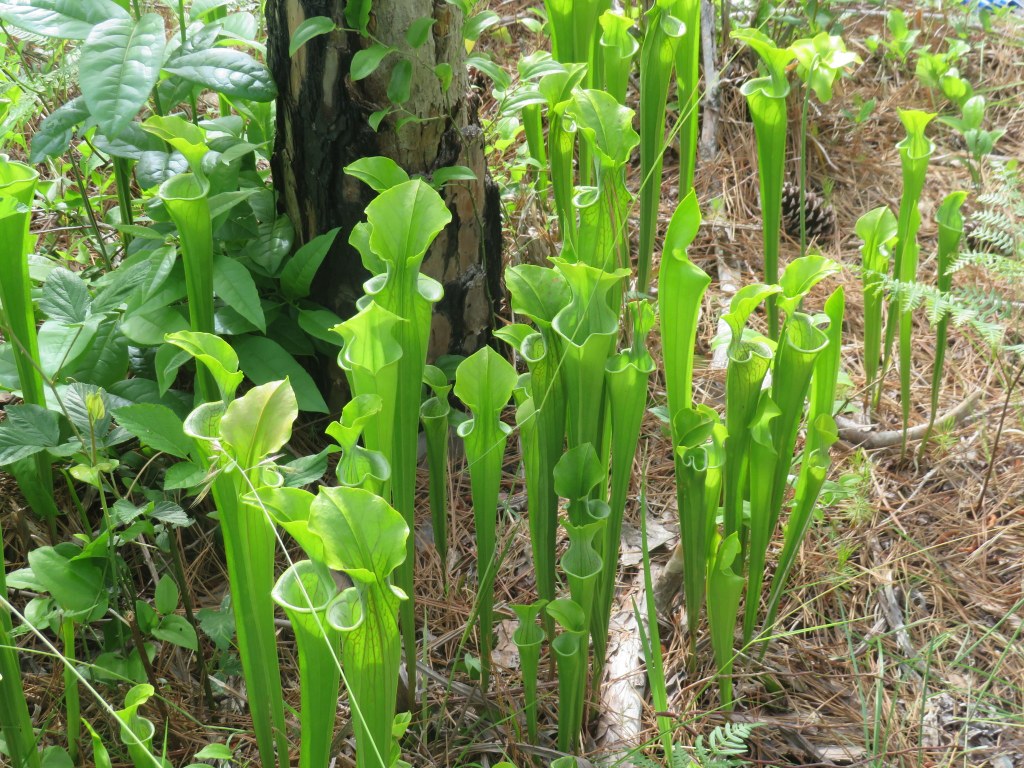
Some of the high-priority plant species are endangered across the country, like the green pitcher-plant. Others are plentiful in some states but rare within Alabama, Schotz said.
“We wanted to make sure we included species like that, with just one, two, maybe three populations in the state,” he said.
A few species, like the Cahaba lily or Rollins’ wild ginger, only have a handful of remaining populations.
“We’re hopeful that this will give plants more attention.”
Katelyn Lawson, Auburn University
The SWAP’s plant discussions also included identifying areas with the greatest significance for biodiversity and conservation. Schotz said the Black Belt prairies and the Bibb County glades are two such areas that are exemplary for plant diversity.
“They’re truly botanically unique or biologically unique, but they don’t get the recognition,” he said. “… You have to look more deeply at their beauty.”
Other high-biodiversity areas include the limestone and sandstone glades in northern Alabama, longleaf pine forests, cove forests along the Tennessee border and pitcher plant bogs, Schotz said.
“They’re really charismatic with the pitcher plants and the wildflowers, but of course there’s a lot of those areas that are just not protected,” he said.
Schotz said he has talked with some wildlife conservationists who fear that making more grants available for protecting endangered plants will mean less money for endangered animals. However, he said plants are often the earliest indicators of habitat destruction that will eventually impact wildlife, too.
Plants are highly sensitive to changes in the soil, water and air, as well as disturbances like human development, since they don’t have the ability to pick up and move if their location is suddenly less hospitable. So, a thriving plant population is usually a good sign of the ecological health of an area, he said.
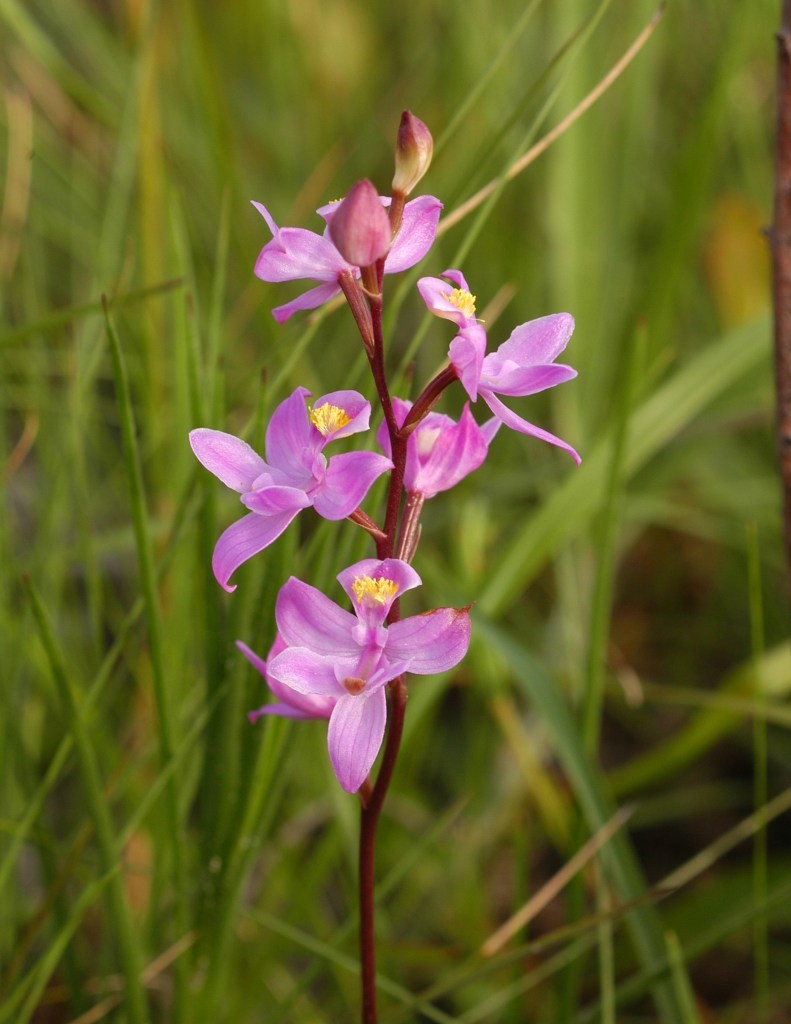
For example, Schotz pointed to the many-flowered grasspink orchid, a native species that can only bloom if a wildfire occurs at the right time of year.
“It really doesn’t get more sensitive than that,” he said.
Monarch butterflies are well known to be dependent on the milkweed plant, but Schotz noted that there are many other insect species, including pollinators, that depend on a single type of plant to survive. Those insects are often the backbone of the local food web for the more “relatable” species that get conservation attention.
“They’re essential to have, as they’re part of the chain of survival,” he said.
When a species like American chaffseed, which is a tall prairie grass, disappears from a longleaf pine forest, Schotz said, “you know that intricate web has been severed somehow. Maybe just one strand, but that’s usually the beginning of a downward trend.”
DESIGNING FOR ENDANGERED SPECIES
The conservation “corridors” being added to the 2025 SWAP are Homan’s brainchild. As a landscape architect, her previous work has included documenting Alabama’s loss of grassland habitats and studying ways to use landscaping for biodiversity.
The corridors are stretches of land that connect and extend important habitats across the state without interference from manmade development, Homan said.
“They’re meant to try and help species freely move around the state, because if a species needs to move and it can’t because we’ve built something, … it could really hurt the species,” she said.
Homan said projects like wildlife crossings over roads are a form of conservation corridor, reconnecting populations that were artificially separated from one another.
The SWAP will include a larger “vision” of corridors connecting a patchwork of habitats across the state, she said, but it can be a starting point for future projects like wildlife crossings.
“I see corridors as kind of a design tool,” she said.
JUDGMENT CALLS
What does it take to make a statewide, comprehensive conservation plan? A lot of meetings and a lot of mapping.
Lawson said that every taxonomic group — mammals, birds, fish, reptiles, amphibians, crayfish, gastropods (snails and slugs), mussels and plants — had its own committee of around 20 scientific experts. The committees would meet and go through the entire list of Alabama species to decide which ones had the greatest conservation needs.
For plants, Schotz said he was part of a panel of three botanists who came up with an initial list based on information from the Natural Heritage Program, national and global population levels and their own expertise on how the plants are doing and the threats they face within Alabama.
That list was then sent to other botanists to review and revise before an in-person meeting in Birmingham last summer.
“It was a two-day endeavor. It was slow and somewhat tedious at times. You know, I thought it was exciting because I never get to sit in the same room with these other botanists,” Schotz said. Usually, he’s working with botanists in the field or by phone, he said.
“There are a lot of people that were involved, and it all came together nicely,” he said.
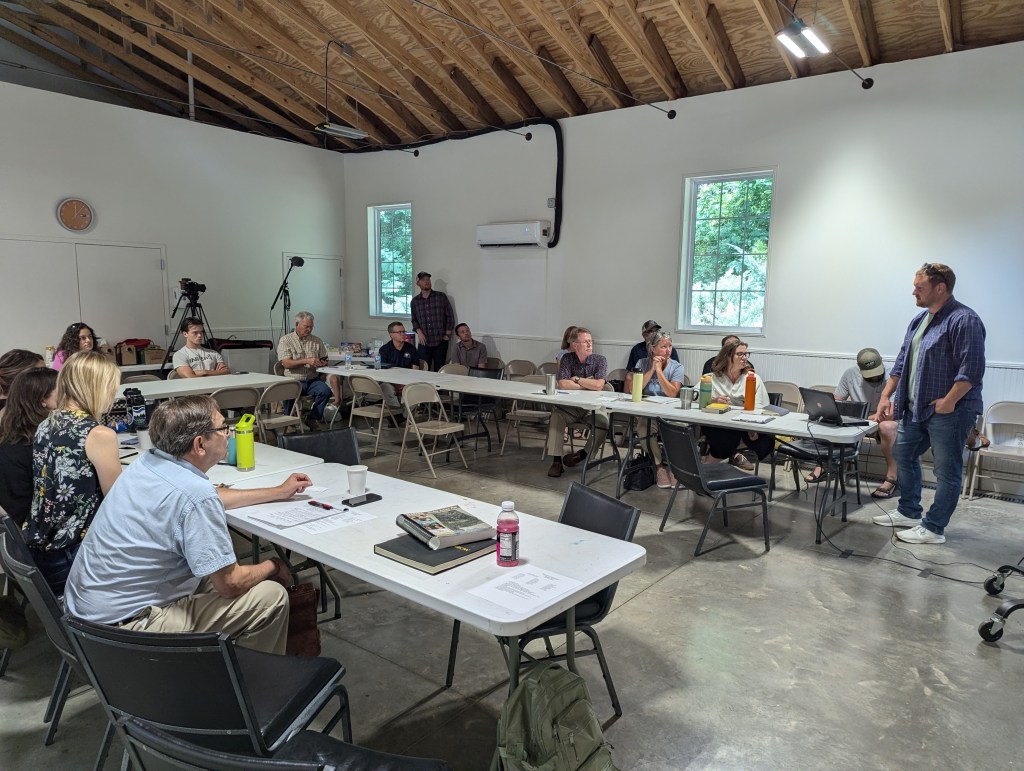
Since that summer meeting, Schotz said they’ve had regular virtual meetings to continue refining the list of species and to review materials like maps and species profiles as the SWAP team creates them.
“So far, I feel good about our judgments as to the species that we’ve deleted and those that we’ve kept on,” Schotz said.
The last decade’s improvements in mapping technology also mean that the 2025 SWAP team had more tools at its disposal to understand how land is used and how species and habitats are spread across the state, Lawson said.
“Now we’ve come so far in how we can look at data and analyze it,” she said. “… [It] helps us get a better idea of how all these factors overlay, to help us decide what areas are most in need of conservation.”
With the help of the DCNR, they created a mapped database for the taxonomic committees to collect their data, which Lawson said made for easier decisions during the meetings. That database won a statewide GIS (geographic information systems) award, she said, and they’ll be presenting it at a conference in San Diego this summer.
“It’s been really great working on this project, … and we’ve learned so many new techniques,” Lawson said.
INFORMATION GAPS
One of the biggest hurdles in creating a SWAP is that not every species gets the same amount of research interest. Information about less-studied species might be sparse or outdated, Lawson said, so the SWAP committees couldn’t decide their rarity or conservation priority with complete confidence.
“We talked about it in every taxa group,” she said.
The 2015 SWAP puts it this way: “The current distribution and status, as well as various aspects of life history and biology, are poorly known for most [Species of Greatest Conservation Need] in most habitats.”
Funding availability is one factor, as botanists like Schotz have experienced. However, Lawson said other species are simply in habitats that are hard to survey, like wetlands, or need a particular technique to find them.
For example, she said the state Geographic Survey had never seen a particular species of river darter in the Alabama River before, but when they changed their trawling technique, they scooped up the darters in abundance.
Many of the species with insufficient data will be labeled as moderate conservation priorities for the 2025 SWAP if the committees believe them to be rare, Lawson said. That way, the species are funding-eligible and future research might be able to pinpoint their rarity more accurately for the next SWAP, she said.
Other species haven’t been seen in Alabama in years, and the committees had to decide whether that meant they were exceptionally rare (and thus a high priority) or totally extinct within Alabama (and thus not a priority at all), Lawson said.
“Some people were very, very hopeful that those species were still here,” she said, while others of their colleagues took the more pessimistic view.
“We’ve all turned grayer, and I think some of us have lost a little more hair, but it’s all in the name of conservation.”
Al Schotz, Alabama Natural Heritage Program
The 2015 SWAP listed more than 100 extinct animal species in Alabama. Lawson said the 2025 list is still being compiled.
Despite his long involvement with the state’s Natural Heritage Program, Schotz said the SWAP process revealed some plant species that he didn’t know were in the state. Just confirming their presence was a big deal, he said, and it made him more appreciative of the value of ongoing monitoring.
“That information is really essential because that helps us determine just how threatened a particular species is,” he said. “… There’s so much we don’t know about what makes them tick.”
UNCERTAIN FUNDING FUTURE
As they take all this data and form it into a comprehensive plan by September, Homan and Lawson said they are aware that the very reason for the creation of the SWAP — eligibility for federal conservation funding — is in limbo more so than in years past.
The Trump administration has frozen or canceled millions of dollars in funding for research into conservation, climate change and other environmental concerns since January. Lawson said she has seen some funding sources restored, but others have been permanently slashed.
“With all the cuts that we’re hearing about, there’s a real possibility that we’ll have less funding available for conservation,” Lawson said. “… There’s still so much uncertainty.”
The future of that grant funding will determine whether the state can actually act on the conservation recommendations outlined in the 2025 SWAP and whether researchers can fill the SWAP’s information gaps for many species.
Each SWAP lists accomplishments by the state from the previous SWAP’s priority lists. The 2025 list is still being finalized, Lawson said, but the 2015 list included acquiring nearly a quarter-million acres of land for conservation, establishing the Alabama Aquatic Biodiversity Center, preserving longleaf pine and prairie habitats, fish migration projects, reintroducing Eastern indigo snakes to the Conecuh National Forest and new monitoring programs for species like black bears and golden eagles.
If the current approach to federal conservation funding continues, Alabama’s list of accomplishments in the 2035 SWAP is likely to be much, much shorter.
Visit the Alabama Department of Conservation and Natural Resources website by July 1 in order to review the 2025 SWAP materials and submit a public comment.
Main article image of a round-leaved sundew plant courtesy of Jasper Shide, via Wikimedia Commons.
 Southern Science