
Mississippi Delta program encourages healthier soil, sustainable farms
by Sydney Cromwell
As he drives around Cherokee County, Ken Murphree hates to see farms with rows of exposed soil.
“I see a lot of bare ground throughout the county, there’s nothing on it. And to me, they’re missing an opportunity to build their soil,” Murphree said.
The 82-year-old has been planting seed and row crops at Murphree Seed Farm in Collinsville for nearly five decades. Between harvests of crops like black oats and corn, Murphree plants cover crops to prevent erosion and restore the fertility of his soil.
“We just never let it be exposed,” he said. “Year after year, it just builds up and it enables you to have a better crop.”
Cover cropping is part of regenerative agriculture, which aims to decrease the environmental damage that farming causes to soil, water and the global climate.
The Soil & Climate Initiative works with farmers like Murphree to make it practical for them to adopt more sustainable practices. One of SCI’s newest initiatives is focused on rice farms in the Mississippi Delta, including Alabama.
The environmental impacts of regenerative agriculture are important, but one of the big draws for many farmers is that it can make their operations cheaper, said SCI Farm Program Manager Taylor Herren. That only becomes more critical as it gets harder for small farms to turn a profit.
“It’s really a win-win. It’s a win for climate, it’s a win for the environment, it’s a huge win for farmers,” Herren said.
‘THE DIFFERENCE BETWEEN US SURVIVING AND NOT’
Agriculture is a major driver of climate change. It’s responsible for more than a quarter of the world’s greenhouse gas emissions and 70% of global freshwater usage. Meat, dairy and rice are the biggest culprits.
Locally, farming also frequently depletes the nutrients in soil, leaches fertilizer and pesticides into the water and replaces diverse ecosystems with acres and acres of a single plant.
Regenerative agriculture practices are meant to reduce those harms, Herren said. They also make farms more resilient to changes in weather patterns and market demand, she said.
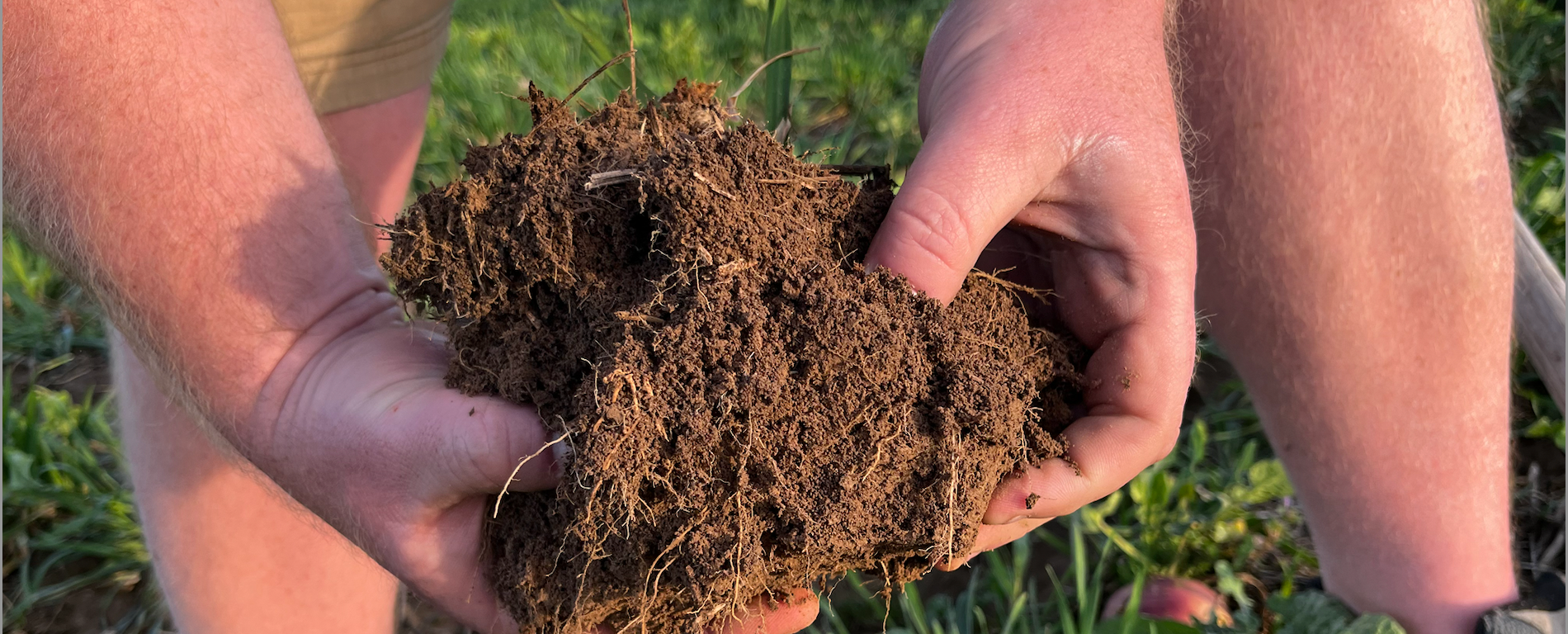
Planting cover crops, as Murphree does, is considered regenerative because it helps hold soil in place, so it doesn’t get eroded by rain or wind.
“If we get a good rain at night, you never see it run off. You can tell the next morning that it held it all,” Murphree said. “… We fight the possibility of soil erosion. That’s one thing that I hate more than anything is to see our soil leave. It’s a waste to let that soil wash away.”
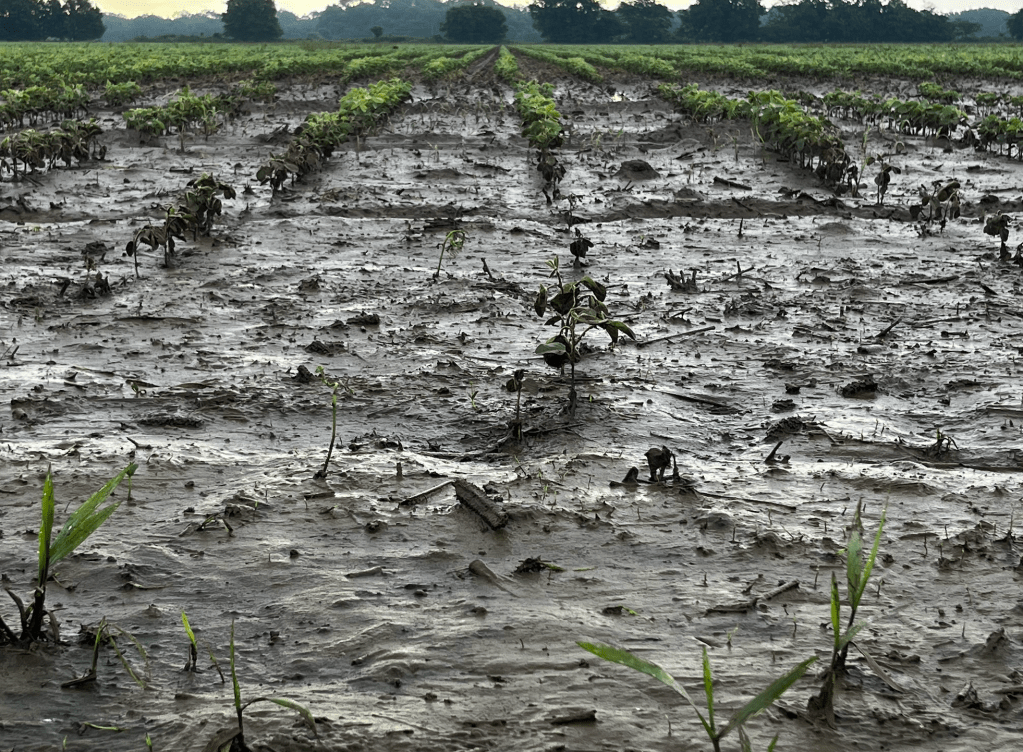
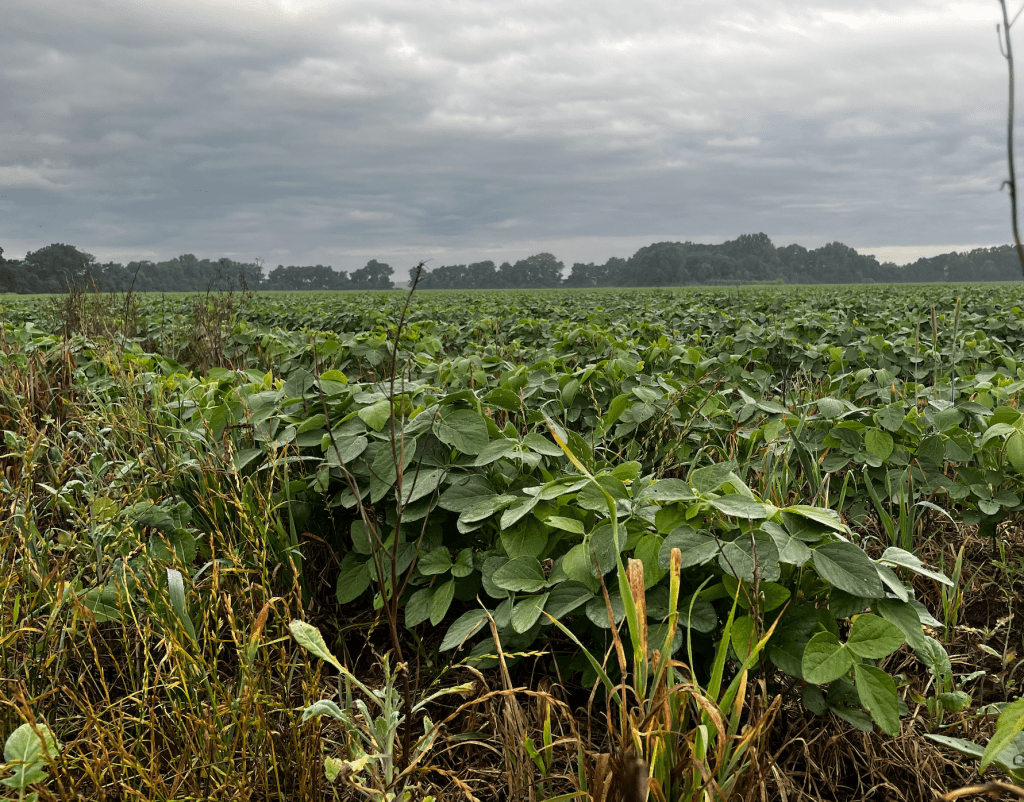
Some cover crops, like clover and legumes, also restore nitrogen or other nutrients to the soil, Herren said. Smart use of cover crops can reduce the amount of synthetic fertilizers that a farmer needs, she said; her own 400-acre farm in Arkansas uses about half the fertilizer that a conventional farm would.
“We really believe in cover crops,” Murphree said. “Farmers that are not using it, taking advantage of it, are really missing the boat because we have good yields most of the time if we get good rainfall. We do everything we know how to do, and the rest is up to the good Lord.”
Adam Chappell, who works with SCI and also grows rice on his Arkansas farm, said he first got interested in cover crops about 15 years ago because of the amount of money and time he spent fighting weeds.
“I started researching organic farms to see how they were handling it, because I’d used all the chemicals I could and was still losing the fight,” he said.
Chappell started with just a few acres of cover crops. He found that those acres had fewer weeds and needed less irrigation than the rest of his farm.
“We just started actively trying to get cover crops on every acre that we could afford,” he said.
Now his entire farm uses cover crops, and Chappell said he’s spending less money on fertilizer, herbicide and water. He also adopted low-tillage, another regenerative practice, which means he spends less on diesel for his tilling equipment.
“It’s been the difference between us surviving and not,” Chappell said.
“We fight the possibility of soil erosion. That’s one thing that I hate more than anything is to see our soil leave. It’s a waste to let that soil wash away.”
Ken Murphree, Murphree Seed Farm
Becoming a no-till or low-till farm also prevents loosened soil from getting carried into local waterways.
“Our rivers and stuff are muddy all the time, and that’s definitely from all the tilling we [farmers] do,” Chappell said.
Advocates of regenerative agriculture, like SCI and the World Economic Forum, say that it can reduce agriculture’s carbon and methane production by capturing gasses in the soil and in cover crops.
“You are literally taking carbon emissions in the air and you’re putting them back where they’re supposed to be, and in a world where we’re going to keep driving cars, mitigation and offsets are an excellent answer,” Herren said.
Some studies have cast doubt on how effective that carbon storage is in the long term, especially compared to the huge carbon impact of other agricultural changes, like lowering meat and dairy consumption. Preserving existing trees and native plants, or planting new ones, may be a more functional strategy for capturing carbon with regenerative agriculture.
Additional regenerative practices include diversifying crops, composting, rotating livestock on grazing land, creating “conservation buffers” of native species and any other techniques that keep the soil undisturbed, preserve ecosystems and reduce synthetic chemical and water use as much as possible.
“Regenerative agriculture, to me, is just making your crop with less and trying to make it fit into the natural world as best you can,” Chappell said. “… There’s countless benefits to farming just a little bit differently.”
SCI currently works with more than 160 farmers in the U.S. They also have a verification program for farmers to certify that their products are sustainably grown, which Herren said can help them sell their crops to companies that are conscious of their environmental footprints.
Since 2024, SCI has also launched three programs with a more regional focus: rotational cropping in the upper Midwest, wheat farm in the Plains and rice farming in the Mississippi Delta.
DECOMPOSITION IN THE DELTA
Spreading the word about regenerative rice farming in the Delta has dual potential, Herren said, both to reduce rice’s outsized environmental impacts and to keep more farmers on their land in one of the poorest areas of the country.
“The Mississippi Delta is rich agricultural land. It’s a place where there’s still water, there’s good soil, but there’s been a whole lot of degradation and conventional agriculture,” Herren said. “… It’s one of the places, more than anywhere, that family farms can’t stay in business.”
Most of the world’s rice is produced in countries like China, India and Indonesia, but the U.S. is the fourth-largest exporter, and the largest concentration of American rice farms is in the Mississippi Delta.
According to the International Rice Research Institute, rice farms produce about 12% of the world’s methane emissions and consume more than a third of the total water used for irrigation. Rice production has also been harmed by the climate change that it has contributed to, with yields down worldwide.
The problem with rice, from an environmental perspective, is in the flooding of fields to create the classic rice “paddy.”
Flooding a field suppresses pests and weeds, and it also can provide some protection from drought conditions. However, a lot of organic material breaks down below the water while the field is flooded. When the field is drained for the rice harvest, all of the gasses created by that decomposition are released.
Regenerative farming instead grows rice in rows, Herren said, and the field is either never flooded or only infrequently. She said planting this way usually requires fewer seeds and leads to healthier soil, since it isn’t trapped underwater.
“How healthy can the soil microbiome be if it’s underwater for six months?” Herren said. “… We see higher indicators of soil health in this row rice system.”
Other regenerative practices, like adding cover crops and reducing fertilizer use and tillage, for rice are pretty similar to their use for other crops, Herren said. However, part of the reason SCI created these regional programs was because farming can’t be identical across the country.
“The application of the practices is super context-specific, super regional-specific and super crop-specific,” she said.

The SCI’s Mississippi Delta program started in early 2025, and there are currently 15 participating farmers, Herren said. None of them are from Alabama, but she said SCI has a waitlist that includes some Alabama farms, and they’re seeking more.
SCI helps rice farmers with technical assistance as they adopt regenerative techniques, plus it provides a network of other farmers to share what works. The organization is also trying to build a larger market of companies interested in purchasing rice from sustainable sources.
“There’s a unique market potential with rice because it’s a consumer-facing product,” said Herren, comparing it to crops like corn and soybeans that are mainly used for animal feed and processed products. “… It would be amazing to bring some value to these farmers, bring some markets to rice farmers, see these landscape effects.”
Since many rice farmers also grow corn, soybeans, cotton or other crops, Herren is hoping that using regenerative practices for rice can lead farmers to adopt them more broadly.
“Regenerative rice is a powerful part of our Mississippi Delta strategy, but that is not only what it’s about. It’s for any farmer in the region,” she said.
“There’s such a need and such an opportunity in the Delta. You know, I travel all over the place, and down there, people farm hard,” Herren added. “… Farmers all the time are being pushed off the land, but at the same time there is such potential there.”
FARMING ON THE EDGE OF A KNIFE
It’s a hard time to be a farmer — perhaps the most difficult since the Farm Crisis of the 1980s, Herren said.
Erratic weather patterns and rising temperatures, both driven by climate change, disrupt planting schedules and reduce a farm’s overall yield, Herren said.
Prices in the agricultural commodity market have been low for a couple years, Chappell said, and recent tariffs have made it worse. Demand also shrank with the cancellation of federal programs like USAID, which purchased more than a million tons of produce from American farmers last year, and USDA grants for food pantries and schools to buy from local farmers.
Herren said she knows farmers who are still trying to find a buyer for last year’s crops.
Meanwhile, the cost of seeds, fertilizers, pesticides, equipment and labor is rising, Chappell said.
“The margin of stuff out here is so thin for farmers, if there’s one at all,” he said. “… Most farmers are just a few missteps away from bankruptcy at the moment.”
The American Farm Bureau Federation and the University of Arkansas have both reported that the number of farm bankruptcies is climbing fast in 2025.
“Most farmers are just a few missteps away from bankruptcy at the moment.”
Adam Chappell, Soil & Climate Initiative
Chappell said he went into this year’s planting season knowing his crop wouldn’t turn a profit. A friend of his had an exceptionally good growing season for cotton last year, “and he still lost $150 an acre on every acre he grew,” Chappell said.
“If you can’t make money on a once-in-a-lifetime event, then we’re in a really bad situation,” he said.
Many farmers rely on government subsidies and assistance just to break even on the crops they produce each year, Chappell said.
Murphree, who weathered the 1980s crisis, estimated that a new farmer would need “a few million dollars” to get started today. His nephew, Jamie, works at Murphree Seed Farm and will someday run it, but for many potential young farmers, those starting costs and lean margins are insurmountable.
“I’m in fear that we’re going to lose a lot of young farmers this year,” Murphree said. “… They’re going to struggle, and we don’t need to lose any.”
GENERATING APPEAL
In the face of so many financial handicaps, convincing farmers to try something completely new, like cover cropping, can be a tough sell.
“It’s hard to get them to turn loose of what they know because it’s either working or barely working,” Chappell said. “… Any risk, whether perceived or otherwise, is just a nonstarter for folks.”
SCI’s farm program tries to meet that challenge in several ways, Herren said. Proving the financial benefits of regenerative agriculture, of course, makes it much more appealing.
Chappell said some advocates of regenerative farming present the techniques as an addition to what farmers are already doing, rather than a replacement practice that can save them time and money elsewhere. That tends to turn farmers away from trying it out, he believes.
“When you just add cover crops in as another line item, then it just makes a bad system worse,” he said.
Getting brands on board with buying regeneratively grown products has gone slower than the SCI team hoped, according to Company Program Manager Megan Tymesko, but creating a proven market will make it easier for farmers to say yes to regenerative techniques.
Herren also is a big believer in letting farmers start small with regenerative techniques and add to them over time. That flexibility makes it feel less risky, she said.
“You don’t go from nothing to running a marathon right? You’ve got to start by walking around the block, and momentum builds momentum,” she said.
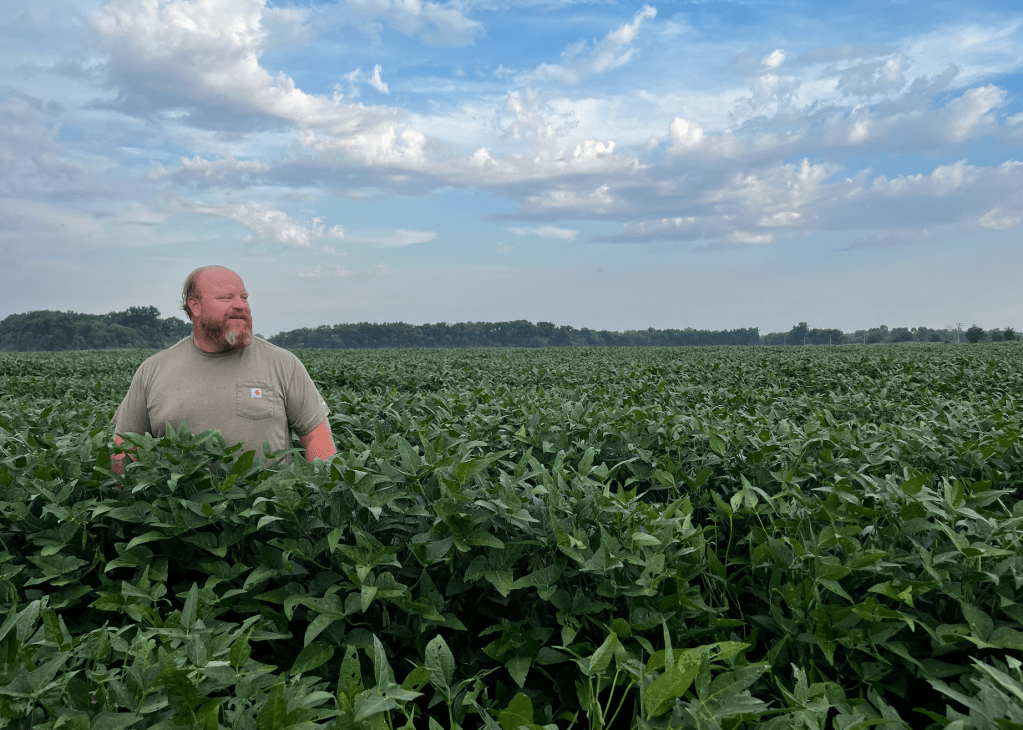
Chappell said asking farmers to completely cut out fertilizers or pesticides doesn’t just make them reluctant; it’s frequently impossible.
“Unfortunately, that’s not reality. At this point in time, we can’t farm on a large scale without pesticides. That’s just the fact of the matter,” he said. “… The labor force and things that it would require, I mean, I’d be broke inside of a week. So unfortunately, pesticides are a necessary tool.”
“I wish people would not be so black-and-white about what farming is or what they want it to be, because that’s not reality,” he added.
SCI’s network of regenerative farmers creates a wealth of advice and help for farmers taking their first steps in sustainable techniques.
“That advice is worth its weight in gold,” Herren said.
It’s also one of the best ways to spread the word. Both Chappell and Murphree first heard about regenerative practices from other farmers. Now Chappell creates those community relationships for SCI, and Murphree talks about the benefits of cover cropping to anyone who will listen.
“Once you get a couple of guys in an area to do it, the others pay attention, and a lot of times they’ll come on board,” Murphree said.
“You don’t go from nothing to running a marathon right? You’ve got to start by walking around the block, and momentum builds momentum.”
Taylor Herren, Soil & Climate Initiative
Farmers tend to stay in the program once they join it, Herren said. SCI has a low dropout rate, she said, and farmers just have to commit to continual, gradual improvements in the way they farm.
“All the guys that I know that have tried cover crops and things like that, the way we do it, they’ve stuck with it,” Chappell said.
SUSTAINABLE FUTURE
Right now, SCI is working on getting the funds to add another 15 farmers to the Mississippi Delta rice program by early 2026, Herren said, and attempting to create an established market for regeneratively grown crops.
Tymesko said this is a new market area for many brands, but she’s seeing momentum as brands learn more about regenerative agriculture.
Since SCI does regular soil and field testing at its participating farms, Herren said they should have data to demonstrate the benefits of regenerative rice farming within three years. More regional programs like the one in the Mississippi Delta could also be in the SCI’s future, she said.
If farmers in the U.S. and across the planet can be convinced of the value of regenerative agriculture, “it could change farming completely,” Chappell said.
Main article image courtesy of Taylor Herren, Soil & Climate Initiative.
 Southern Science
One thought on “A new farming (re)generation”