
FEMA assistance grant is first step in fixing persistent Birmingham stormwater issues
by Sydney Cromwell
Birmingham Fire & Rescue performed 89 water rescues in the city last year, about half of them on a single, very rainy day: June 8, 2022.
Nearly 7 inches of rain fell that day, a record-setting deluge for the area. But it doesn’t take a storm that intense to cause flooding problems in Birmingham.
“This has been a longstanding issue,” Mayor Randall Woodfin said.
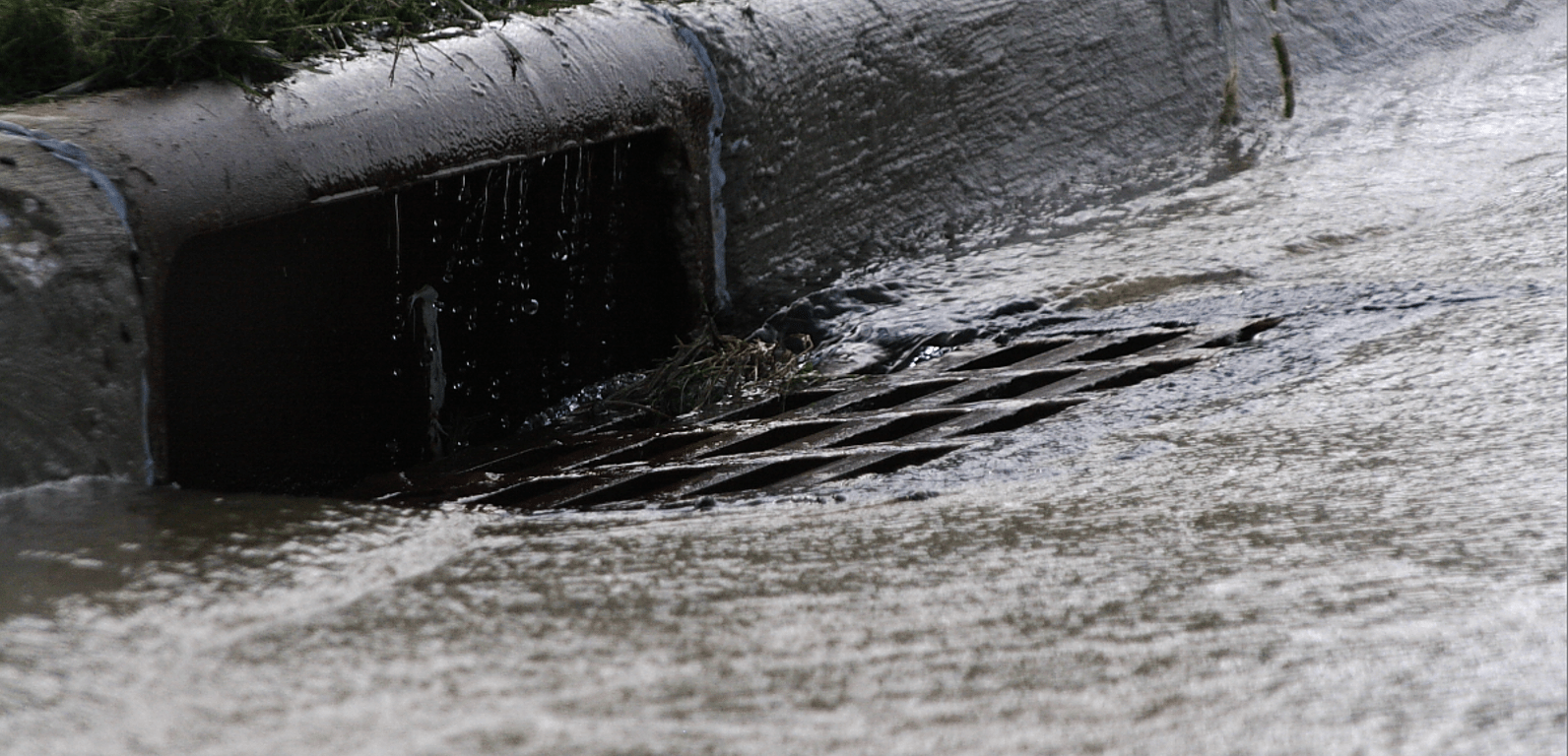
All over the city, sudden, heavy rainfall can overwhelm the stormwater drainage systems, causing water to back up into streets, parking lots and buildings.
A recent technical assistance grant from the Federal Emergency Management Agency (FEMA) is the starting point for Birmingham to build a stormwater system that can handle what will be coming down the pipe in the future.
RAINFALL RECORDS
If it feels like the last few years have been particularly rainy in Birmingham, it isn’t just your imagination.
Both 2020 and 2021 broke into the top 10 rainiest years for the city. Along with June 8, 2022, Birmingham Fire & Rescue had another busy day on March 16 of this year, when flash flooding resulted in one death and 17 water rescues.
These flash floods can cause injuries and deaths, road washouts and property damage. And in the years to come, Birmingham’s department of planning, engineering and permits expects heavy rainfall will be more likely.
“We’re seeing a significant impact on our residents,” said Tracey Hayes, the deputy director of the city’s department of planning, engineering and permits.
Climate change is predicted to make storms more intense; indeed, many scientists believe it has already been a factor in more damaging hurricane seasons.
If rainstorms over Birmingham are likely to be more severe in the future, that will send even more rainwater down city streets and cause more sudden floods.
That’s bad news for neighborhoods that already have experienced consistent flooding for decades.
“It’s not like it’s new, but the weather patterns and the increase in rain have definitely increased the flooding in those areas,” Woodfin said. “… We have to make the necessary improvements in stormwater infrastructure.”
INADEQUATE INFRASTRUCTURE
The system that will handle those floodwaters is already outmatched.
Much of Birmingham’s stormwater drainage piping is original to the city — making it a century old. While some pipes have been replaced over the years, the overall system was still built with a smaller urban area in mind.
“We’re at our max population,” said Katrina Thomas, the director of Birmingham’s department of planning, engineering and permits.
As Birmingham senior planner Donald Wilborn said in a May 2021 interview with Southern Science, the stormwater system is “sort of ancient.”
As the city’s footprint has expanded and hard surfaces like asphalt and concrete have replaced soil and plants, the rainwater that falls can’t be absorbed into the ground. Instead, it rushes on toward the storm drains, creating water to back up into the streets when the pipes can’t handle the volume pouring into them.
“We don’t have places for the water to go,” Thomas said.
The drains also have to carry the additional burden of rainwater that lands on the mountains and hills around Birmingham and flows down into the valley where the city is situated.
Thomas said Birmingham has 2,000 miles of stormwater pipes and nearly 27,000 drains.
On average, the city receives about 327 stormwater complaints and requests each month.
Some neighborhoods have more frequent flooding issues than others. Woodfin said Ensley and Collegeville are two such neighborhoods.
The flooding in Collegeville, combined with its active industry and train tracks, makes an “awful trifecta” for the area, the mayor said. Stormwater can wash oil, industrial chemicals and other pollutants off city surfaces and carry it directly into the local waterways.
The Village Creek Human and Environmental Justice Society was founded in the 1980s due to repeated flooding from Village Creek that reached nearby homes. Yohance Owens, the society’s executive director, told Southern Science in May 2021 that tree plantings, home buyouts and other projects have reduced the damage caused by flooding, but the society continues to receive calls about flash floods after particularly heavy storms.
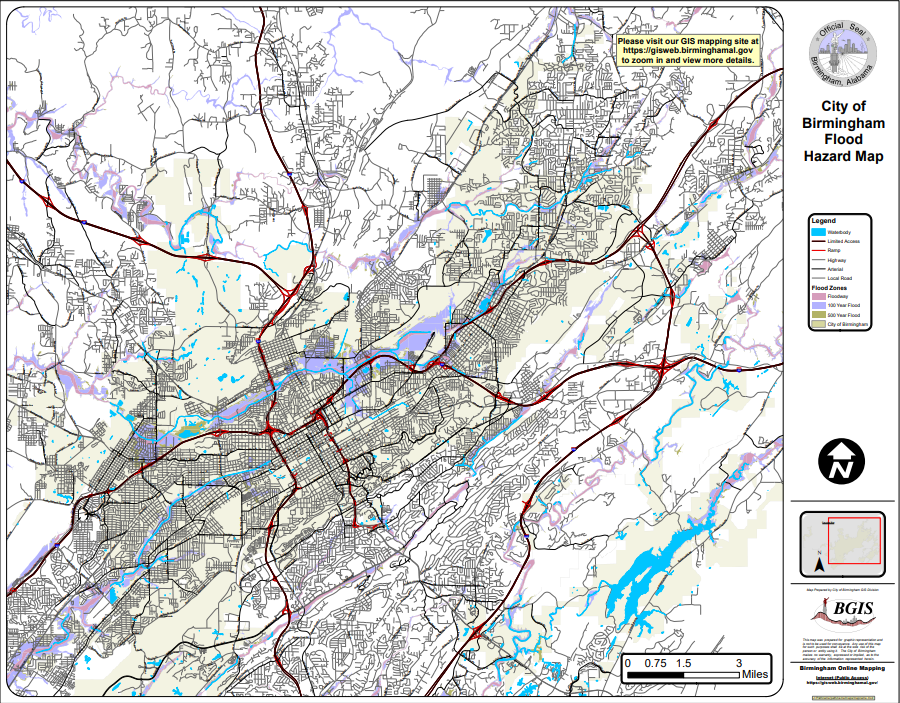
About 8,000 acres of Birmingham are within 100-year floodplains, those areas deemed to have a 1% chance of flooding each year. Birmingham’s floodplains flank the streams and creeks, like Village Creek, that cross the city. However, those maps don’t factor in flooding caused by urban development and insufficient infrastructure.
The Washington Post recently published a report on how FEMA’s floodplain maps are often outdated and don’t portray the total flooding risk, especially as climate change continues.
Thomas said more than 900 properties in Birmingham have flood insurance due to their locations within those floodplains, and around 500 of them are considered “repetitive damage” properties. But, she said, the city is seeing more and more flooding outside those areas.
“We have to think about those neighborhoods and the development that’s occurring in the city as well,” she said.
“WAY BIGGER THAN BIRMINGHAM”
The FEMA direct technical assistance program isn’t a traditional grant, in the sense that Birmingham won’t be receiving any money. Instead, the grant provides something that may be worth its weight in gold: expert guidance.
“We’re working directly with FEMA, for them to come in and give us that direct technical assistance,” Thomas said.
Birmingham was one of 28 communities to receive this grant, which is part of the Building Resilient Infrastructure and Communities (BRIC) program, in 2022. According to the BRIC website, FEMA prioritizes communities that are economically disadvantaged, prone to frequent natural disasters or lacking in technical expertise when awarding its assistance.
“Helping communities to be more resilient and lessen the impact of repetitive flooding is a key priority for FEMA,” said Crystal Paulk-Buchanan, FEMA’s Region 4 mitigation liaison, via email.
Many cities, towns and native tribes are struggling with the same stormwater flooding and climate change problems, Thomas said.
“There’s not an overnight solution to it,” she said.
“We don’t have places for the water to go.”
Katrina Thomas, Birmingham Department of Planning, Engineering and Permits
For the next 3 years, FEMA officials will work with city staff to assess conditions in Birmingham and look at possible repairs and improvements that can reduce the city’s risk from extreme weather and help it better withstand those conditions when they come.
FEMA will also review the city’s previous unsuccessful grant applications and advise them on how to be more competitive in future applications. This opens up a world of possible federal funding for Birmingham to future-proof its stormwater sewers.
“They’re going to help us come up with great projects that we can submit,” Thomas said.
So far, the city, Alabama Emergency Management Services and FEMA advisors had a kickoff meeting in September and a needs assessment in December, where they discussed drainage complaints, capital projects and past grant applications.
Thomas said that beginning in February, FEMA advisors will begin creating a priority list and help Birmingham map out a plan.
“This issue is way bigger than Birmingham and we can’t solve it alone,” Woodfin said.
Main article image courtesy of Robert Lawton, Wikimedia Commons.
 Southern Science