
Volunteer science ‘hub’ helps communities tackle environmental injustices
by Sydney Cromwell
The signs of environmental injustice in a community are often pretty obvious for the people that live there. What isn’t as obvious, though, is the path to fixing it.
Tackling problems like poor water quality, industrial pollution, heat islands or flooding take not only time and money, but also expertise and organization, according to Kathleen Kirkpatrick, co-founder of the Capacity Collaborative. Those are often exactly the resources that communities — especially poorer or more rural ones — lack.
“One of the biggest challenges for environmental justice communities is finding local volunteers for carrying out the work,” Kirkpatrick said. When people are focused on trying to make ends meet, “the last thing on their mind is going out and doing water sampling.”
Instead, the Capacity Collaborative and its partner, Thriving Earth Exchange, are trying a different approach through their recently created science “hub”: bringing volunteer scientists and experts to these communities to provide the time, expertise and organizational prowess that have been missing.
“It really is giving people some hope that there are solutions,” Kirkpatrick said.
SCIENCE IN THE COMMUNITY
The science hub isn’t technically a grant program, as there’s usually little or no funding involved. It also isn’t a citizen science project, where non-experts are trained in tasks like water sampling, Kirkpatrick said.
Instead, the science hub’s projects match researchers, engineers, planners and other experts who are willing to volunteer their time with communities that need their skills to solve a local problem.
“Community science really, by our definition, takes it a step further, and it’s really looking for solutions to local issues or collecting data for what the solutions might be,” Kirkpatrick said.
“I want to know that folks are getting real results.”
Kathleen Kirkpatrick, Capacity Collaborative
Created by the American Geophysical Union, the Thriving Earth Exchange has worked with more than 350 community science projects around the world in its 10-year history.
“TEX is a proven process,” Kirkpatrick said.
The Capacity Collaborative, on the other hand, started in 2022 and focuses on providing environmental and technical expertise across the U.S. and in Africa. Kirkpatrick, who lives in Montgomery and does much of her work with communities in the Southeast, said the collaborative is about solving local problems related to climate change, as well as other social issues that often contribute to environmental injustice.
“There’s so many other needs that we can’t look at climate solutions in a vacuum. We’ve got to consider issues of poverty, food, health care, housing,” she said during a previous interview with Southern Science in October 2023.
The community science hub that TEX and the Capacity Collaborative have partnered on is the first of four that TEX has launched. A grant provided each hub with $50,000 to support 12 projects over two years.
The Capacity Collaborative hub chose its first batch of projects earlier this year, and they’ve added more in the months since. Those projects are based in Alabama, Louisiana, Mississippi and South Carolina.
Each community’s project has to be achievable in about 16 to 18 months, Kirkpatrick said. Once the goal is defined, each project is paired with a TEX fellow, who serves as project manager, and pro bono experts with the technical know-how to carry out the work. Kirkpatrick said they try to find local scientists when possible, but sometimes the person with the right expertise and interest is across the country or overseas and has to work remotely.
Kirkpatrick’s role is to recruit community leaders to the science hub and keep in touch throughout the process to make sure it’s going smoothly.
TRUST-BASED RELATIONSHIPS
One of the biggest factors of a successful community science project, Kirkpatrick said, is the level of enthusiasm from the people who will be participating. When deciding where to launch the hub’s initial projects, she focused on communities where she already had connections, knew about local issues and “had a reasonable expectation that they were ready for our projects.”
Kirkpatrick said her particular interest is in providing a community with data that can help in securing future grants or deciding the best solution to pursue.
Much of the work of Capacity Collaborative has been focused on small rural communities like Camp Hill (population 965) and Parrish (population 970), which are now part of the inaugural list of science hub projects as well. Other hub projects are based in communities with long histories of pollution, such as West Anniston or the Mississippi town of Pascagoula.
Read more from Southern Science about small-town disaster relief efforts in Camp Hill and Parrish.
Starting with existing relationships also meant that Kirkpatrick had already built a sense of trust with community organizers, she said.
“I know that the Capacity Collaborative has a genuine interest in environmental justice-focused communities,” said West Anniston Foundation Director of Outreach Tycoma Miller, who is the community lead on one of the science hub’s projects.
People living in areas with a history of environmental injustice often have reason to be wary of promised assistance from organizations they don’t know, Kirkpatrick said.
“There’s a reason there’s a lack of trust,” she said. “… It’s based on experience. People have learned not to trust well-intentioned people parachuting in to help out and then not seeing real results.”
ADAPTABILITY AND ALTERNATIVES
Trust and enthusiasm aren’t enough to carry a community science project to the finish line, however. All sorts of situations can arise that the hub and the participating communities have to adapt to, Kirkpatrick said.
Some projects have already been put on hold, she said, while others have had to make major changes to their scope.
“We have to be adaptable because that’s life,” Kirkpatrick said.
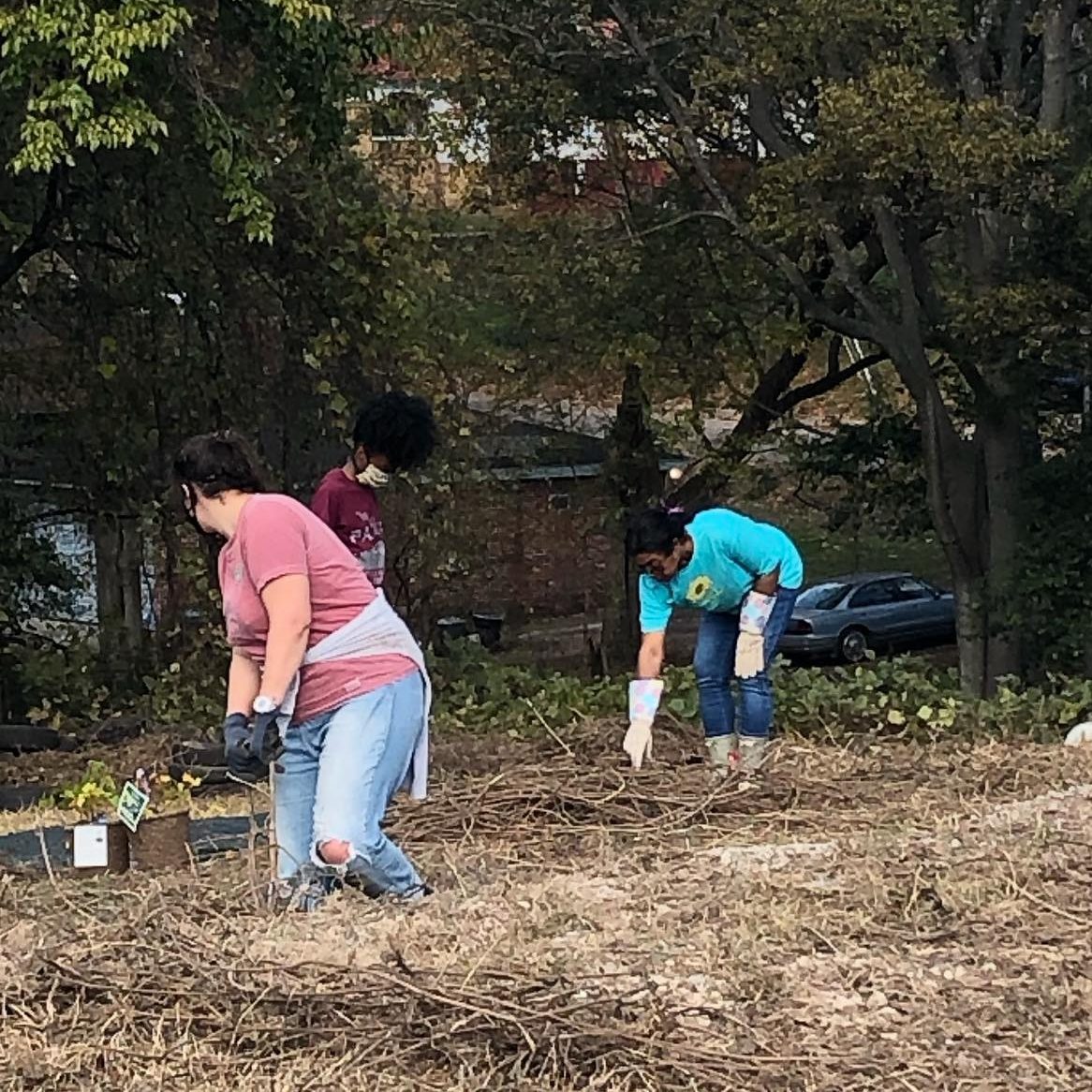
In the Dynamite Hill community of Birmingham, for instance, the terrain of a set of abandoned lots means that project organizers have moved away from their original plan of building sustainable housing and instead are looking at possibilities for a community farm.
The science hub project in Pascagoula started out with trying to explore the source and extent of local industrial pollution. However, the situation turned out to be quite complex, Kirkpatrick said, and the project is instead looking at possible green infrastructure uses for the land, which could give residents an opportunity to sell and move, if they want, and repurpose the area for coastal flood mitigation.
“It’s a way to show the city and polluters that there are viable alternatives that would support buying out the homeowners,” she said.
Time is also a challenge, Kirkpatrick said, since both the community members and the scientists are working on the project without payment. Finding professionals with relevant expertise and the time to commit to a project can sometimes be a lengthy task — the West Anniston Foundation is still waiting to be matched with a scientist, for example — but Kirkpatrick said they are “tenacious” about recruiting and keeping projects moving forward however they can in the meantime.
“Things may not move as quickly or it may be harder to recruit scientists than you had hoped, but that’s just real life,” she said.
‘REAL RESULTS’
As the community science hub approaches the end of its first year, Kirkpatrick said she’s excited to start seeing results, in the form of communities that can now make better informed decisions about their futures.
“I want to know that folks are getting real results,” she said.
Facing a systemic problem like industrial pollution or food insecurity can be “overwhelming,” Kirkpatrick said, but having data, training and assistance can give people hope.
“[This project] would be dead in the water without Thriving Earth Exchange. Full stop. There’s no other way to say it.”
Ryan Cagle, Jubilee House
While the grant that launched the science hub only covers its first two years, Kirkpatrick said she would like to secure additional funding for the future so the hub can launch more community science projects and so she can spend more time working with the communities in person.
“I hope that we get funding to continue. That would be exciting because I want to bring on other projects like this,” she said.
Read on to find out more about some of the Capacity Collaborative hub’s currently active community projects.
FARMING AND SUSTAINABLE HOUSING IN BIRMINGHAM
Dynamite Hill got its nickname due to the racially motivated bombings of its past, but the greater neighborhood of Smithfield, in Birmingham, has had to contend with several other destructive forces.
“Today, of course, it is affected by redlining, building of the [Interstate 20] freeway directly through the middle of the area and blight,” said Wilhelmina Thomas of the Dynamite Hill-Smithfield Community Land Trust.
The neighborhood also has a history of pollution from mining and coking industries, and it has lost a lot of its population as people have aged or moved away, she said. Around half of Smithfield’s households earn less than $25,000 a year.
But in the abandoned properties that dot this historic neighborhood, Thomas said there’s also opportunity for Smithfield to experience a new way of living.
“This area, it doesn’t need the model of cutting the grass every two weeks. It needs the model of planting wildflowers and being able to grow crops.”
Wilhelmina Thomas, Dynamite Hill-Smithfield Community Land Trust
The Community Land Trust started in 2016 to try to put Smithfield’s abandoned and blighted lots to new use for affordable housing. The group also preserves historic Black cemeteries in the area, does regular cleanups at nearby creeks and trails, hosts farmers markets and does walking tours and other educational programs.
They want to do more work to encourage sustainably built housing that lowers residents’ cost of living, Thomas said.
“Inside Birmingham is not very conducive to using solar and wind and things like that, so it’s going to be down to using some more of those building techniques that were used before the invention of central heating and air,” she said.
Things like window placement for cross-ventilation, roof pitch and elevated foundations have fallen out of fashion with the rise of air conditioning, Thomas said, but they were once the only way to keep homes comfortable.
“It’s just how we’ve been taught to think about construction,” she said, but modern homes also mean higher electricity bills. “The central heating and air and all that, to me it’s not sustainable.”
There are still some of those pre-air-conditioning homes in Smithfield, she said, and people should be “looking at what was built here and is still standing, and envisioning those in ways that are sustainable.”
One of the Community Land Trust’s early plans was to purchase eight contiguous lots next to the Red Rock trail system and build a small community of affordable houses there, Thomas said. While the lots previously had houses on them, however, the incline of the road made access difficult, and the properties had flooding issues whenever it rained.
“So you really can’t build anything there,” Thomas said.

Instead, the Community Land Trust has a new idea for those properties.
“Rather than being able to build on that site, it would be more advantageous to turn it into an arboretum or into a food farm,” Thomas said.
Turning those lots into green space would create opportunities for outdoor classrooms, recreation, connection to walking trails and cooling the neighborhood, Thomas said. They could also grow produce for community use on those sites.
“It went from the whole idea of buying this to build houses, to looking at this area as a food forest and as an extension of that greenway, … making it a resource rather than just eight lots that are sitting out there,” she said.
Fresh produce isn’t always easily obtainable in Smithfield, Thomas said, and community crops could make the neighborhood’s residents healthier.
“It’s important to have food sources that are local to the land and to the season,” she said.
However, it wouldn’t look like a traditional farm. Instead, Thomas said, the group envisions a “food forest” where the crops are interspersed among native habitats and the walking trail. She hopes that would give people more motivation to come to pick and take home their produce.
“This area, it doesn’t need the model of cutting the grass every two weeks. It needs the model of planting wildflowers and being able to grow crops,” Thomas said. “… What we’re looking at is providing something that’s going to be there long after we’re gone, still producing crops.”
While the Community Land Trust has grown crops like corn, sunflowers and berries in the past through the Sugar Hill Community Farm, Thomas said in recent years the group hasn’t been able to do as much as it wants to do.
“Working with Thriving Earth, that’s where we’re trying to get back to,” she said.
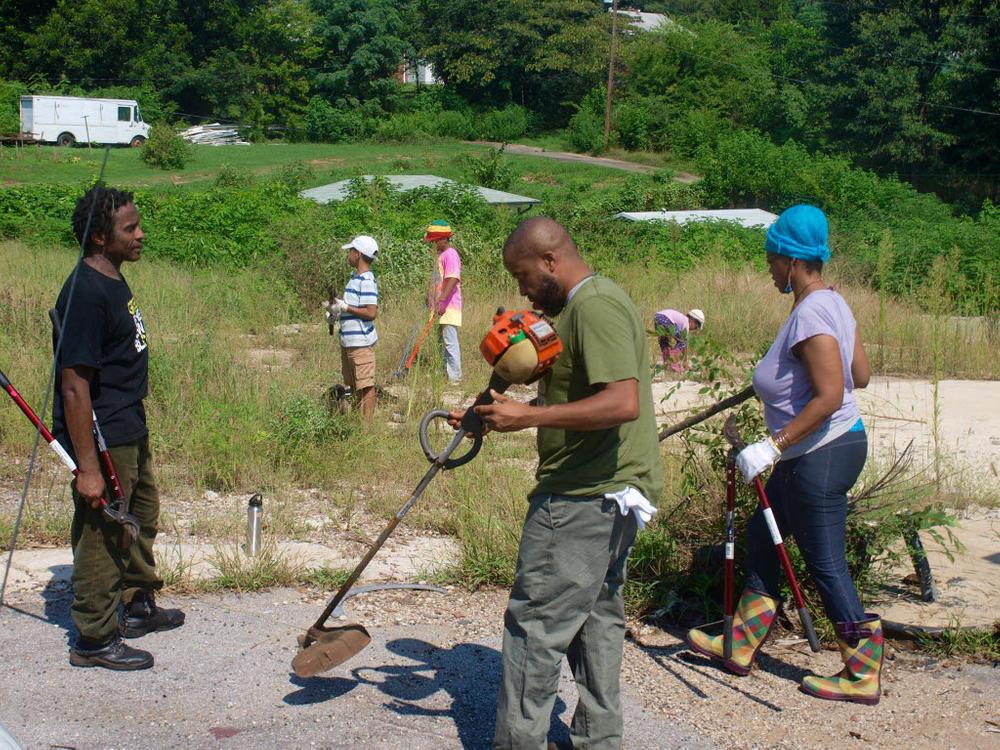
The Community Land Trust’s project with the community science hub is intended to make the group’s work more visible in the community, define long-term goals and figure out how to maintain what they build, Thomas said.
Their partner engineers and planners will help the group create a white paper that covers Smithfield’s history and obstacles, as well as the Community Land Trust’s work and objectives, Thomas said. That white paper can then be the starting point for grant applications, brochures, communicating with the city government and more.
“What we’re hoping to achieve is to have the ‘elevator pitch,’” Thomas said. “… When you’re applying for a grant, you already have the layout of what you need.”’
With TEX’s help, they also plan to do soil testing to make sure the lots are viable for planting crops, Thomas said.
She said the group hopes to have their white paper complete by early 2025.
“I think we’ve been very lucky in that we’ve had good consistent meetings that have been productive,” Thomas said.
Thomas said she wants the green space and community farm to be an asset to Smithfield and a “jumping off point” for the community to consider other ways of getting engaged and solving problems that they see in their neighborhoods.
“What I see is the Land Trust developing an area that is going to be there to enhance the community, even if we don’t get to the housing part,” Thomas said.
FEEDING RESILIENCY IN PARRISH
Food and farming are also central to the Jubilee House’s community science project in the town of Parrish.
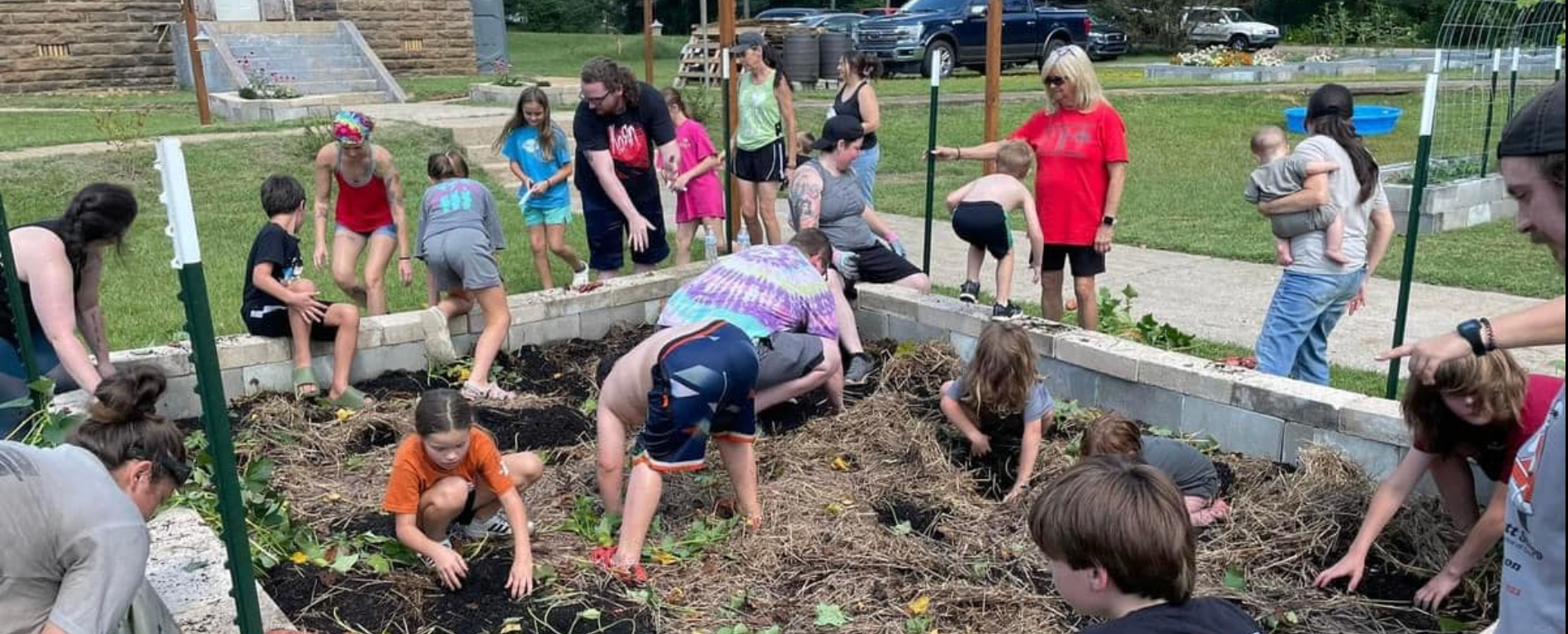
Converting an unused football field into a “reclamation garden,” Jubilee House co-founder Ryan Cagle said, will get more healthy produce into residents’ kitchens.
“For us this work is about justice. It’s not just about feeding people,” he said.
Ryan and Jordan Cagle started Jubilee House after returning from Arizona to the area where Ryan grew up. Parrish is “small and scrappy,” he said, in the face of natural disasters, food insecurity and loss of mining and other local industries.
“We’ve gone through a lot, obviously,” he said, but it’s also a place where residents “want to fight for it to be better.”
“The bottom line is people are having a hard time there, meeting their basic needs,” Kirkpatrick said.
The Jubilee House offers a food pantry that’s open around the clock, as well as a free store where people can share or take household items they need. It also offers a fund for helping community members pay down their debts and recently started Project HERO, which installed free naloxone vending machines around Walker County to help residents treat opioid overdoses.
Recently, the Cagles decided they wanted to help Parrish develop a more resilient food system, especially in the face of climate change harming agriculture and food supply chains in ways that could leave Parrish wanting, Cagle said.
The town — where Cagle’s brother is the mayor — gave Jubilee House permission to grow crops on a former high school football field, which Cagle said would stock the pantry and also have space for community plots for residents. But when they went to clear the land and set up the community plots, there was an immediate problem.
“We found a sinkhole, then we found another sinkhole. Then we found a pretty big sinkhole,” he said. “… We were pretty panicked.”
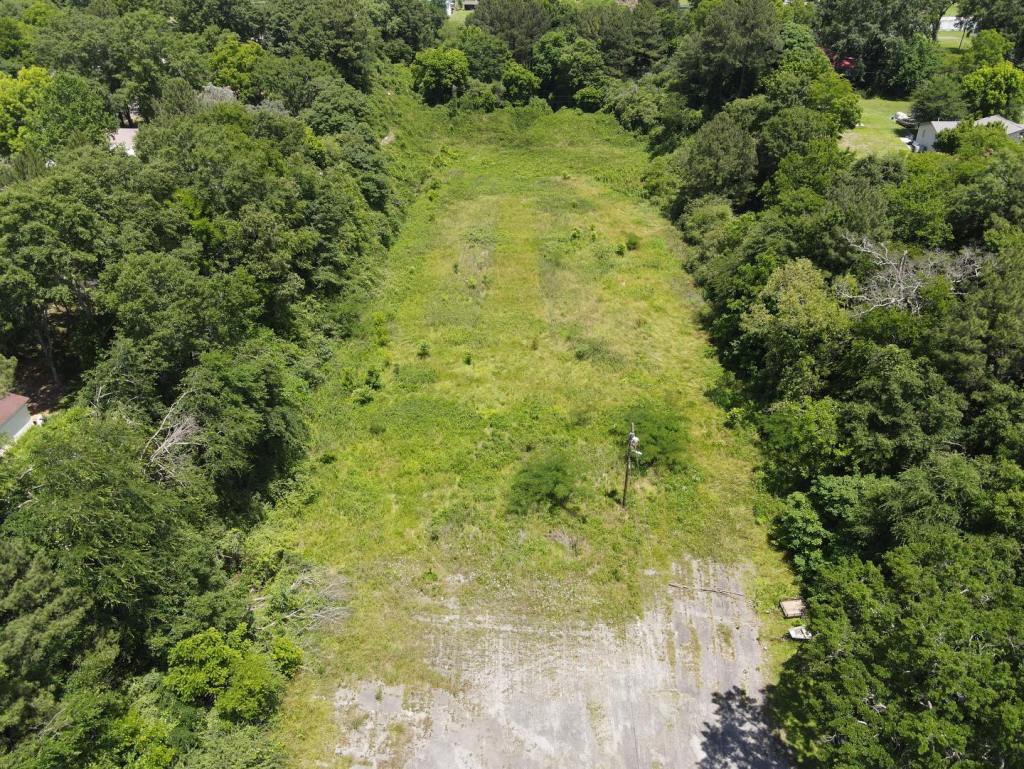
The sinkholes, created by a collapsed drainage culvert, made the property a safety liability, and it also caused the nearby road to flood during storms, he said. The town government let Jubilee House build a few community beds on another property while they figured out what to do with the field, Cagle said, but it was beyond their ability to fix or to pay for an expert to help.
“We could have washed our hands of it, … [but] the whole idea was reclaiming what’s been neglected and abused in our community,” he said.
Kirkpatrick connected Jubilee House with TEX, which covered the cost of clearing the football field’s overgrowth and brought Auburn University associate engineering professor Jack Montgomery and a graduate student to look at ways to fix the culverts.
Through the assistance from the science hub, Cagle said, they’ll be able to diagnose the extent of the culvert’s damage and potential solutions to not only make the field safe for farming but also protect the nearby street from flooding and hopefully harness some of the site’s rainwater for irrigation.
“We’re trying to breathe life back into that land, we’re trying to repair it,” he said. “… This is not just fixing something in the community but also helping us build toward long-term climate resilience.”
In October, the Auburn researchers came to Parrish and took measurements, aerial images and seismographic data at the football field, which Cagle said was “very enlightening and very comforting” — although they did find another sinkhole while they were there. Cagle said they’ll return sometime over the winter, when the plants have died back, to further investigate the area where water enters the property.
“We were way out of our depths,” Cagle said. “… It’s definitely a job for an engineer.”
In addition, Cagle said their TEX science fellow, Stanford University doctoral student Emma Liu, has been “truly the backbone” of the project’s progress so far.
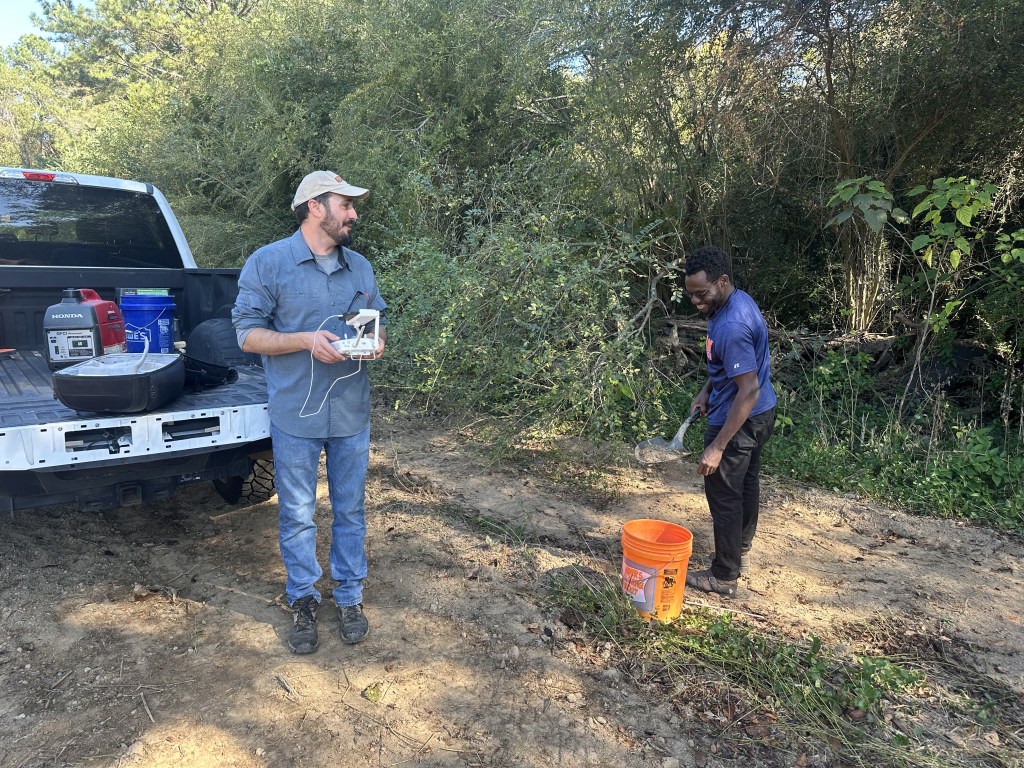
While they wait for more testing and final results, Cagle said Jubilee House is taking preventative measures, such as building berms to divert the water flow, in order to keep the sinkholes and culvert from deteriorating further.
They also hope to get a camera into the culvert’s interior to find out whether it can be repaired or will need to be completely removed. Cagle wants to document how water moves on the property for potential irrigation, although they’ll have to wait for significant rain — Alabama has been in a drought for several weeks.
Kirkpatrick said Jubilee House’s work is currently one of the fastest-moving projects in the hub.
“Fast in this kind of way is probably relative. It’s still a big commitment to long-term environmental healing,” Cagle said.
While the science hub doesn’t have the funding to fix the culvert issues itself, the data they collect will help Jubilee House write grant proposals to fund the solution.
“It would be dead in the water without Thriving Earth Exchange. Full stop. There’s no other way to say it,” Cagle said.
“This is not just fixing something in the community but also helping us build toward long-term climate resilience.”
Ryan Cagle, Jubilee House
Focusing on green infrastructure and water management, Kirkpatrick said, could be used to deal with other stormwater problems around Parrish, or the solutions could inform other science hub communities dealing with similar issues.
“What can be done to manage stormwater in a different way, instead of putting in another culvert that’s eventually going to fall apart?” she said.
When the sinkholes and culvert are eventually repaired and the football field can achieve its intended use, Cagle said he hopes “it will be a thriving farm space in our community that grows food for our community but also serves as a place of education for farming, food sovereignty, climate resilience.”
“Let’s feed people, but let’s also build a system where people can feed themselves and can participate in that process,” he said.
REDEVELOPING POLLUTED LAND IN WEST ANNISTON
The community of West Anniston joined the TEX science hub at around the same time as Jubilee House did. But rather than fixing culverts under a single field, West Anniston is facing pollution that lies under the soil of the entire city.
The West Anniston Foundation, which is the community leader for their science hub project, started in 2002 after a grassroots movement to bring awareness to polychlorinated biphenyl (PCB) contamination in Anniston, according to Outreach Director Tycoma Miller, a lifelong Anniston resident.
The city has spent decades dealing with pollutants such as lead and other heavy metals, arsenic, PCBs and other toxic chemicals that have been produced by military and industrial sites nearby, including at Fort McClellan and the Anniston Army Depot and former Monsanto Co. Superfund sites.
Read more from Southern Science about Superfund sites in Anniston and across the state.
The West Anniston Foundation addresses some environmental health issues directly, such as lead exposure control and addressing common in-home dangers like mold, carbon monoxide, radon and pesticides. They also help low-income homes receive building upgrades, and they offer workforce training and scholarships.
The foundation’s science hub project will be to create an environmental risk assessment and a white paper on how contaminated land can safely be rehabilitated for new uses and redevelopment, Miller said. That way, residents can make informed decisions on building homes, repairing dilapidated businesses or other land uses, and the foundation can apply for grants or government assistance to achieve those aims.
“We want to make sure we’re aware of the public health impact on the decisions we make,” she said.
“I want to be able to say that what is happening is a result of what the community overall has identified as what they want and need.”
Tycoma Miller, West Anniston Foundation
Miller said the West Anniston Foundation wants to look for ways to use that land to have a positive impact on the community “in creative, empowering ways.” For instance, a community garden that encourages healthier eating could be a way to offset some of the effects of conditions like diabetes and heart disease, which studies have shown can be worsened by pollution exposure.
“We know that’s one of the ways to counteract the risk factors” of industrial pollutants, Miller said.
The specifics of the white paper, however, are going to be based around what they hear from the community, not their own ideas, she said.
“We really want to hear what the community thinks the issues are,” Miller said. “… I want to be able to say that what is happening is a result of what the community overall has identified as what they want and need.”
The West Anniston Foundation is still early in the process and trying to find its matching volunteer scientists, Miller said. However, once they’ve been matched, she said they hope to have the white paper complete and available for both the public and the foundation to use within 12 to 18 months.
MONITORING CLASSROOM AIR QUALITY IN MADISON
Environmental justice isn’t limited to the outdoors. Given how much time most people spend indoors, the air quality there is just as important, according to Indoor Air Care Advocates co-founder Michael Bailey.
Bailey, a Madison-area resident, got interested in air filtration — particularly in schools — during the COVID-19 pandemic.
“I never imagined in my life that I would care about that,” he said.
As he began reading about how proper air filtration can reduce Covid transmission, Bailey also learned about its benefits for slowing other infectious diseases and improving conditions like asthma and immune disorders. But many schools weren’t measuring up to federal code standards for healthy air, or they had no data at all, he said.
“Schools are so under-ventilated that students are inhaling an, I would say, not-well-diffused concentration” of not only airborne viruses, but also particulates from furniture, paint and other indoor materials that aren’t being filtered out, Bailey said.
Illness is a major reason for student absenteeism at school, he said, and that translates to lost learning and children falling behind.
“Breathing clean air will help you do better work. There are lots and lots of studies that say that,” Bailey said. “… You’re going to have continued learning loss if kids can’t make it to school because they keep getting sick.”
“Nothing makes an invisible problem visible like giving people the ability to walk into a space and see a number that tells people where things are at.”
Michael Bailey, Indoor Air Care Advocates
As the pandemic continued, he kept finding studies that linked improved air filtration with lower absentee rates and better academic performance.
“Experts have told us it’s not enough,” he said. “… It’s staggering that we know the solution to a big public health problem.”
Bailey and his wife, Tara, started Indoor Air Care Advocates so that other parents could understand healthy air standards and how to push their schools to achieve those standards.
IACA started with the school systems in the Baileys’ backyard — Madison City and County systems and Huntsville City Schools — but they have since grown to include parents elsewhere in Alabama and in Tennessee, Pennsylvania and Wisconsin, he said.
Bailey said parents in IACA advocate for schools to take specific measures that increase air filtration and circulation of fresh air from outside, but it’s hard to get schools to address the overall problem.
“What we found there is that a lot of schools have no idea what [standard] they’re meeting,” he said. “… I’ve seen the full gamut from interested to disinterested.”
IACA’s next goal, Bailey said, is to create a “library” of air monitors and testing equipment that they can lend to parents or schools who are concerned about their air quality. That’s where the science hub project comes in.
TEX helped the group purchase carbon dioxide monitors, which can tell a room’s concentration of CO2 in parts per million (ppm), Bailey said. While CO2 isn’t a perfect measurement for air quality, he said, reaching certain thresholds of concentration usually means that the ventilation system isn’t exchanging enough air to keep up with people exhaling carbon dioxide.
In a room with 800 ppm of CO2 — within the recommended range for indoor air — about 1% of the air you’re breathing is made up of other people’s exhaled carbon dioxide, Bailey said. In one Madison classroom that IACA tested, the monitors showed 3,700 ppm, which is closer to 9% exhaled air, he said.
Most of the classrooms they tested in Madison and Huntsville were above 1,200 ppm, he said, and a few were above 2,000.
“If a kid is sick there, it’s going to have a much higher chance of spreading that disease,” Bailey said.
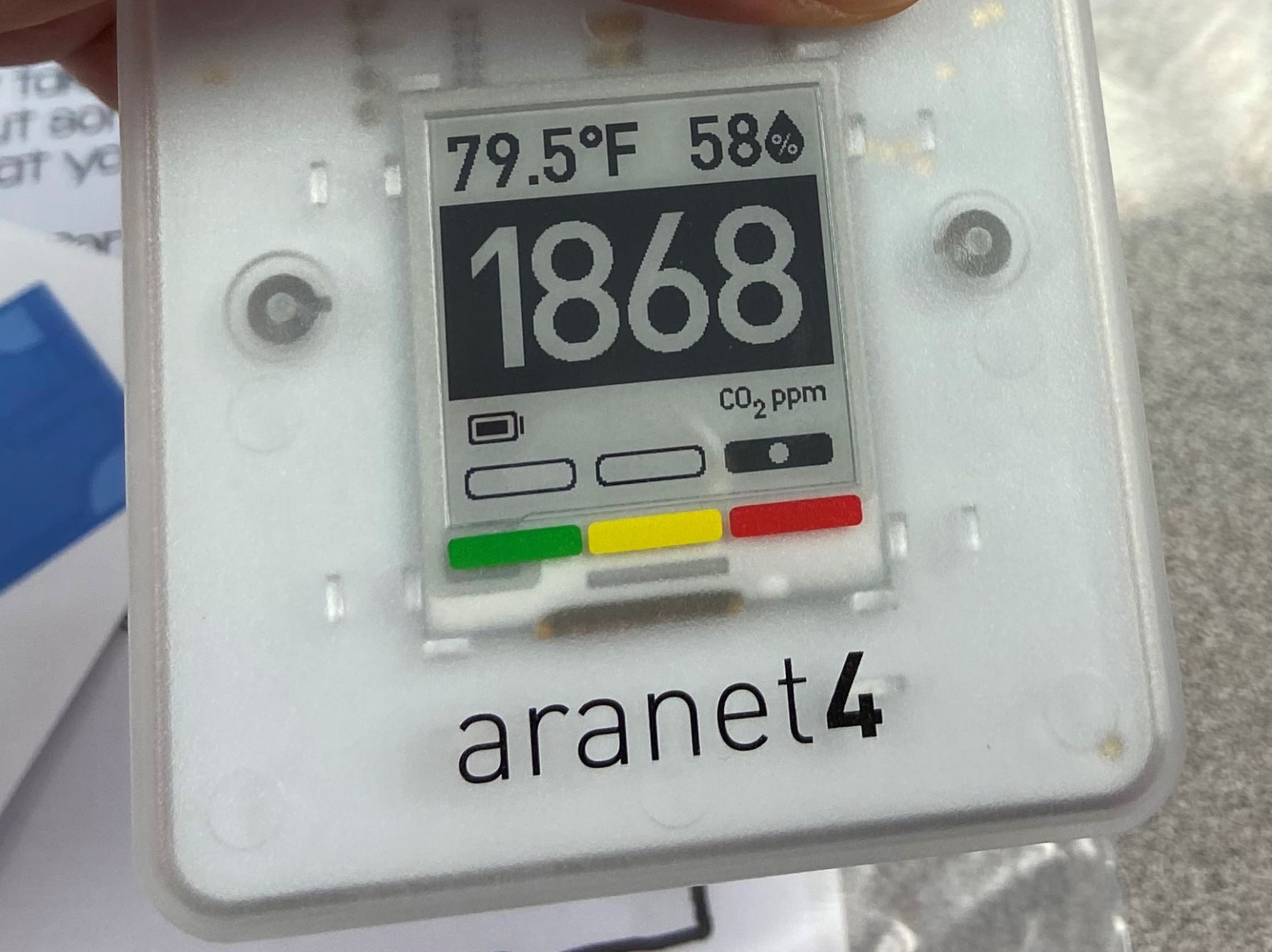
Having CO2 monitors available to other parents and schools can enable them to realize the extent of their air quality problems and take steps to solve it, he said.
“Nothing makes an invisible problem visible like giving people the ability to walk into a space and see a number that tells people where things are at,” Bailey said.
IACA is budgeting to purchase particulate sensors as well, which can show how well the air system is filtering out polluting particles, he said. TEX’s pro bono scientists have also helped the group build a website, develop their sensor kits and review their educational materials “to make sure that we’re not asserting things out of thin air,” Bailey said.
Bailey wants the lending library to be established in Alabama so it’s close to home, even though they can lend the monitoring kits to people in other states. It will include a learning kiosk to teach people about using the kits.
Similar lending programs are already established in places like the Nashville Public Library and through the EPA’s office in Atlanta. IACA is still trying to find a partner library to host its lending materials, and one potential partner has already fallen through, Bailey said.
Once they have a location, everything else is pretty much ready for the lending library to be available to the public.
“That’s the main ingredient,” he said.
The materials they’re developing with TEX will also be used in education and advocacy efforts. Bailey hopes these tools can lead to more healthy classrooms, fewer respiratory illnesses and less absenteeism in schools where parents and administrators decide to take air quality seriously.
“I don’t think it can be overstated how important that is,” he said. “… We should be making schools hospitable to occupancy.”
OTHER PROJECTS
A few other projects are also in progress as part of the Capacity Collaborative’s science hub.
In Trussville, the community wants to conduct an air monitoring program and assessment of the health risks related to the long-burning Moody Landfill site, which was first reported in November 2022 and continues to smolder underground.
Kirkpatrick said that project’s goals are still being developed and may shift depending on the Environmental Protection Agency’s ongoing work at the landfill site. According to the project website, they could expand to include water chemistry and blood or urine samples as well.
In Camp Hill, the science hub connected the town with Riley Dibble, a recent graduate of Auburn University who studied community planning and GIS mapping, to help map and maintain water and wastewater lines. The goal is to be able to deal with leaks more effectively and proactively seek funding to repair aging water infrastructure before the leaks can happen.
Visit the Thriving Earth Exchange website to learn more about the Capacity Collaborative’s science hub projects in other states and the other three science hubs around the country.
Main article image courtesy of Jubilee House.
 Southern Science
One thought on “‘Fight for it to be better’”